




¡Nuestro equipo cuenta con más de 7,000,000 operadores!
Cada día, trabajamos juntos para mejorar las operaciones. Obtenemos grandes resultados y seguimos adelante.
El reconocimiento de millones de operadores en todo el mundo es el mejor agradecimiento a nuestro trabajo! ¡Usted hizo su elección y haremos todo lo que esté a nuestro alcance para satisfacer sus expectativas!
¡Juntos somos un gran equipo!
InstaSpot. ¡Orgulloso de trabajar para usted!





¡Actor, 6 veces ganador del torneo UFC y un verdadero héroe!
El hombre que se hizo a sí mismo. El hombre que sigue nuestro camino.
El secreto detrás del éxito de Taktarov es el constante movimiento hacia el objetivo.
¡Revele todo los lados de su talento!
Descubra, intente, fracase, ¡pero nunca se rinda!
InstaSpot. ¡Su historia de éxito comienza aquí!
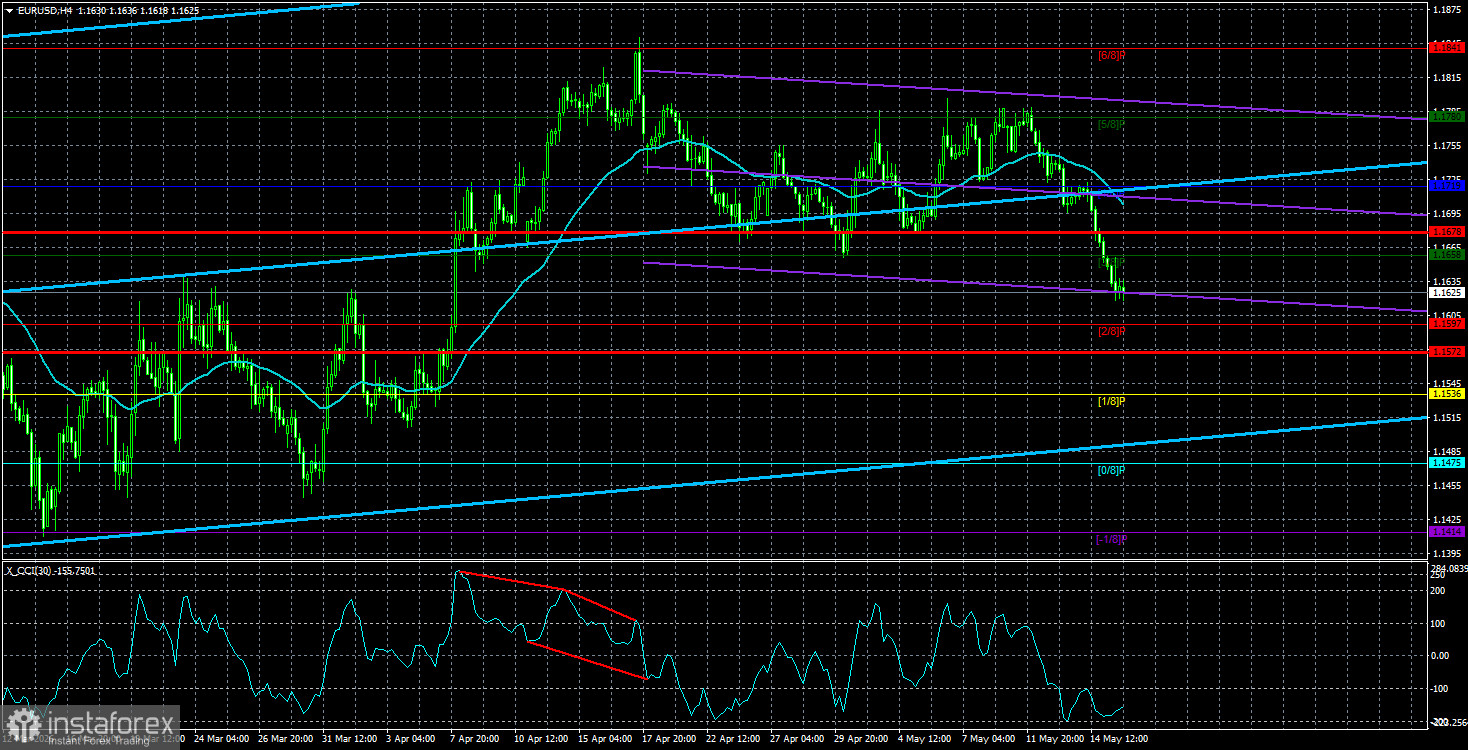
The EUR/USD currency pair significantly decreased last week, and the anticipated new wave of the bullish trend that many have been waiting for 8-9 months is once again postponed. Although the euro has been declining for exactly one month (the drop began on April 17), this movement is merely a correction, which is clearly visible even on the 4-hour timeframe. Unfortunately, corrections occupy a large portion of time in the currency market, and there is little we can do about it. A range of factors supported the American currency last week, although we continue to believe the primary driver was geopolitics.
One can speculate endlessly about Donald Trump's visit to China or the rising inflation in the US, but the facts cannot be denied. Over the past three months, the market has largely ignored macroeconomic data and significant fundamental events (including central bank meetings), and price movements often align with traders' geopolitical sentiment. For example, the situation in the Middle East significantly worsened last week. As a result, the dollar began to strengthen and continued to appreciate throughout the week. Previously, the market was optimistic about an agreement between Iran and the US and the reopening of the Strait of Hormuz, while the dollar was falling. That is the rationale behind the current movements of the EUR/USD pair.
Last week, it was also reported that US inflation rose to 3.8%, which some experts immediately linked to the Federal Reserve's monetary policy. "Hawkish" expectations are rising, leading many to attribute the dollar's rise to an impending Fed interest rate hike. However, we would like to remind you that the Fed has not yet provided any signals regarding a possible increase in the key interest rate. Furthermore, the inflation increase was virtually within forecasted limits (only exceeding it by 0.1%). We want to state that the market saw in the inflation report what it had been expecting. Therefore, it is difficult to say that the US dollar gained against the euro simply because the market suddenly began to anticipate "hawkish" decisions from the Fed, led by a "dovish" chairman. Inflation is rising globally, and the European Central Bank and the Bank of England are also preparing for interest rate hikes.
This week, there are very few important events in the Eurozone. We can highlight the Eurozone inflation report for April's second estimate, the business activity indices for the EU and Germany for May, and Germany's third estimate of GDP for the first quarter. All of these reports can be confidently categorized as "secondary." Therefore, this week, the primary focus will once again be on geopolitics. The market will closely monitor any changes in the tone of statements from key figures in the US and Iran to assess the likelihood of renewed negotiations and a resumption of hostilities in the Persian Gulf region.
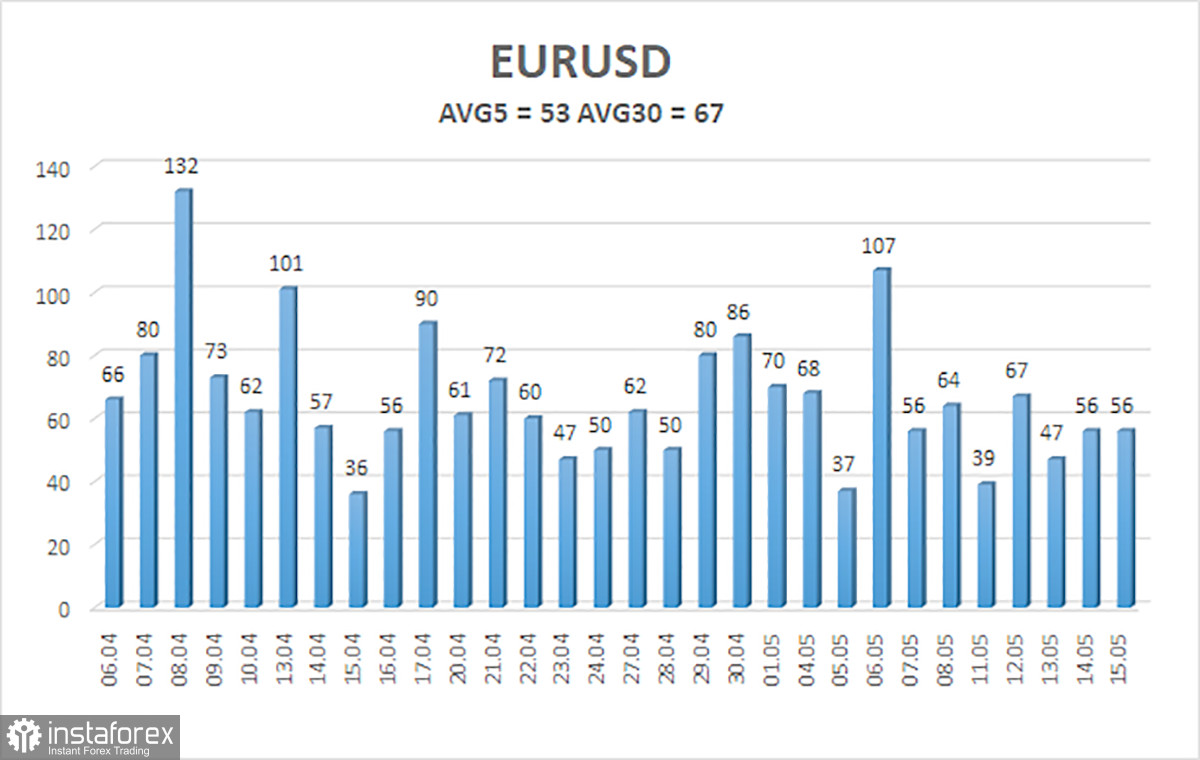
The average volatility of the EUR/USD currency pair over the last 5 trading days, as of May 16, is 53 pips and is characterized as "average." We expect the pair to trade between 1.1572 and 1.1678 on Monday. The upper linear regression channel has turned upward, indicating a trend change to bullish. In fact, the upward trend of 2025 could have resumed a month ago. The CCI indicator has entered the overbought zone and formed two bearish divergences, signaling the start of a downward correction that is still ongoing.
S1 – 1.1597
S2 – 1.1536
S3 – 1.1475
R1 – 1.1658
R2 – 1.1719
R3 – 1.1780
The EUR/USD pair continues its downward movement, which is presumably a correction within the broader upward trend. The overarching fundamental backdrop for the dollar remains extremely negative, and only the factor of geopolitics regularly supports it. If the price is below the moving average, shorts can be considered with targets at 1.1597 and 1.1572. Long positions are relevant when the price is above the moving average line, with targets at 1.1780 and 1.1841. The market continues to move away from geopolitical factors, but last week was disappointing for the euro. A more significant decline is not expected yet, but no one knows how relations between Iran and the US will develop.
*El análisis de mercado publicado aquí tiene la finalidad de incrementar su conocimiento, más no darle instrucciones para realizar una operación.
¡Los informes analíticos de InstaSpot lo mantendrá bien informado de las tendencias del mercado! Al ser un cliente de InstaSpot, se le proporciona una gran cantidad de servicios gratuitos para una operación eficiente.


