




¡La leyenda en el equipo de InstaSpot!
¡Leyenda! ¿Cree que es una retórica grandilocuente? Pero, ¿cómo deberíamos llamar a un hombre, que se convirtió en el primer asiático en ganar el campeonato mundial de ajedrez júnior a los 18 años y en el primer Gran Maestro indio a los 19 años? Ese fue el comienzo de un camino difícil hacia el título de Campeón del Mundo para Viswanathan Anand, el hombre que se convirtió en parte de la historia del ajedrez para siempre. ¡Ahora una leyenda más en el equipo de InstaSpot!





Borussia es uno de los clubes de fútbol con más títulos en Alemania, que ha demostrado repetidamente a los fanáticos: el espíritu de competencia y liderazgo que ciertamente conducirán al éxito. Opere de la misma manera que los profesionales del deporte: con confianza y de forma activa. ¡Mantenga un "pase" del Borussia FC y lidere con InstaSpot!
When the market rises at the slightest bit of good news and refuses to fall on bad headlines, bulls are clearly in control. The S&P 500 closed the week on a high note as Treasury yields and oil retreated on reports that Iran may have offered to reopen the Strait of Hormuz. US President Donald Trump said he had discussed the Middle East with Xi Jinping and was optimistic. Still, the new trading week may not be so kind to equity indices.
Iran's seven?day truce proposal was rejected by the White House. The plan would have allowed Iran to circumvent the blockade and resume oil exports; Tehran's economy is suffering from restricted shipments, which puts its leadership under pressure. With tensions in the Middle East unresolved, Brent and bond yields are likely to resume their rallies — a headwind for the S&P 500.
Treasury yields and S&P 500 dynamics
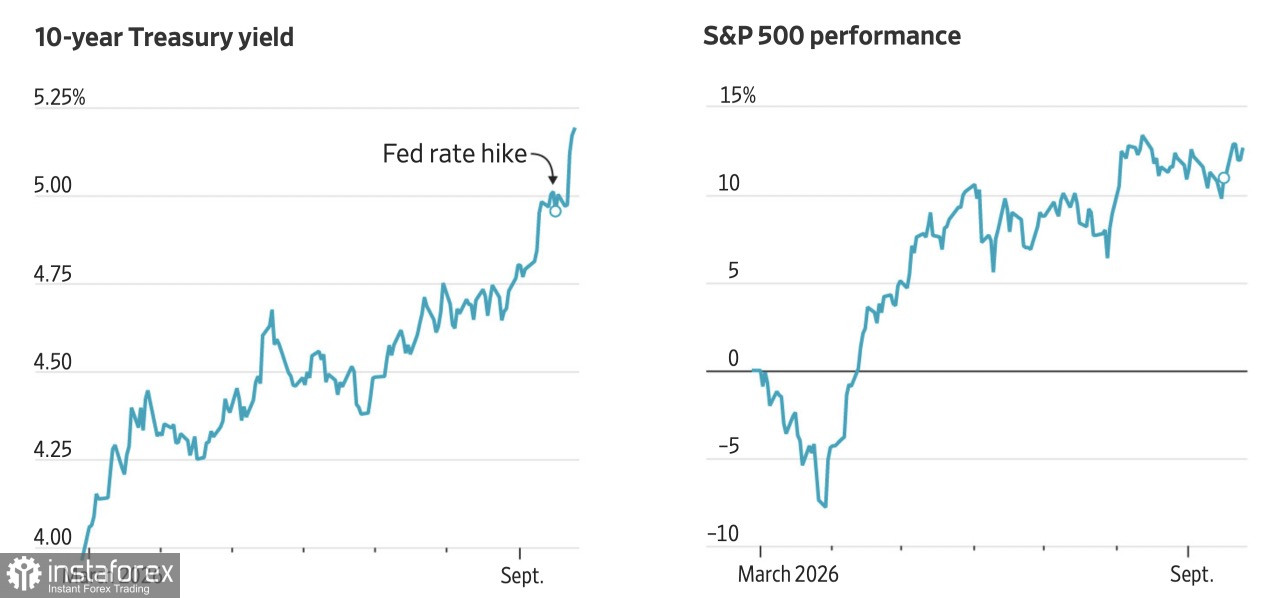
Rising Treasury yields are typically negative for stocks. Higher yields reduce equity fundamentals, raise financing costs, and compress profit prospects. Higher bond yields also pull capital away from equities. Yet history shows many episodes in which the S&P 500 remained resilient despite a rapid rise in yields.
In 1994, Treasuries were sold off aggressively as Greenspan's Fed hiked rates, but the S&P 500 recovered on confidence that the economy was strong enough to withstand a tight policy. In 1999, yields rose again, but the market moved ahead of the Fed: strong tech demand and the dot?com boom let greed overcome fear and powered a stock rebound.
The current environment is a hybrid of those episodes. The US economy is on a firm footing and can tolerate higher interest rates, while the role once played by Internet stocks is now taken by artificial intelligence leaders. It's no surprise the Nasdaq Composite is outperforming other major indices — in September, it is ahead of the equal?weighted S&P 500 and the Russell 2000 by roughly 7 percentage points.
Index divergence dynamics
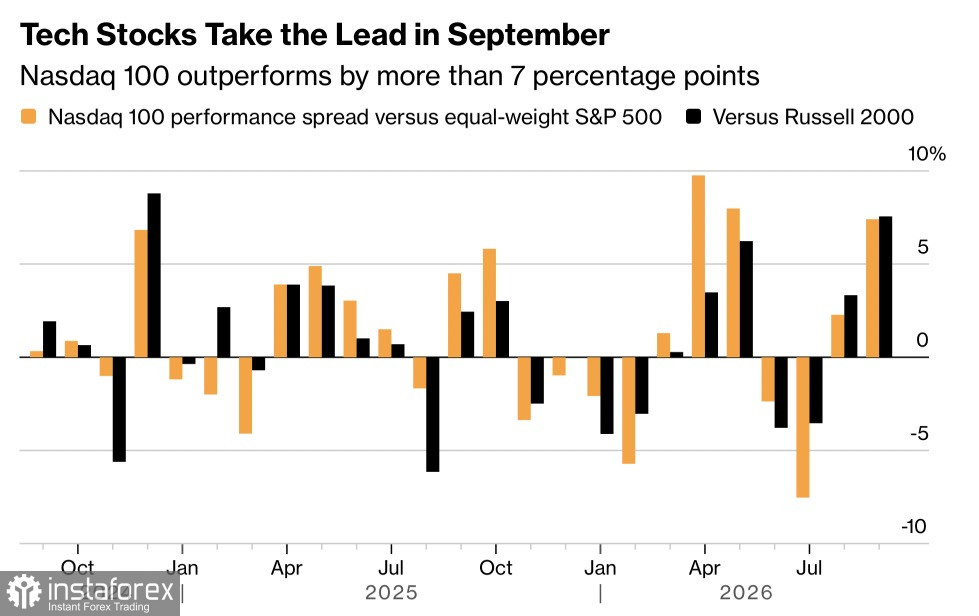
So equities have counterarguments even against aggressive Fed tightening. S&P 500 sell?offs driven by rate fears provide buying opportunities for investors to pick up shares of hyperscalers and other AI?exposed names.
Technically, the daily chart shows that the S&P 500 has managed to consolidate above the upper boundary of a descending trading channel. That said, the risk of activating a 1?2?3 reversal pattern has emerged. If bulls can keep the price above 7,690, maintain a bias to buy the dips.
*El análisis de mercado publicado aquí tiene la finalidad de incrementar su conocimiento, más no darle instrucciones para realizar una operación.
¡Los informes analíticos de InstaSpot lo mantendrá bien informado de las tendencias del mercado! Al ser un cliente de InstaSpot, se le proporciona una gran cantidad de servicios gratuitos para una operación eficiente.


