




The legend in the InstaSpot team!
Legend! You think that's bombastic rhetoric? But how should we call a man, who became the first Asian to win the junior world chess championship at 18 and who became the first Indian Grandmaster at 19? That was the start of a hard path to the World Champion title for Viswanathan Anand, the man who became a part of history of chess forever. Now one more legend in the InstaSpot team!





Borussia is one of the most titled football clubs in Germany, which has repeatedly proved to fans: the spirit of competition and leadership will certainly lead to success. Trade in the same way that sports professionals play the game: confidently and actively. Keep a "pass" from Borussia FC and be in the lead with InstaSpot!

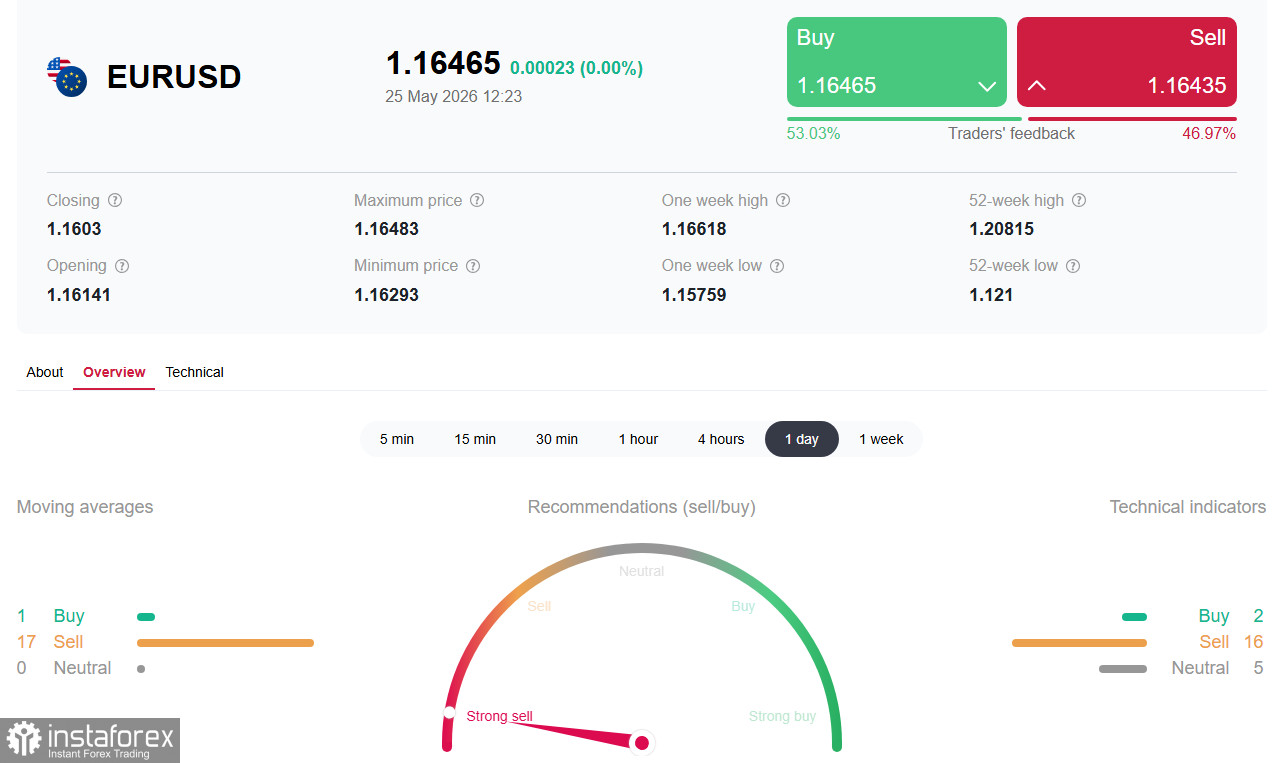
See also: InstaSpot trading indicators for EUR/USD.
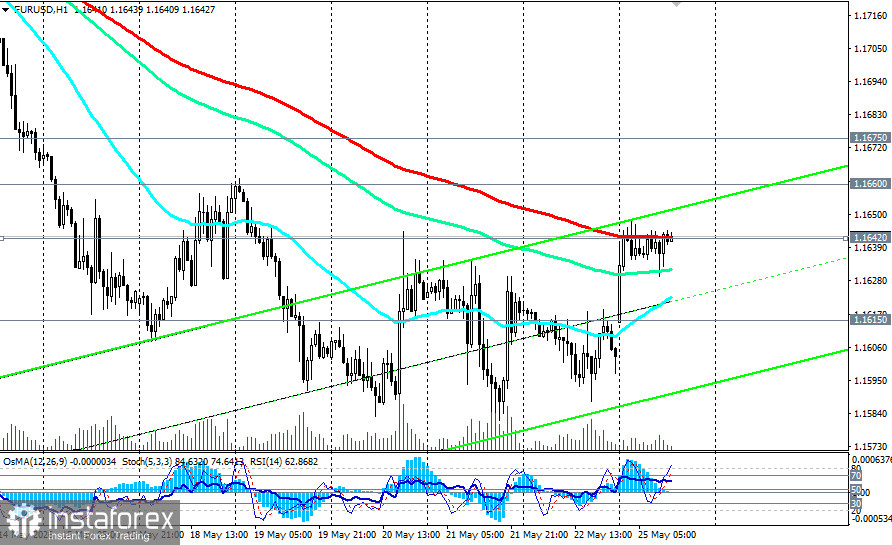
EUR/USD opened the week with a confident gap higher, rebounding from seven-week lows around 1.1575. At the time of writing quotes are consolidating near short-term resistance at 1.1642, reflecting a tug of war between two opposing drivers: hopes for a US-Iran peace framework and falling oil prices, which weaken the dollar, versus hawkish Fed expectations and weak euro-area data that limit euro upside.
Fundamental picture: ECB's stagflation dilemma, oil shock versus a hawkish Fed
The principal support for the euro early in the week came from reports of progress in US-Iran negotiations. President Donald Trump said the agreement was largely agreed upon, and Secretary of State Marco Rubio described the potential deal as a fairly strong offer.
Media reports indicate discussions center on a 60-day truce that would include reopening the Strait of Hormuz and Iranian mine-clearing in exchange for US concessions. That news sent oil prices sharply lower — WTI fell roughly 5 percent to below $94 per barrel — which in turn eased dollar strength.
Optimism remains fragile. Mr. Trump warned that any deal must be "great and meaningful" or there will be no deal, and he said the strait's blockade will not be lifted until a formal agreement is signed. Iran insists on maintaining control over the strait.
While geopolitics is producing temporary upbeat signals, the macro backdrop is increasingly hawkish. April inflation prints (CPI 3.8% year-on-year; PPI 6.0% year-on-year) prompted a marked re-pricing of Fed policy: markets now assign roughly a 55 percent probability to at least one rate hike by year-end.
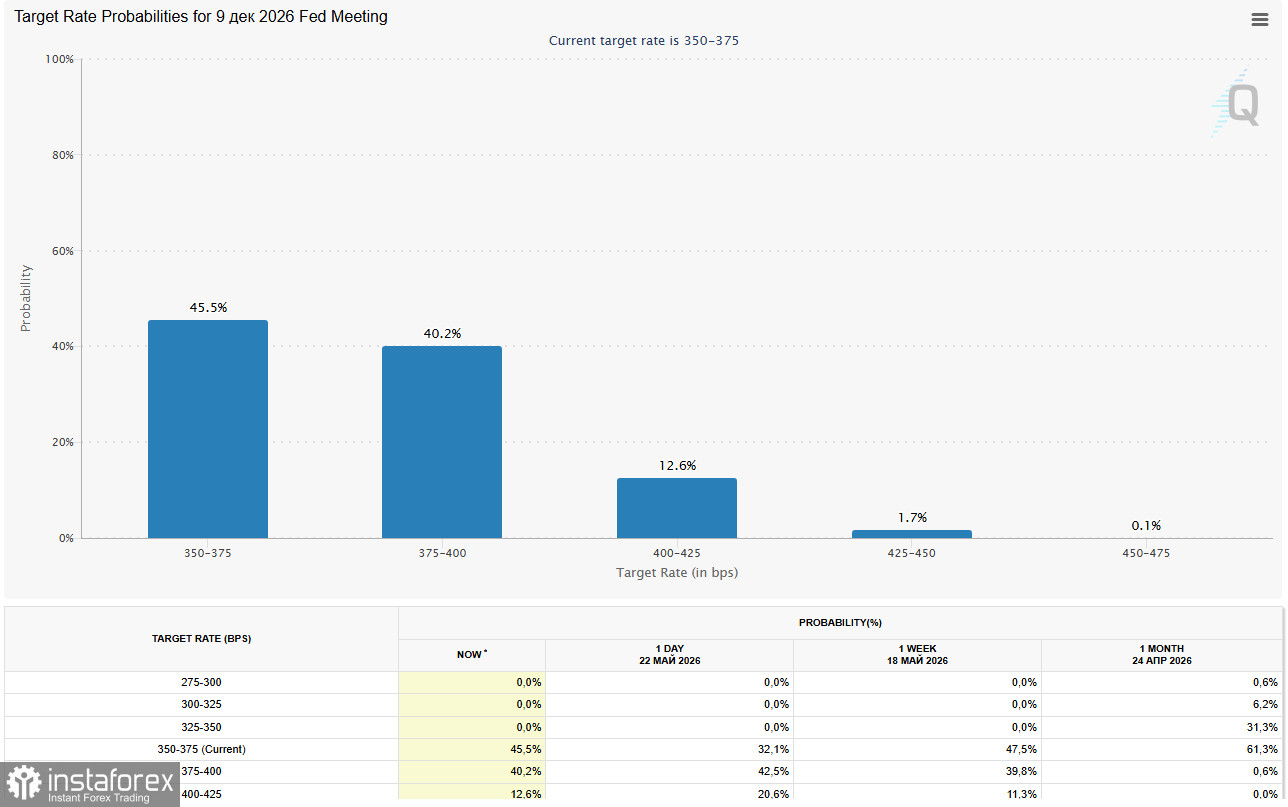
Philadelphia Fed governor Christopher Waller, formerly considered relatively dovish, said last week he could no longer rule out future rate increases if inflation does not decline soon. New Fed Chair Kevin Warsh, sworn in last week, prefers to monitor inflation using trimmed-mean measures that currently sit below core PCE, which in theory leaves room for easing, but the FOMC's center of gravity has shifted toward a more neutral stance.
The euro remains vulnerable to stagflation risks. Preliminary May PMI for the euro area showed an intensifying downturn: the composite index fell to 47.5, with the services sector contracting at the fastest rate since early 2021.
S&P Global warns the eurozone economy could contract by 0.2% in Q2 as inflation approaches 4%; consumer confidence is at its lowest level since the pandemic lockdowns.
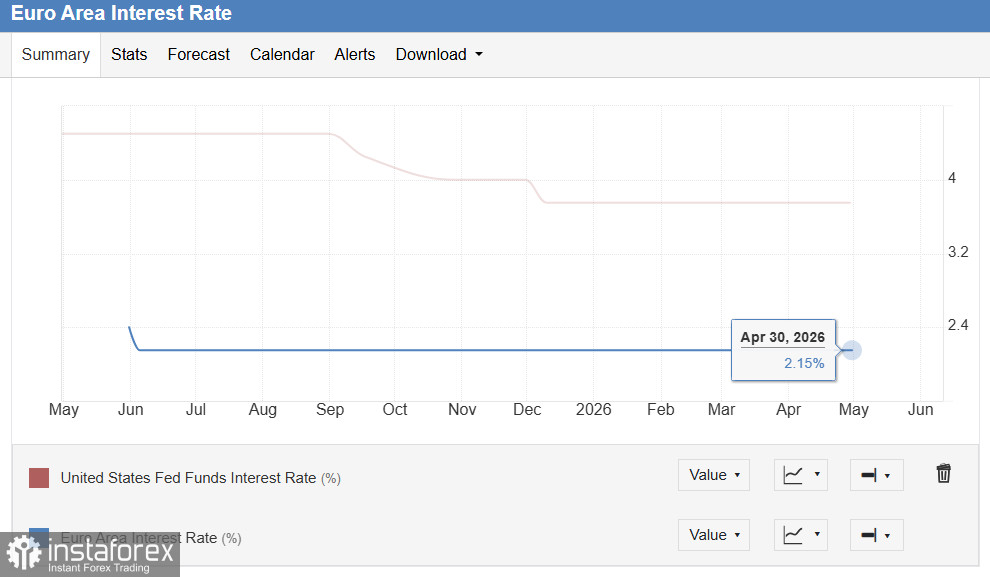
Despite weak growth, the ECB must respond to inflation. Governing Council members, including Martin Kocher of Austria, said the ECB is likely to raise rates next month unless a durable peace between the United States and Iran emerges. Markets price roughly a 90% chance of an ECB rate increase at the June meeting to 2.25%.
Key factor summary
- US-Iran negotiations (60 days): Temporary support. Falling oil prices weaken the dollar, but no signed deal yet.
- Fed rate expectations (over 50%): Pressure. Hawkish repricing supports the dollar.
- Euro-area PMI (composite 47.5): Pressure. Economy is contracting; services sector in crisis.
- ECB rate expectations (90% for June): Support. Hawkish tilt limits euro weakness.
- Upcoming PCE (Thursday): High volatility. Key inflation test for the dollar.
Technical snapshot
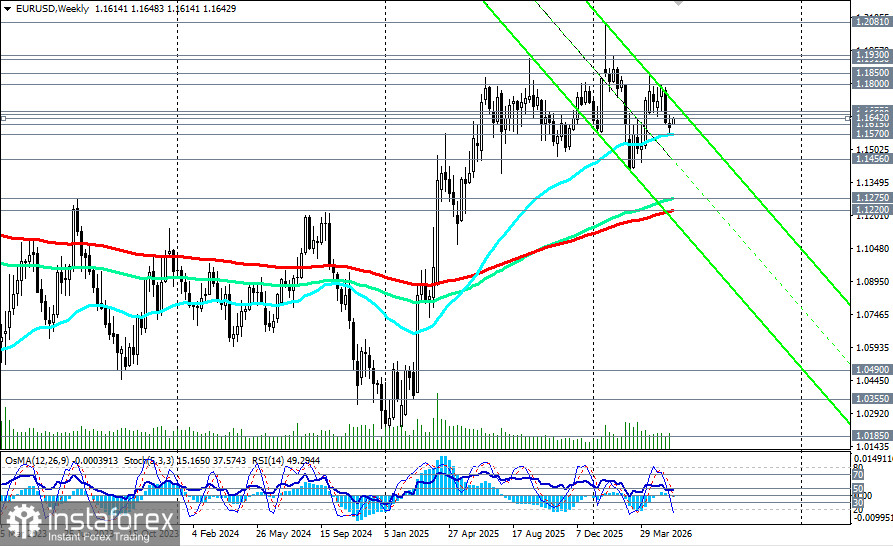
EUR/USD is developing a short-term downward impulse. However, as long as the pair remains above key supports at 1.1615 and the 200-period EMA level (noted here at 1.1220), it remains within a broader bullish regime on medium and long-term time frames.
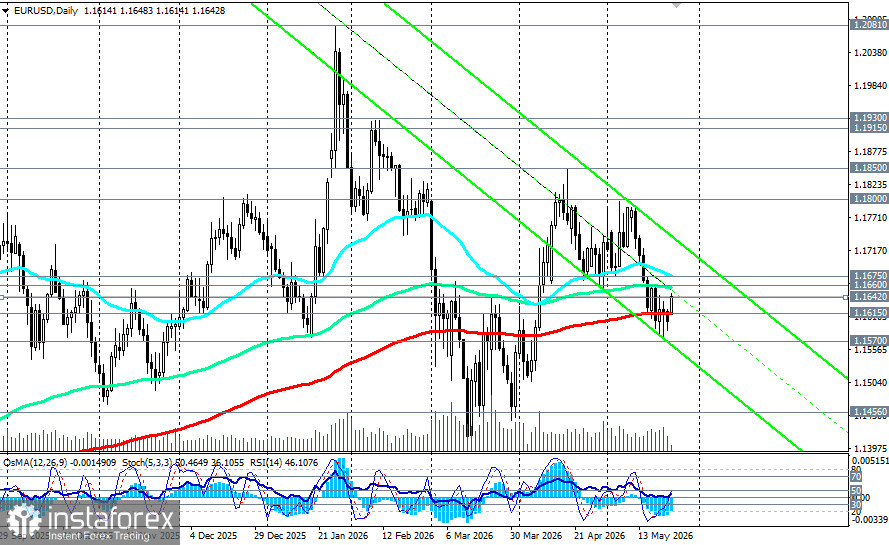
Last week, the pair formed a low near 1.1575 and opened today with a bullish gap, encountering strong resistance at 1.1642.
Key technical levels
- Resistance: 1.1660–1.1675 — 144- and 50-day EMAs and a broken April support; a breach would open the way to 1.1700–1.1720+
- Support: 1.1615 — 200-day EMA
Momentum indicators
- Short-term: RSI(14) on the 1- and 4-hour charts sits in the 56–61 range, indicating improving upside momentum and a corrective move rather than overbought conditions.
- Daily: RSI, OsMA and Stochastic remain in bearish territory, signalling persistent broader downside pressure.
Key events this week
- Thursday, 28 May — ECB President Christine Lagarde speech: potential signals on a June rate increase; a hawkish tone would support the euro.
- Thursday, 28 May — US core PCE release: market consensus near 3.3% yearly; a print above consensus would strengthen hawkish Fed expectations.
- Thursday, 28 May — US second-estimation Q1 GDP: forecast +2.3%; stronger growth would support the dollar.
- Thursday, 28 May — Euro-area consumer confidence and industrial production: data will help gauge the depth of the downturn.
- Weekend — continuation of US-Iran negotiations: the principal geopolitical trigger — either a signed deal or renewed escalation.
Conclusion
EUR/USD sits at the intersection of two forces. Hopes for a limited US-Iran agreement and falling oil prices provide temporary tailwinds for the euro by easing dollar strength. Offsetting that, a hawkish repricing of Fed policy (more than 50% chance of a hike by year-end) and continued weakness in the eurozone economy (services PMI at 46.4) underpins the dollar.
The 1.1642–1.1675 zone is likely to be contested in the near term. A technical break above 1.1680 would open the path to 1.1700, 1.1720 and 1.1790. Conversely, loss of support at 1.1640 could trigger a return to 1.1575 and then 1.1525.
Market participants should watch Christine Lagarde's remarks, the US core PCE release on Thursday, and developments in the US-Iran talks over the weekend. The next few days will be decisive for the pair's direction.
*The market analysis posted here is meant to increase your awareness, but not to give instructions to make a trade.
InstaSpot analytical reviews will make you fully aware of market trends! Being an InstaSpot client, you are provided with a large number of free services for efficient trading.


