




ہمارے ٹیم میں 7000000 سے ذائد تاجران شامل ہیں
ہم تجارت کی بہتری کے لئے ہر روز اکھٹے کام کرتے ہیں اور بہترین نتائج حاصل کرتے ہوئے آگے کی جانب بڑھتے ہیں
دُنیا بھر سے سے لاکھوں ہمارے بہترین کام کو سند عطاء کرتے ہیں آپ اپنا انتحاب کریں باقی ہم آپ کی توقعات پر پورا اترنے کے لئے اپنی بہترین کوشش کریں گے
ہم مل کر ایک بہترین ٹیم بناتے ہیں
انسٹا فاریکس آپ سے کام کرتے ہوئے فخر محسوس کرتا ہے





ایکٹر - یو سی ایف 6 ٹورنامنٹ چیمپین اور واقعی ہیرو
ایک فرد کے جس نے اپنا آپ منوایا ہے وہ فرد کہ جو ہماری راہ پر چلا ہے.
ٹکٹا روو کی کامیابی کا راز یہ ہے کہ وہ اپنے اہداف کی جانب مسلسل بڑھتا رہتا ہے
اپنے ہنر یا ٹیلنٹ کے تمام پہلو آشکار کررہے ہیں
پہچانیں ، کوشش کریں ، ناکام ہوں لیکن کبھی نہ رُکیں
انسٹا فاریکس آپ کی کامیابی کی کہاں یہاں سے شروع ہوتی ہے

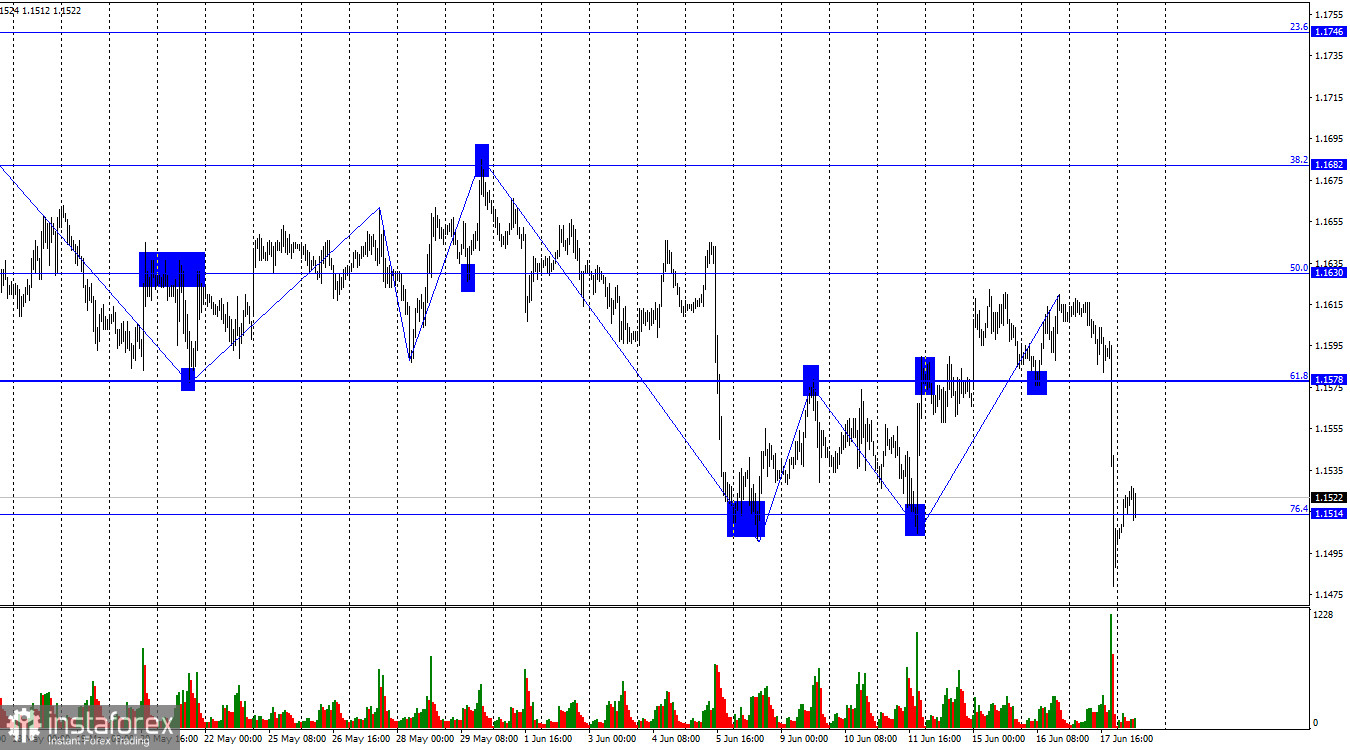
The wave picture on the hourly chart became more complicated yesterday evening. The last completed upward wave exceeded the previous peak, but the new downward wave also broke below the previous low. Thus, the trend has once again turned bearish. Geopolitical conditions have improved significantly in recent weeks, but the Federal Reserve triggered a new wave of bearish pressure. A full-scale bearish move would require additional supporting factors, which I do not currently see. Bulls may attempt to regain the initiative after yesterday's setback.
On Wednesday, the FOMC announced its policy decisions and did not surprise traders in terms of the headline outcome. Interest rates remained unchanged. However, many of the formulations used at previous meetings were revised. The Federal Reserve is no longer expecting monetary policy easing, while half of the Board members now anticipate at least one rate hike in 2026. Inflation forecasts for 2026–2027 were revised upward, which became the primary reason behind the more hawkish tone of the FOMC.
Overall, traders had expected Federal Reserve officials to adopt a more hawkish stance. This was a reasonable assumption, as inflation accelerated to a three-year high in May. At the same time, the baseline scenario implied only a moderate shift toward tighter policy, and few market participants expected particularly hawkish comments from Kevin Warsh regarding monetary policy. The newly appointed governor stated that the Federal Reserve has spent five years trying to return inflation to 2% without success and that it is now time to address the issue more decisively.
The fact that the market expected Warsh to hold dovish views on Federal Reserve policy and was proven wrong at his very first meeting played a key role in the dollar's dominance on Wednesday evening. Market participants expected a combination of a more hawkish FOMC and a relatively dovish position from Warsh. Instead, even the new Fed official emphasized the need to stabilize inflationary pressure on the economy and consumers.
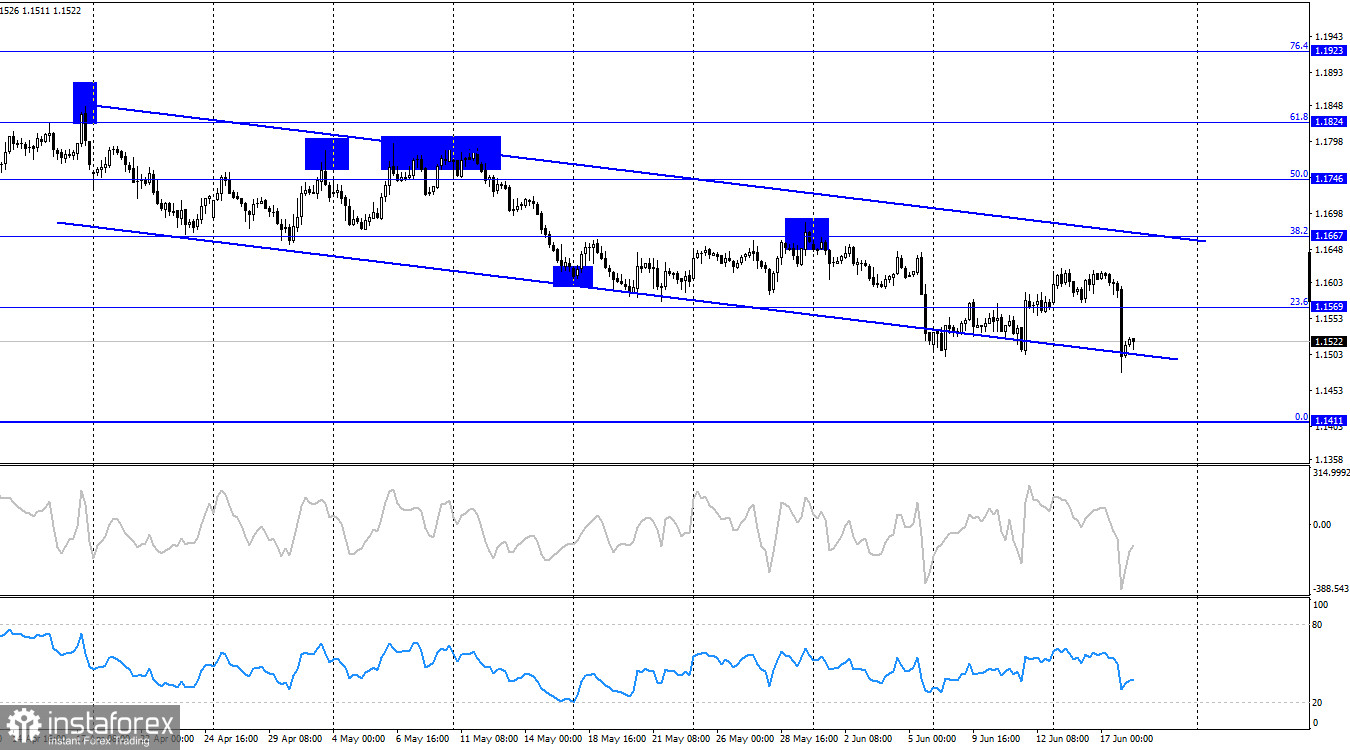
On the 4-hour chart, the pair once again declined toward the lower boundary of the downward trend channel. In my view, yesterday's decline was caused by a factor that is unlikely to provide long-term support for the dollar, while the lower boundary of the channel should limit further downside. Therefore, a rebound from this boundary would favor the euro and a resumption of growth toward the upper boundary of the channel. No emerging divergences are currently visible on any indicator.
Commitments of Traders (COT) Report:
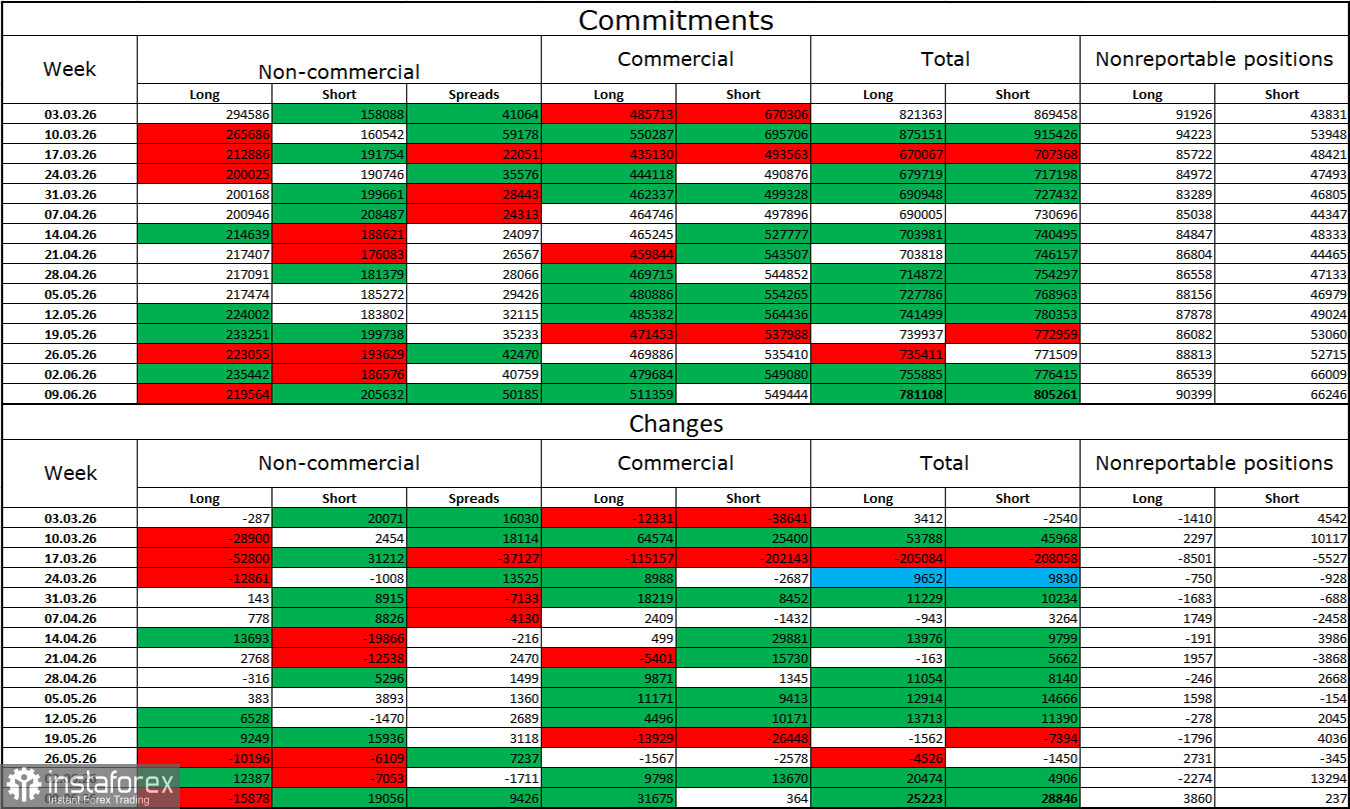
During the latest reporting week, professional traders closed 15,878 Long positions and opened 19,056 Short positions. During the seven weeks of February and March, the bulls' overwhelming advantage disappeared because of the war in Iran. Over the following eleven weeks, the situation gradually normalized as hostilities in the Middle East were suspended, and bulls have once again regained control.
The total number of Long positions held by speculators now stands at 219,000, while the number of Short positions amounts to 205,000.
Overall, large market participants continue to view the euro favorably from a long-term perspective. Naturally, various global developments, which have been plentiful in recent years, continue to influence investor sentiment. At present, market attention remains focused on the Middle East, where the conflict has merely been paused rather than resolved. Therefore, in the near term, the performance of the euro and the dollar will depend less on Federal Reserve or ECB monetary policy and economic data, and more on developments in Iran.
News Calendar for the United States and the Eurozone:
The economic calendar for June 18 contains only two events, neither of which can be considered particularly important. Therefore, the economic backdrop is unlikely to influence market sentiment on Thursday.
EUR/USD Forecast and Trading Tips:
Long positions may be considered today if the pair consolidates above the 1.1514 level on the hourly chart, with a target at 1.1578. Short positions could previously be opened after a close below 1.1578, targeting 1.1514. This target has been reached. New short positions may be considered if the pair closes below 1.1514, with a target at 1.1409.
Fibonacci retracement grids are plotted from 1.1409 to 1.1850 on the hourly chart and from 1.2081 to 1.1411 on the 4-hour chart.
*تعینات کیا مراد ہے مارکیٹ کے تجزیات یہاں ارسال کیے جاتے ہیں جس کا مقصد آپ کی بیداری بڑھانا ہے، لیکن تجارت کرنے کے لئے ہدایات دینا نہیں.
InstaSpot analytical reviews will make you fully aware of market trends! Being an InstaSpot client, you are provided with a large number of free services for efficient trading.


