




¡Nuestro equipo cuenta con más de 7,000,000 operadores!
Cada día, trabajamos juntos para mejorar las operaciones. Obtenemos grandes resultados y seguimos adelante.
El reconocimiento de millones de operadores en todo el mundo es el mejor agradecimiento a nuestro trabajo! ¡Usted hizo su elección y haremos todo lo que esté a nuestro alcance para satisfacer sus expectativas!
¡Juntos somos un gran equipo!
InstaSpot. ¡Orgulloso de trabajar para usted!





¡Actor, 6 veces ganador del torneo UFC y un verdadero héroe!
El hombre que se hizo a sí mismo. El hombre que sigue nuestro camino.
El secreto detrás del éxito de Taktarov es el constante movimiento hacia el objetivo.
¡Revele todo los lados de su talento!
Descubra, intente, fracase, ¡pero nunca se rinda!
InstaSpot. ¡Su historia de éxito comienza aquí!
The EUR/GBP cross has been falling actively for a second week. On Thursday, buyers tried to build a corrective rebound toward the 0.85 area, but the northbound impulse died almost at once. The pound still retains the fundamental advantage, and EUR/GBP sellers continue to hold the initiative.
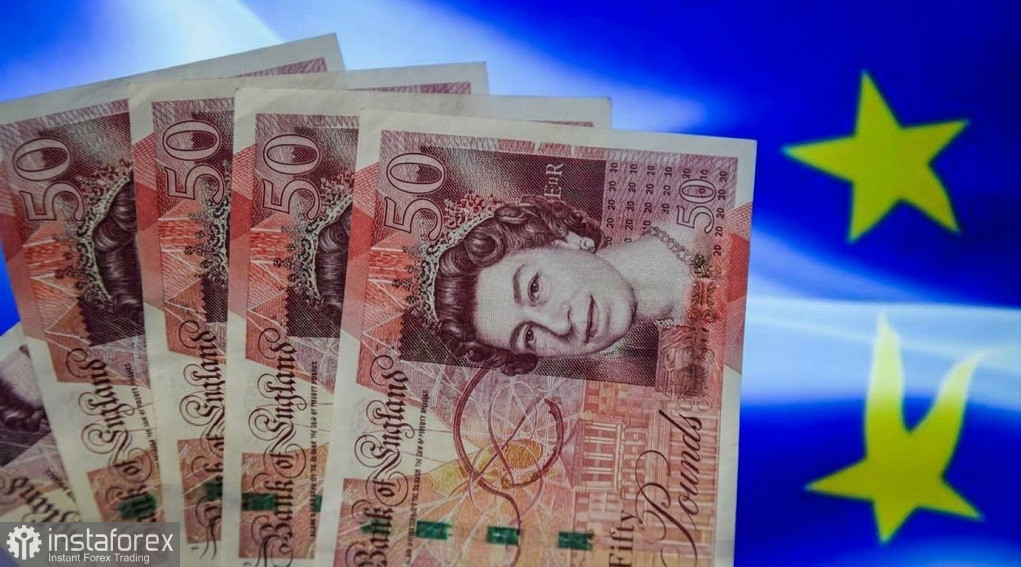
What is the pound's "strength"? In my view, the cross's two-week decline is driven primarily by a revision of market expectations about the Bank of England's future policy. Where the baseline scenario was gradual easing not long ago, the focus has shifted in the opposite direction. Today the market prices in roughly an 80% chance of a rate hike at the November meeting. Some estimates even allow for two rounds of increases by February 2027.
Hawkish rhetoric from BoE officials further supports the pound. In particular, BoE Chief Economist Huw Pill said there is a need to pursue a tight monetary stance amid rising inflationary pressure. Another central banker, Megan Greene, warned that too-rapid wage growth could hinder inflation from returning to target. Against these signals, the hawkish case for the pound grows increasingly tangible.
The pound also benefits from the UK economy's relative resilience. Recall that UK Q2 GDP rose 0.4%, and at its September meeting the BoE also revised up its Q3 growth estimate to about 0.4%. Meanwhile, the labor market, while showing signs of cooling, is not collapsing. With renewed inflationary pressure, the central bank can keep policy tight longer without fearing a major economic failure.
The euro, by contrast, faces several headwinds. On the one hand, headline inflation in the eurozone accelerated to 3.8% in September, raising the likelihood of another European Central Bank hike at the December meeting (a recent Reuters poll showed nearly 90% of economists now expect such a step). That decision, however, is far from simple for the ECB. Rising yields on European sovereign bonds amid France's fiscal problems increase concerns about the eurozone's financial stability and simultaneously raise the risk of an economic downturn. In these conditions, the ECB must weigh not only inflationary threats but also the potential damage to economic activity.
The result is a contradictory, almost paradoxical situation for the euro: faster inflation strengthens hawkish expectations about ECB policy, but it also raises stagflation risks, making the pound more attractive given the UK economy's relative resilience.
To be fair, the pound's fundamental backdrop is also far from perfect. High yields on UK government bonds and rising debt-servicing costs remain a vulnerability for sterling. However, the market interprets rising UK yields primarily as a reflection of a tougher expected policy path from the BoE, whereas European bonds react more to France's political and sovereign-debt risks. In EUR/GBP, that difference in perception is decisive.
On the monthly timeframe (MN), the cross has fallen for the second month in a row. If September's price peak was 0.8601, the current October low is 0.8446—a 16-month low. In other words, this is a full-blown southbound (downward) trend supported by fundamentals: the market is consistently revising up expectations for BoE tightening. At the same time, the euro faces fiscal and economic pressures in the eurozone.
Thursday's northbound retracement in EUR/GBP should be viewed as a correction inside a downtrend, not the start of a new up cycle. In my view, the fundamental prerequisites for further decline remain intact. The BoE is approaching a tightening cycle, while the ECB simultaneously faces fiscal constraints and rising borrowing costs. The scales still tip in the pound's favor.
Technically, the cross on the daily chart sits between the middle and lower Bollinger Bands and below all Ichimoku lines, producing a bearish "Parade of Lines" signal. All this points to prioritizing short positions. On the 4-hour chart, EUR/GBP sits on the Bollinger middle band, below the Kumo cloud, and between Tenkan-sen and Kijun-sen. To confirm a resumption of the southbound trend, sellers need to close below the Tenkan-sen on H4 (around 0.8460) — that would also trigger an Ichimoku "Parade of Lines" bearish signal on this timeframe. The main target for the downward move is 0.8400 (the MN lower Bollinger Band).
*El análisis de mercado publicado aquí tiene la finalidad de incrementar su conocimiento, más no darle instrucciones para realizar una operación.
¡Los informes analíticos de InstaSpot lo mantendrá bien informado de las tendencias del mercado! Al ser un cliente de InstaSpot, se le proporciona una gran cantidad de servicios gratuitos para una operación eficiente.


