




¡Nuestro equipo cuenta con más de 7,000,000 operadores!
Cada día, trabajamos juntos para mejorar las operaciones. Obtenemos grandes resultados y seguimos adelante.
El reconocimiento de millones de operadores en todo el mundo es el mejor agradecimiento a nuestro trabajo! ¡Usted hizo su elección y haremos todo lo que esté a nuestro alcance para satisfacer sus expectativas!
¡Juntos somos un gran equipo!
InstaSpot. ¡Orgulloso de trabajar para usted!





¡Actor, 6 veces ganador del torneo UFC y un verdadero héroe!
El hombre que se hizo a sí mismo. El hombre que sigue nuestro camino.
El secreto detrás del éxito de Taktarov es el constante movimiento hacia el objetivo.
¡Revele todo los lados de su talento!
Descubra, intente, fracase, ¡pero nunca se rinda!
InstaSpot. ¡Su historia de éxito comienza aquí!
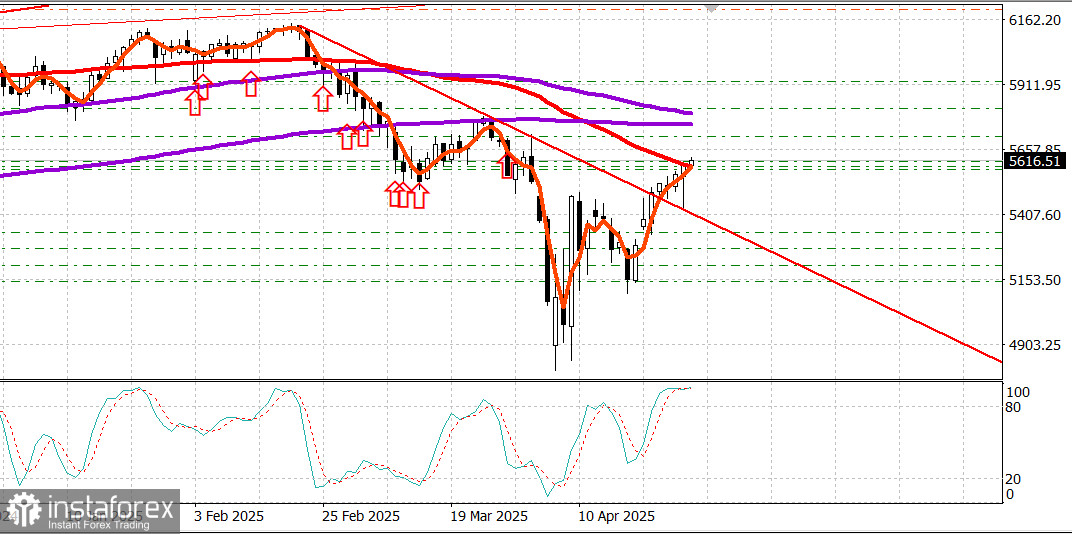
S&P 500
Overview for May 1
GDP contracts, but US market climbs
Key US indices on Friday: Dow +0.4%, NASDAQ -0.1%, S&P 500 +0.2%, S&P 500: 5,560, trading range: 5,150–5,800.
The US stock market initially pared some of its recent losses today. However, a "buy-the-dip" mentality remained intact, helping major indices close well above session lows.
The S&P 500, which had dropped 2.3% to its intraday low, ultimately closed 0.2% higher than its previous close. The initial decline was partly fueled by stagflation concerns following a disappointing Q1 GDP report, which showed a 0.3% contraction in growth coupled with a 3.7% rise in the GDP price deflator.
Additional pressure came from the ADP employment report showing a modest gain of just 62,000 private-sector jobs in April, which added to investor unease. Consumer spending worries also mounted after lackluster earnings from Starbucks (SBUX 80.05, -4.80, -5.7%) and Norwegian Cruise Line Holdings (NCLH 16.03, -1.35, -7.8%), raising fresh doubts about consumer demand.
The market's rebound from session lows coincided with the release of the March personal income and spending report at 10:00 a.m. ET, which showed flat month-over-month readings for both headline and core PCE price indices, offering modest relief on the inflation front.
Seven of the S&P 500's 11 sectors ended the day in positive territory, while four declined. Health care (+0.9%) and industrials (+0.8%) led the gains, while energy (-2.6%) and consumer discretionary (-1.1%) posted the steepest losses.
Overview of today's economic data:
The Mortgage Applications Index fell by 4.2% for the week, with refinancing applications down 4% and purchase applications also dropping 4%.
April's ADP Employment Change Report showed that the private sector added approximately 62,000 jobs (consensus estimate: 128,000). Meanwhile, pay for those remaining employed rose 4.5% year over year, reflecting a slight deceleration from March.
The Employment Cost Index for Q1 increased by 0.9%, in line with expectations for the three-month period ending March 2025. This followed a similar 0.9% rise in the three-month period ending December 2024. Wages grew by 0.8%, down from 1.0% in the previous quarter, while benefit costs jumped 1.2%, up from 0.8%. The key takeaway is that labor cost growth has cooled compared to the previous year. Compensation costs rose 3.6% over the 12 months ending in March 2025, versus 4.2% for the same period ending March 2024. The Q1 GDP report showed a real GDP contraction of 0.3% (consensus: +0.4%), with net exports subtracting a staggering 4.83 percentage points from growth — a sharp reversal from the 2.4% contribution in Q4.
The GDP price deflator surged by 3.7% (consensus: 3.1%) following a 2.3% increase in Q4. The main takeaway is that tariff measures were a clear contributor to this inflationary uptick, with imports soaring by 41.3%. On a separate note, consumer spending rose by 1.8%, a solid figure, but notably slower than the 4.0% pace seen in the previous quarter.
The Chicago Business Activity Index for April came in at 44.6, below the consensus estimate of 46.0 and down from the previous reading of 47.6. Personal income rose 0.5% month-over-month in March (consensus: 0.4%) following a revised 0.7% gain in February (previously reported at 0.8%). Personal spending climbed 0.7% in March (consensus: 0.4%) after a revised 0.5% increase in February (previously 0.4%).
The PCE price index was unchanged on the month (consensus: 0.0%), leaving it up 2.3% year-over-year versus a revised 2.7% in February (previously 2.5%). Core PCE prices also showed no change from the previous month (consensus: +0.1%), bringing the year-over-year figure down to 2.6% from a revised 3.0% in February (previously 2.8%). The key takeaway is that the data reveals accelerating consumer spending, likely as households braced for the implementation of new tariffs.
The housing component of PCE inflation offered a welcome sight — the year-over-year headline housing PCE index declined from 2.7% to 2.3%, while the core housing PCE index fell from 3.0% to 2.6%. Separately, pending home sales surged 6.1% in March (consensus: -0.2%) following a revised 2.1% increase in February (previously 2.0%).
Looking ahead to Thursday, markets will watch for:
8:30 ET: Weekly Initial Jobless Claims (consensus: 225,000; prior: 222,000) and Continuing Claims (prior: 1.841 million)
9:45 ET: Final April S&P US Manufacturing PMI (prior: 50.2)
10:00 ET: March Construction Spending (consensus: +0.3%; prior: +0.7%) and April ISM Manufacturing Index (consensus: 47.9; prior: 49.0)
10:30 ET: Weekly Natural Gas Inventories (prior: +88 billion cubic feet)
Conclusion: The US equity market continues to demonstrate resilience, with buyers stepping in on dips and conditions favoring further upside.
*El análisis de mercado publicado aquí tiene la finalidad de incrementar su conocimiento, más no darle instrucciones para realizar una operación.
¡Los informes analíticos de InstaSpot lo mantendrá bien informado de las tendencias del mercado! Al ser un cliente de InstaSpot, se le proporciona una gran cantidad de servicios gratuitos para una operación eficiente.


