




¡Nuestro equipo cuenta con más de 7,000,000 operadores!
Cada día, trabajamos juntos para mejorar las operaciones. Obtenemos grandes resultados y seguimos adelante.
El reconocimiento de millones de operadores en todo el mundo es el mejor agradecimiento a nuestro trabajo! ¡Usted hizo su elección y haremos todo lo que esté a nuestro alcance para satisfacer sus expectativas!
¡Juntos somos un gran equipo!
InstaSpot. ¡Orgulloso de trabajar para usted!





¡Actor, 6 veces ganador del torneo UFC y un verdadero héroe!
El hombre que se hizo a sí mismo. El hombre que sigue nuestro camino.
El secreto detrás del éxito de Taktarov es el constante movimiento hacia el objetivo.
¡Revele todo los lados de su talento!
Descubra, intente, fracase, ¡pero nunca se rinda!
InstaSpot. ¡Su historia de éxito comienza aquí!
Markets follow a natural cycle: trends give way to consolidations, and consolidations lead to new trends.
Before the sell-off on February 23–24, the S&P 500 had gone 35 consecutive trading sessions without a 1% decline, marking its longest streak since December. This has happened only three times in 2024. Since the November presidential election, the broad stock index had been stuck in a tight 4% trading range—the narrowest since 2017. A breakout was inevitable, and bulls fled the battlefield.
S&P 500's performance
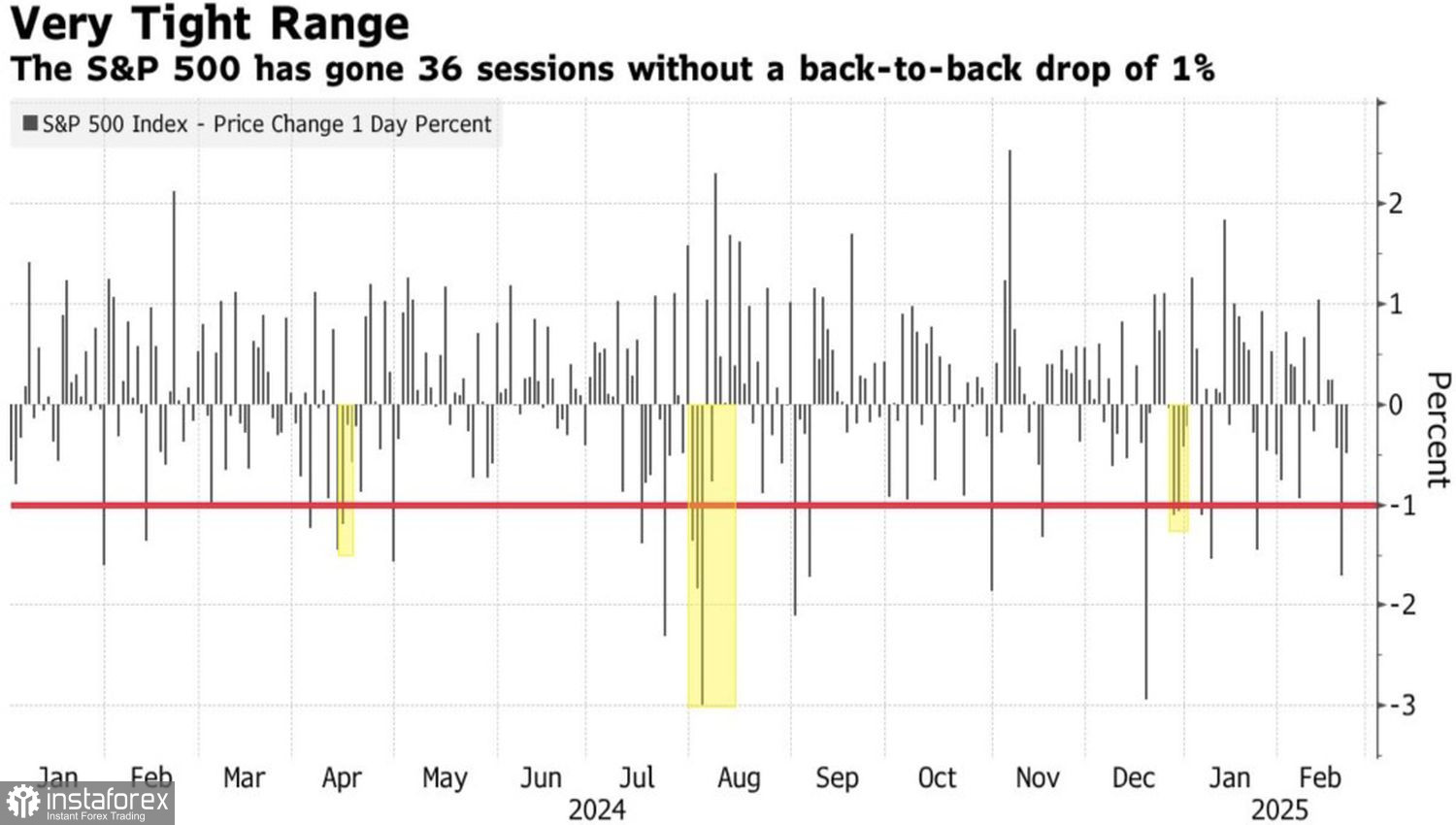
The market was falling ahead of NVIDIA's earnings report, despite expectations that the company's earnings would exceed forecasts. Strong economic data, corporate earnings which are twice higher than Wall Street estimates, and even a bullish shift from Morgan Stanley—all failed to support US stocks.
Even Morgan Stanley, which was previously bearish, now claims that the US stock market's underperformance compared to Europe and other regions won't last long. The S&P 500, they argue, remains the highest-quality index with the best profit potential.
According to Principal Asset Management, since 1965, 10%+ corrections in the S&P 500 have primarily been caused by either a hawkish Federal Reserve's policy shift, or prolonged high interest rates. Something similar is happening now, as derivatives markets don't expect rate cuts before June. However, the situation differs significantly—no one is even hinting at a hard landing.
S&P 500 and European stock index performance
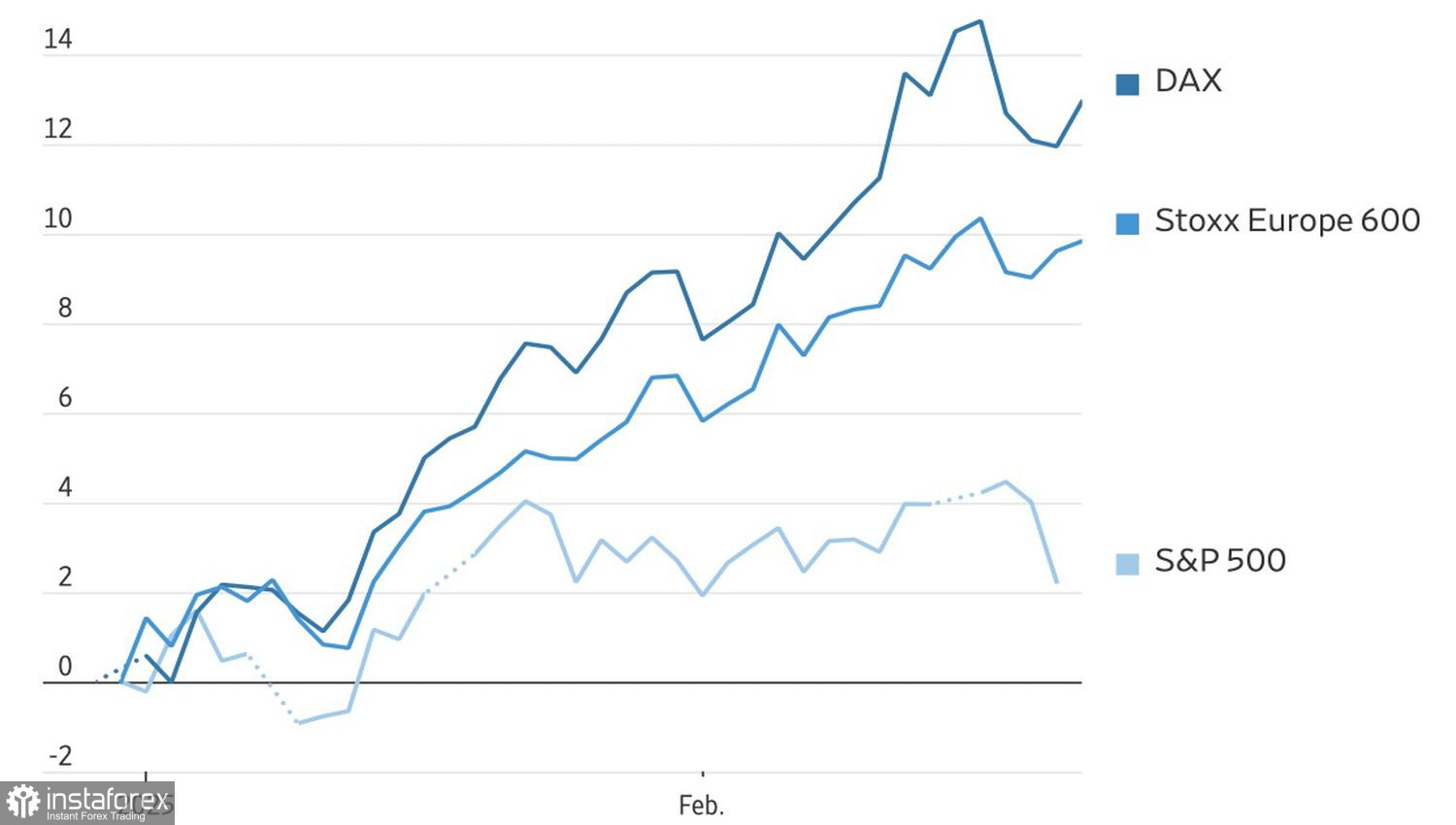
The key drivers of the S&P 500 pullback include Donald Trump's confirmation that tariffs on Mexico and Canada will proceed as planned; the victory of Germany's Christian Democratic Union (CDU) in parliamentary elections; and investors' belief in an imminent resolution of the conflict in Ukraine. For a long time, the S&P 500 rallied as markets grew indifferent to Trump's tariff threats, which could slow the US economy.
However, the clock is ticking:
March 1: 25% tariffs on Mexico and Canada could take effect.
March 12: Steel and aluminum duties—to which the EU has promised retaliation.
April 1: Reciprocal tariffs with China are set to roll out.
Meanwhile, 10% duties on Chinese imports remain in place.
The CDU's victory under Friedrich Merz sent European stock indices, led by the DAX 40, soaring. This accelerated capital outflows from the US to Europe, reinforcing the narrative of waning US market dominance and diminished faith in American tech giants.
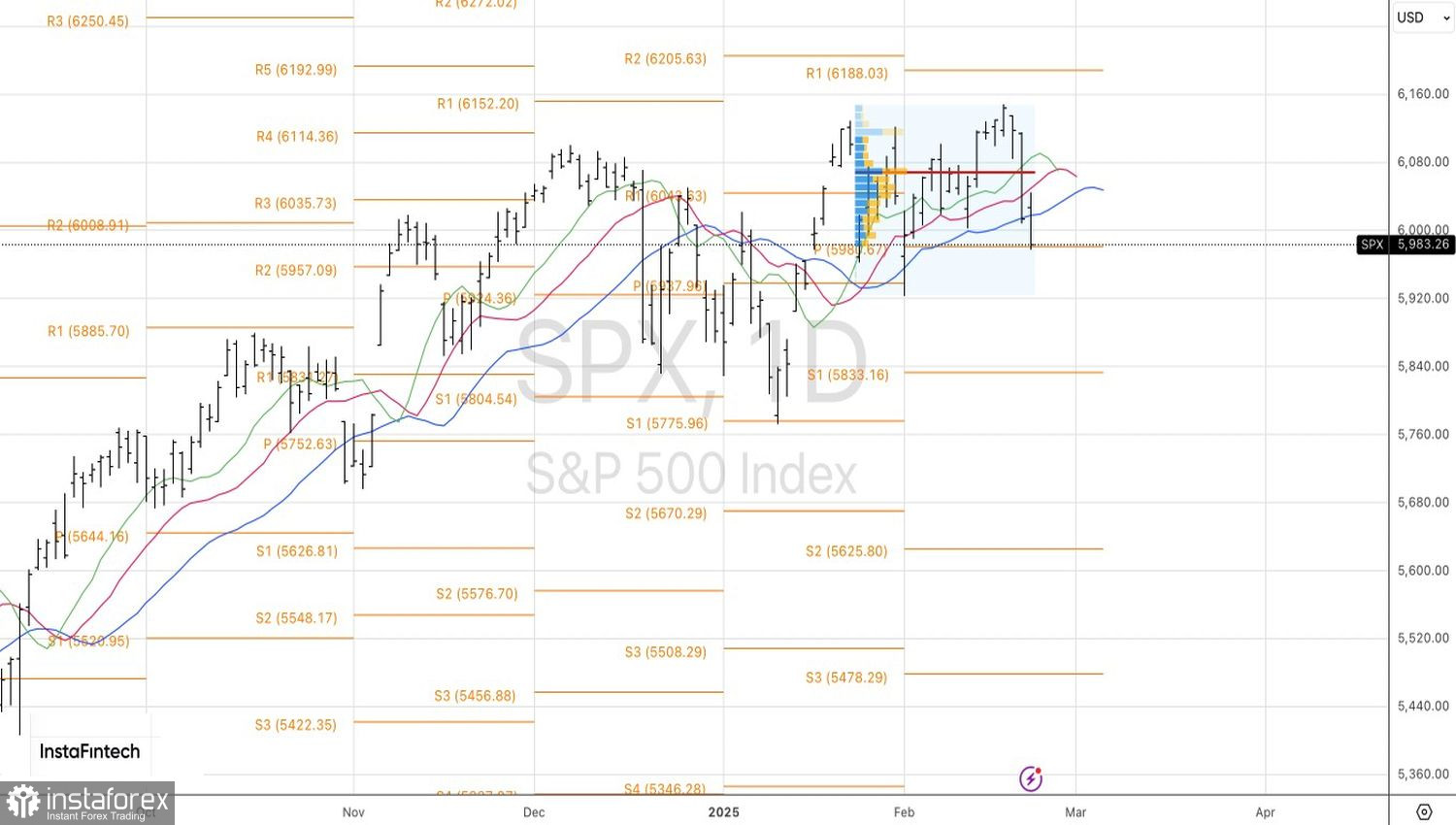
Technical outlook for S&P 500
On the daily chart, the S&P 500 continues to form an expanding wedge reversal pattern. For confirmation, the index needs to break below 5,925. Once this occurs, a short-term rebound is expected, providing an opportunity to increase short positions from 6,083.
*El análisis de mercado publicado aquí tiene la finalidad de incrementar su conocimiento, más no darle instrucciones para realizar una operación.
¡Los informes analíticos de InstaSpot lo mantendrá bien informado de las tendencias del mercado! Al ser un cliente de InstaSpot, se le proporciona una gran cantidad de servicios gratuitos para una operación eficiente.


