




Naš tim čini više od 7.000.000 trgovaca!
Svakog dana zajedno radimo na unapređenju trgovanja. Ostvarujemo vrhunske rezultate i krećemo se samo napred.
Priznatost od strane miliona trgovaca širom sveta najbolje pokazuje koliko se naš rad ceni! Napravili ste svoj izbor i mi ćemo učiniti sve što je neophodno da zadovoljimo vaša očekivanja!
Zajedno činimo sjajan tim!
InstaSpot. Sa ponosom radi za Vas!





Glumac, šampion UFC turnira i pravi heroj!
Čovek koji je ostvario sebe. Čovek koji hoda uz nas.
Tajna uspeha Taktarova jeste stalno kretanje ka svom cilju.
Otkrijte sve strane svog talenta!
Istražuj, pokušaj, padni - ali se nikad ne zaustavljaj!
InstaSpot. Priča Vašeg uspeha započinje ovde!

New Zealand's GDP for Q4 rose by just 0.2% quarter-on-quarter, below both market expectations and those of the Reserve Bank of New Zealand (RBNZ). ANZ Bank forecasts GDP growth of 0.7% year-on-year in 2026, but further deterioration is possible if rising energy prices are compounded by problems with fertilizer supply and increasing fertilizer costs—which now appears highly likely. For New Zealand's agricultural sector, this would be a very significant blow, affecting not only production levels but also exports.
The RBNZ will hold its next meeting on April 8, and it is already clear that positive outcomes are unlikely. Whatever the bank does with its interest rate, it cannot stop rising oil prices or short-term inflation. Nor can it prevent the associated impact on economic growth. Changes in monetary policy will have only a limited effect on these short-term developments.
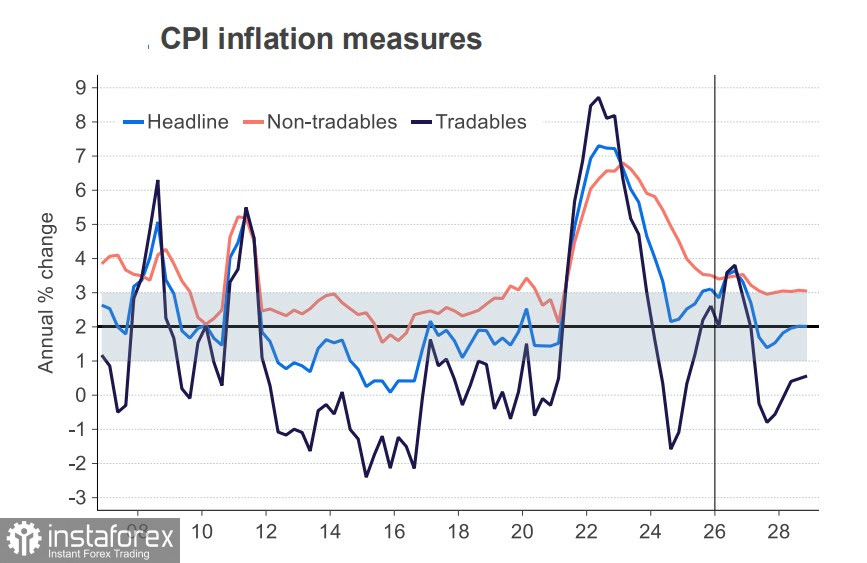
As fuel prices continue to rise, inflation forecasts are also increasing. BNZ expects CPI to reach 3.0% in the first quarter and 4.2% in the second quarter of 2026. Beyond that, everything will depend on the extent of the damage in the Gulf and disruptions in energy logistics, which are currently impossible to predict.
There is very little data expected this week: on Friday, only the ANZ-RM consumer confidence index is due for release. Until recently, there had been an upward trend, but it is likely to decline in March, while consumer inflation expectations, on the contrary, are expected to rise. High fuel prices reduce household purchasing power and business profitability, meaning GDP forecasts are likely to be revised downward in the near future. Fitch Ratings, while maintaining New Zealand's credit rating at AA+, has downgraded the outlook from stable to negative. This is the first warning sign, and others will likely follow.
The net short position on the NZD decreased by 0.9 billion over the reporting week to -1.35 billion, but positioning remains bearish. The estimated price, amid a temporary easing of tensions following statements by Trump, is attempting to move upward.
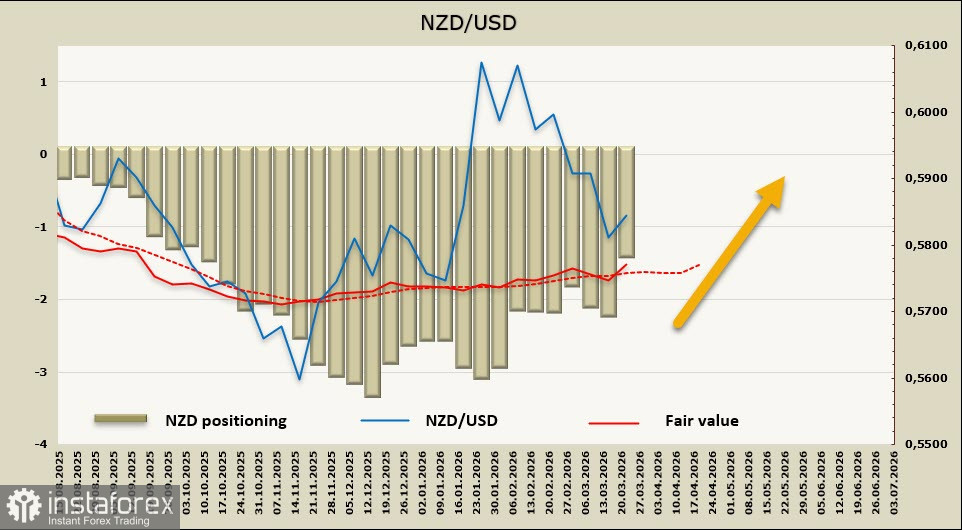
For NZD/USD, two main scenarios are possible, and it is not possible to predict which one will materialize. In the case of further escalation in the Gulf, the kiwi will inevitably decline toward 1.5533, as the level of economic risk will increase, and even rate hikes will not stop the decline. If the conflict ends and the consequences are reassessed, growth may resume—provided the impact on GDP is not severe enough to prevent the RBNZ from raising rates. In this case, the nearest target will be 0.5887, followed by further growth toward 0.6086.
*Analiza tržišta koja se ovde nalazi namenjena je boljem razumevanju tržišta i ne pruža instrukcije za vršenje trgovanja.
Uz InstaSpot-ove analitičke preglede uvek ćete biti u toku sa tržišnim trendovima! Klijentima InstaSpot-a su dostupni mnogobrojni besplatni servisi za uspešno trgovanje.


