
The global financial system has run into harsh reality. Expectations of imminent monetary easing were premature. Global regulators are moving into a new round of tightening. The data are categorical. Among 33 leading central banks worldwide, 15 have raised rates over the past six months—exactly 45% of key policymakers. That is the highest reading since 2023. The current dynamics bring markets close to the critical levels seen in 2011 and 2018.
Back then the share of tightening central banks reached 55%. The surge in monetary rigidity has deep roots. In 2022 nearly 95% of countries raised rates in sync—a forced reaction to massive pandemic stimulus that flooded markets with cheap liquidity and sparked a global price surge. Traders hoped that cycle was final. Yet by 2026 the situation had deteriorated again. Fifty-four central banks have officially resumed hiking borrowing costs, and an especially dangerous tilt emerged over the past three months.
Mirror-corridor effect
The count of rate hike decisions is high and greatly exceeds cuts. Central banks are trapped in the vise of imported inflation. Cutting rates now will be capitulation in the face of rising prices. Further hikes risk crushing economic growth. Regulators chose the second scenario. The Federal Reserve operates under unprecedented pressure. The September quarter-point increase was the first in three years. But the real reason behind that step lies not in classic economic models. Ahead of the September meeting, futures markets had priced a hike with better than 90% probability.
The macro picture, however, allowed for a pause. Yet the Fed found itself hostage to market expectations. Declining to deliver a move markets had already priced in would have triggered a broad asset sell-off and a spike in volatility. The regulator had to yield to the crowd. Economists have aptly called this phenomenon the "mirror-corridor effect." The term was introduced by Fed Chair Kevin Warsh. The effect is destructive for central bank independence: instead of shaping expectations, the regulator merely confirms them. The central bank fears disappointing traders. This is a classic behavioral trap that has become the norm in recent years.
The macro picture, however, allowed for a pause. Yet the Fed found itself hostage to market expectations. Declining to deliver a move markets had already priced in would have triggered a broad asset sell-off and a spike in volatility. The regulator had to yield to the crowd. Economists have aptly called this phenomenon the "mirror-corridor effect." The term was introduced by Fed Chair Kevin Warsh. The effect is destructive for central bank independence: instead of shaping expectations, the regulator merely confirms them. The central bank fears disappointing traders. This is a classic behavioral trap that has become the norm in recent years.
Warsh himself defended the hike on the grounds that US inflation remains too high. It has stayed unacceptably elevated for too long. Therefore, the September decision was necessary to speed the return to price stability goals. The recent Beige Book dispelled remaining dovish illusions. It showed that most committee participants openly target another rate increase before the end of 2026. At the same time officials tie the precise timing of steps to incoming data. Yet market quotes already live in another reality—traders price in three more hikes by mid-next year. The tightening spiral is spinning faster.
Oil fuse—why rates are powerless
The main paradox of the current crisis lies in the nature of inflation. Interest rates are a tool to dampen demand. But today's inflation is plainly energy-driven, with the war with Iran and a military premium in oil prices as the main drivers. A central bank cannot print barrels of crude. The Fed's rate cannot alter the vulnerability of tankers in the Strait of Hormuz. Yet the mandate forces the regulator to fight inflation, so it must suppress the economy with rates. September's releases exposed the scale of the problem.
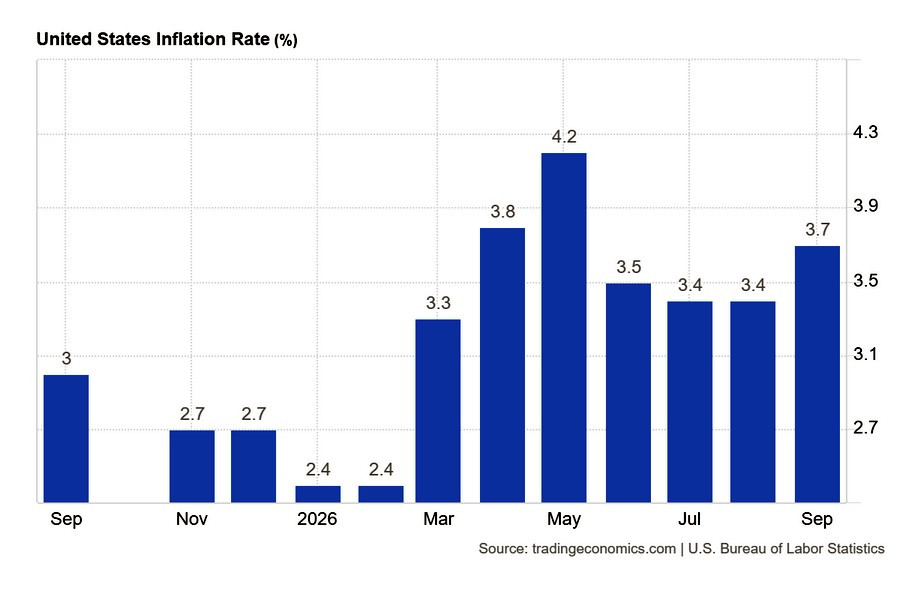
US consumer inflation accelerated to 3.7% from 3.4% in August (chart 1). The energy price index jumped 5.2% in a single month. Gasoline prices at US pumps rose 9.1% month-on-month. Meanwhile, core inflation (excluding energy and food) settled at 2.6%.
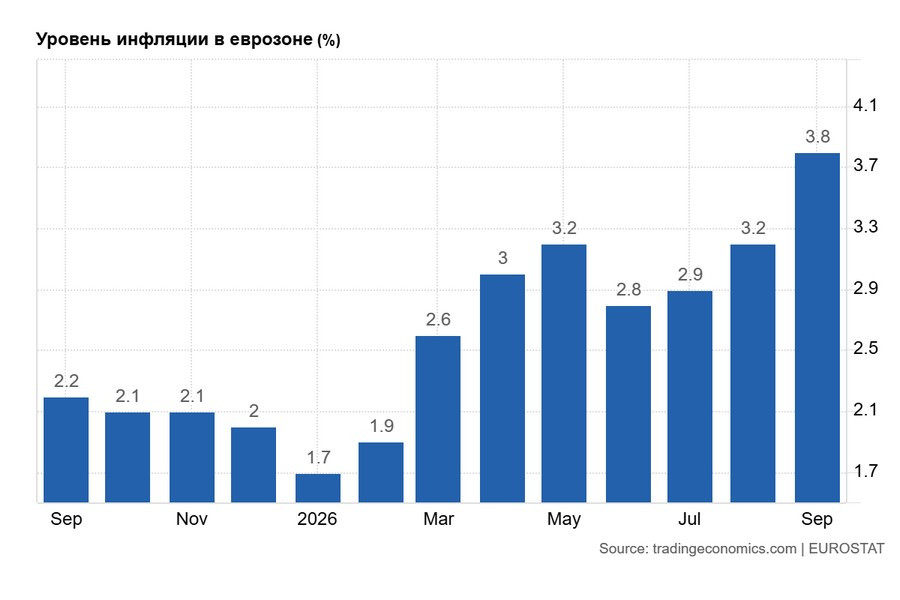
The euro area is suffering even more. The annual pace of consumer price growth there surged to 3.8% from 3.2% a month earlier (chart 2). The driver is the same: energy costs for European consumers and industry jumped 18.9%. Services inflation stood at a modest 3.2%. Clearly Europe is paying a huge geopolitical tax.
Price of Hormuz
As for the United States, the military confrontation in the Middle East is being rapidly monetized into direct budgetary losses. Bloomberg Economics estimates the cost of sustaining the second phase of a maritime blockade of Iran at up to $42m per day for the US. These figures add up to astronomical sums: direct operating costs to sustain the current phase of the blockade have reached $2bn. Adding the initial naval buildup in the region, Operation Epic Fury, and the costs of the first blockade push the Pentagon's cumulative bill to $7.1bn.
Such colossal spending is a heavy burden on the US budget. The Treasury must borrow ever more on the open market. The surge in sovereign issuance coincides with peak interest rates. The government pays record yields on its bonds. This is a classic pro-inflationary factor that fully offsets the Fed's efforts to tighten money. A prolonged period of high rates hits the banking sector and AI investments, which are most sensitive to large funding costs.
Major financial institutions sit on huge portfolios of government bonds bought in the low rate era. Rising yields generate enormous unrealized losses. At the same time, banks are overloaded with investments in AI-related projects. That segment has been inflated toward bubble-like proportions. If AI startups do not show quick profitability, credit risk will blow up lenders' balance sheets. The US equity market is already reacting to these risks; Wall Street is registering the first gusts of a looming correction.
In the longer term, consider the construction sector. Recall how severely China's property crisis hit its economy. The sector had been fueled by aggressive borrowing, with apartments sold as foundations were excavated. After the enforced "three red lines" policy the house of cards collapsed and produced a multiyear systemic crisis. The result is known: a wave of defaults, bankruptcies, and liquidations of major developers led by China Evergrande and Country Garden. Mass project stoppages sparked buyer anger and mortgage boycotts, leaving vast unused residential blocks (photo).
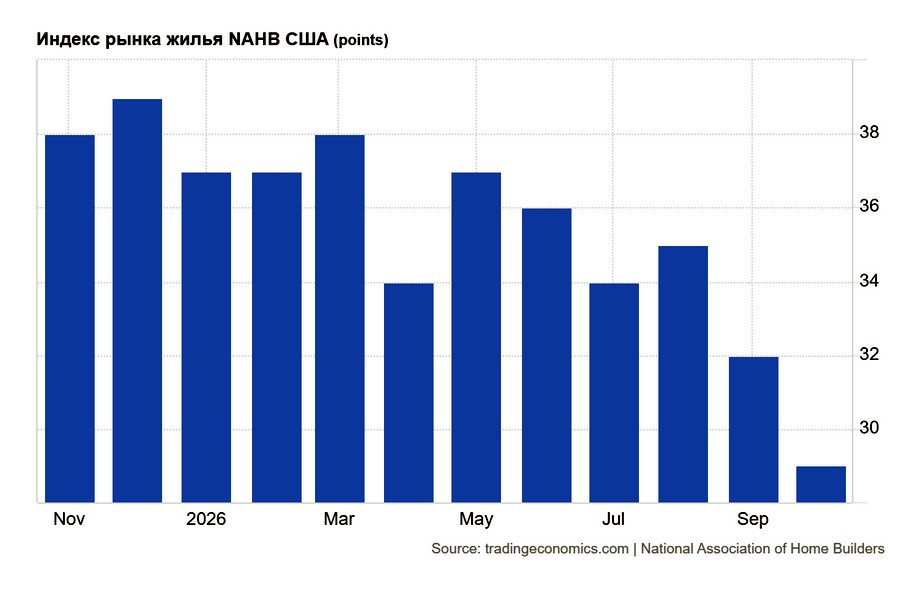
The former engine of China's GDP became a source of toxic risks. The government had to buy assets and undertake a painful industry restructuring. The US housing sector is not as dire, but the NAHB/Wells Fargo Housing Market Index (HMI) continues to fall in October (chart 3). US homebuilder confidence dropped to 29 points from 32 a month earlier. Readings below 50 signal outright pessimism. This is a catastrophic low not seen since June 2012. For comparison, in October 2025 the index was 37 points.
All internal components of the index are posting record lows:
- Current sales index—33 points (14-year low)
- Six-month sales expectations—32 points (lowest since November 2022)
- Traffic of prospective buyers index – 18 points
US homebuilders are hit by a perfect storm. The US homebuilding sector has run into a perfect storm. The Middle East conflict has pushed energy prices higher, and expensive energy has lifted the cost of basic construction materials. Tough immigration policies have produced an acute labor shortage. New import tariffs have raised overheads. At the same time, the Fed is keeping mortgage rates at sky-high levels. Trying to save sales, developers are taking extreme measures: in October 43% of builders formally cut prices on projects. That is the highest share of discounting developers in the 2020–2026 period. The average size of cuts has held at about 6% for the seventh month in a row.

But straight discounts are clearly not enough. Sixty-five percent of respondents to the National Association of Home Builders survey admitted they use hidden incentives—they pay insurance, subsidize part of mortgage rates, or offer free finishing. The share of companies using such measures has exceeded 60% for 19 months running. NAHB chief economist Robert Dietz issues a bleak verdict: the housing sector is crushed by supply constraints and an affordability crisis. Buyers are exiting the market under the pressure of high mortgage rates, expensive materials, and plunging consumer confidence. Client activity has collapsed to April 2012 lows, and the sector—more than 140,000 specialized firms—is sliding into recession.
Shifting components of demand...
Despite internal problems and rising deficits, foreign demand for US Treasuries has not fallen. But the structure of that demand has undergone tectonic change. Who is actually funding America? The answer lies in a handful of jurisdictions. Overall demand for Treasuries masks a massive reshuffle among the largest buyers. Traditional donors to the US debt are stepping back. The UK, France, Norway, and Japan have sharply reduced purchases versus last year, and China continues to run down dollar reserves.
Major sellers also include Canada, the UAE, the Netherlands, and Saudi Arabia. The lost flows have been fully offset by new leaders pouring money into American markets. Capital concentration has reached alarming levels: five jurisdictions account for 79.1% ($751.6bn) of all country-level net inflows into US paper:
A year earlier, the top five also covered a comparable 77.6% share, but the composition was different: the UK, Cayman, France, Norway, and Ireland. The level of concentration is unchanged; the internal distribution has shifted. Germany stands out: German purchases of US debt rose 13.3-fold versus the same period last year. Ireland boosted inflows 2.5x, and Singapore 2.7x.
What do these numbers mean? They point to a large-scale exodus of European industrial and financial capital. Germany's economy is losing appeal amid expensive gas and stagnation, and capital is fleeing across the Atlantic to high US yields. London remains the largest channel for buying US Treasuries, yet it has become a significant net seller of US equities—a classic sign of de-risking. Investors are liquidating Wall Street equity positions and rotating into safe US government bonds.

France—the weakest link?
While capital flees to the dollar, Europe is sliding into its own crisis. The Middle East conflict has tightened natural gas shortages; European energy prices are climbing again, fueling inflationary pressure across the euro area and tying regulators' hands. France has become the weakest link. The Fifth Republic's economy is highly vulnerable: GDP growth is minimal, the budget deficit has ballooned to dangerous levels, and sovereign yields are rising rapidly. In such conditions a new energy shock hits Paris far harder than its neighbors.
Rising borrowing costs automatically increase the budget's interest burden. The government urgently needs fiscal consolidation and spending cuts, but society responds with mass street protests, leaving authorities cornered. Thierry Weiseman, Macquarie Group's global rates and FX strategist, warns of political risk: the probability of populists gaining power in France is increasing, whether on the far right or the far left.
Any non systemic cabinet could make budget correction unworkable. Political campaigns are only beginning, and rhetoric about massive debt, potential default, and radical budget shifts will intensify. These political battles will directly weigh on the euro in coming months. There are simply no fundamental reasons for a euro rally.
Can the world escape the expensive dollar?
The high cost of borrowing in the US has a side effect. Sovereign issuers and corporations in other countries physically cannot afford to issue dollar debt. Competition for capital has become too fierce. Stephanie von Friedeburg, head of Citi's sovereign group, notes an important trend: governments around the world are moving away from the dollar when issuing new debt. Servicing dollar obligations at benchmark yields above 5.30% bankrupts national budgets. Sovereign and corporate issuers are seeking refuge in regional markets. They are diversifying funding sources by issuing debt in local currencies.
Interest in borrowing in Chinese yuan, Australian dollar, Hong Kong dollar, and Singapore dollar has surged. It is cheaper and safer from an FX risk perspective, especially for emerging markets. Yields in developed markets are hitting record highs. Huge volumes of private capital are heading to the US to finance AI infrastructure. Emerging economies are simply crowded out of the global capital market: they lack fiscal buffers and cannot compete for investors' money. The burden of servicing old debt presses on their budgets.
Despite this forced dedollarization of debt portfolios, von Friedeburg draws one clear conclusion: the US dollar will remain the world's dominant reserve currency for the foreseeable future. No other financial market can match the US market's depth and liquidity. Issuers may borrow in yuan out of desperation, but they will keep reserves in Treasuries.
Dollar: the safest high yield option in turbulent markets
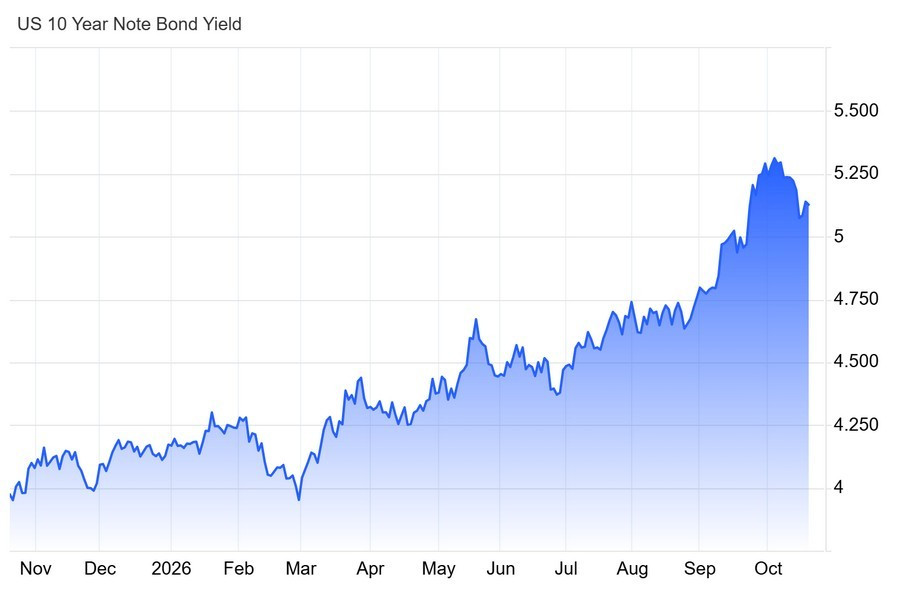
Against the backdrop of geopolitical turbulence, 10 year US Treasury yields have confidently risen above 5.30% (chart 4). That gives the US dollar a gigantic yield advantage over rivals. US denominated assets look far more attractive than European paper, and that spread supports a steady inflow of global capital into the United States. The Middle East conflict remains the principal source of fear. Oil supply disruption risks keep energy price inflation elevated. In such conditions the greenback's appeal as the ultimate safe haven currency—and as the petrodollar—is secure.
Currency strategists see the outlook for EUR/USD differently.
On Wall Street, analysts have systematically underestimated the dollar for nine months. In a survey conducted September 30–October 2, nearly 70 strategists stubbornly reiterated bearish views on the main currency pair, expecting the euro to strengthen to 1.14 in a month and to rise roughly 3% in three to six months; the one year median call was about 1.15.
Jayanti Bharadwaj, head of FX strategy at TD Securities, acknowledges the dollar may remain strong in the near term but puts a firm bet on dollar weakness over the six to 12 month horizon.
Kenneth Brooks, head of research at Societe Generale, argues the dollar will only decline after a US economic collapse: in his logic, high Fed rates must trigger a recession. Yet the US economy is still growing much faster than the 2.2% annualized pace many forecast.
Paul Mackel, global head of FX research at HSBC—one of the few who correctly called the dollar's strength this year—is confident the currency will keep rising while markets believe in Fed toughness. He uses a trader's metaphor: the US dollar again looks like "the cleanest dirty shirt" in the basket of global currencies. He expects the greenback to remain strong at least through the first half of 2027 and strongly criticizes the consensus view of an inevitable dollar collapse. In his view many analysts rely on outdated concepts, ignoring real rate spreads and the extraordinary resilience of the US economy.
UBS G10 FX research head Shahab Jalinos backs the view. Decades long bias against the dollar persists in the market. Valuation models repeatedly show the greenback as overvalued and priced too expensively. But those academic models ignore the flow of real money. Jalinos explains the mechanics: foreign capital continuously flows into the United States. The US equity market is deep and liquid. Global investor appetite for US debt does not wane. All this generates colossal physical demand for dollars, breaking any trading models based on purchasing power parity.
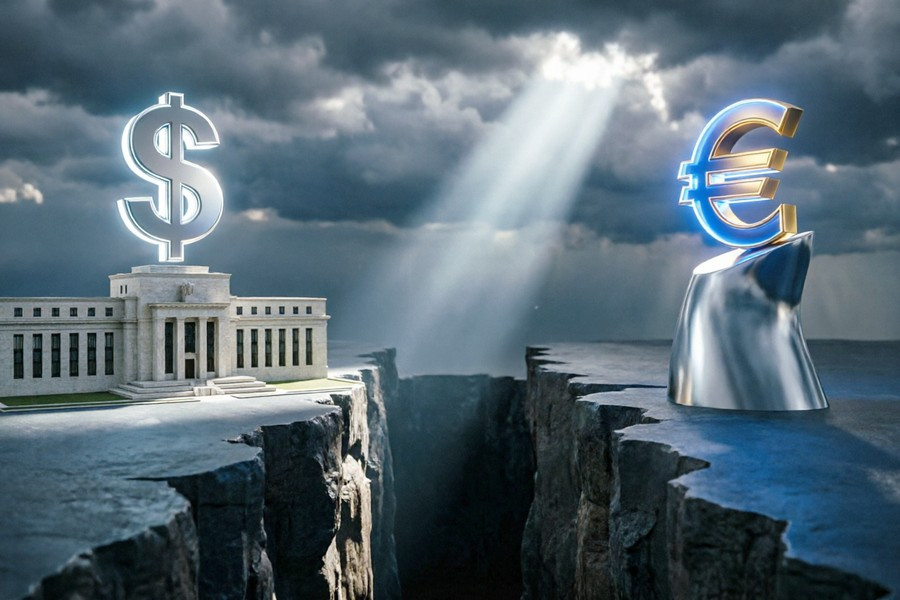
Will central bank hawks arrive in October?
September's inflation prints forced Wall Street to capitulate to the facts, and major investment banks promptly rewrote their forecasts. Most market participants now expect the Fed to deliver another 25 bp rate hike in December. UBS economist Andrew Dubinsky highlights a dangerous mix of factors. Accelerating goods inflation has coincided with persistently high services inflation. This toxic combination virtually guarantees the Fed will keep rates at peak levels far longer than markets had expected. UBS also identifies three main risks that keep the Fed in a hawkish stance:
1. An investment boom in artificial intelligence is pushing up demand.
2. The Middle East crisis is disrupting logistics and driving oil prices higher.
3. Trade policy uncertainty and import tariffs are raising goods' production costs.
A prolonged tightening cycle is the only way to anchor inflation expectations among firms and households. As long as inflation remains near 3% because of repeated shocks, easing is off the table. The new reality is that borrowers, corporations, and ordinary consumers face a long era of high debt service costs. The Fed is considering further tightening, and other central banks are refraining from relief cuts. Thus, the fundamental picture for EUR/USD shows the euro under powerful triple pressure:
· hawkish US monetary policy;
· a mounting fiscal political crisis in France that drags down the eurozone sovereign market;
· Middle East geopolitical risks that hit energy dependent Europe.
The ECB, for its part, has little room to maneuver. Frankfurt fears destabilizing peripheral bond markets. The technical picture for the pair is clear: the bearish structure remains intact. A global downtrend dominates, and any upward correction is temporary. If local supports break, the euro is set for a further sharp decline. If Europe acts more cautiously than the US, the interest rate differential will widen further in the dollar's favor.
Therefore, the key FX events in the final week of the month will be the Fed meeting on October 27–28 and the ECB meeting on October 28–29.
InstaSpot analytical reviews will make you fully aware of market trends! Being an InstaSpot client, you are provided with a large number of free services for efficient trading.