




ہمارے ٹیم میں 7000000 سے ذائد تاجران شامل ہیں
ہم تجارت کی بہتری کے لئے ہر روز اکھٹے کام کرتے ہیں اور بہترین نتائج حاصل کرتے ہوئے آگے کی جانب بڑھتے ہیں
دُنیا بھر سے سے لاکھوں ہمارے بہترین کام کو سند عطاء کرتے ہیں آپ اپنا انتحاب کریں باقی ہم آپ کی توقعات پر پورا اترنے کے لئے اپنی بہترین کوشش کریں گے
ہم مل کر ایک بہترین ٹیم بناتے ہیں
انسٹا فاریکس آپ سے کام کرتے ہوئے فخر محسوس کرتا ہے





ایکٹر - یو سی ایف 6 ٹورنامنٹ چیمپین اور واقعی ہیرو
ایک فرد کے جس نے اپنا آپ منوایا ہے وہ فرد کہ جو ہماری راہ پر چلا ہے.
ٹکٹا روو کی کامیابی کا راز یہ ہے کہ وہ اپنے اہداف کی جانب مسلسل بڑھتا رہتا ہے
اپنے ہنر یا ٹیلنٹ کے تمام پہلو آشکار کررہے ہیں
پہچانیں ، کوشش کریں ، ناکام ہوں لیکن کبھی نہ رُکیں
انسٹا فاریکس آپ کی کامیابی کی کہاں یہاں سے شروع ہوتی ہے

Gold is trading today near $4,507 per ounce—up 0.3% after yesterday's close, which saw a 1% increase, despite the metal dropping to a two-month low during the same session. This intraday volatility accurately reflects the current state of the market: every new headline about Iran moves gold by several percentage points in either direction.
Yesterday's rebound was triggered by reports of a preliminary agreement between the US and Iran to extend the ceasefire for 60 days, along with the start of negotiations regarding Tehran's nuclear program. The agreement is still awaiting final approval from Trump, and the market is viewing it cautiously—which is reasonable, given how many times similar news has already unfolded in the opposite direction.
It's worth noting that the mechanics of the Iranian settlement's influence on gold are not straightforward. Seemingly, a decrease in geopolitical tension should reduce demand for a safe-haven asset. However, it is the war that created the main pressure on the metal through another channel: the closure of the Strait of Hormuz caused an inflationary shock that pushed central banks to raise rates, and high rates are the main enemy of non-yielding gold. The reopening of the Strait would reduce inflation and ease pressure on rates—and this is what will ultimately support the metal.
Data released yesterday confirms the urgency of the situation. Consumer spending in the US rose slightly in April; however, annual inflation accelerated to its highest level since 2023. US GDP in the first quarter increased by 1.6% year-on-year—slower than preliminary estimates. The economy is slowing precisely when inflation is picking up again—a classic stagflation combination that leaves the Fed with no good options.
Since late February, gold has lost about 15% and is trading in a narrow sideways range. Silver is up 0.4% today to $75.96. Platinum and palladium have remained virtually unchanged.
The further direction of gold will be entirely determined by the Middle Eastern issue, which needs to be closely monitored.
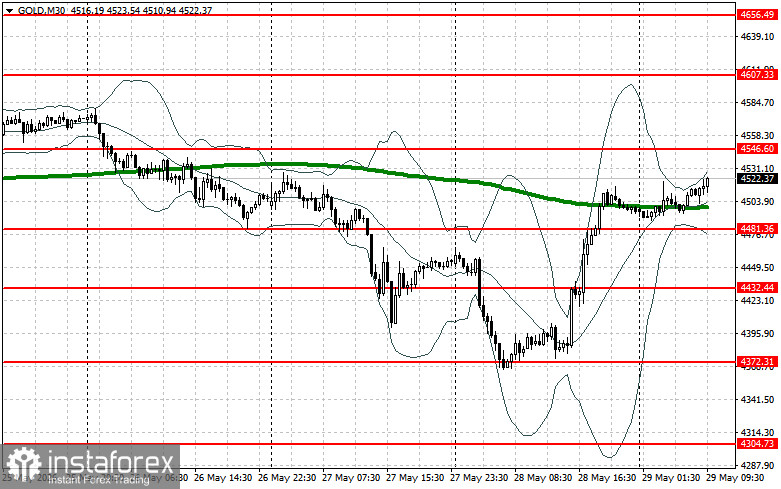
As for the current technical picture of gold, buyers need to overcome the nearest resistance of $4,546. This will allow targeting $4,607, above which it will be quite problematic to break through. The most distant target will be around $4,656. In case gold falls, bears will try to take control of $4,481. If they succeed, breaking through the range will deal a serious blow to the bulls' positions and drive gold down to a low of $4,432 with the prospect of reaching $4,372.
*تعینات کیا مراد ہے مارکیٹ کے تجزیات یہاں ارسال کیے جاتے ہیں جس کا مقصد آپ کی بیداری بڑھانا ہے، لیکن تجارت کرنے کے لئے ہدایات دینا نہیں.
InstaSpot analytical reviews will make you fully aware of market trends! Being an InstaSpot client, you are provided with a large number of free services for efficient trading.


