




Kumpulan kami mempunyai lebih daripada 7,000,000 pedagang!
Setiap hari kami bekerjasama untuk meningkatkan perdagangan. Kami mendapat keputusan yang tinggi dan bergerak ke hadapan.
Pengiktirafan oleh berjuta-juta pedagang di seluruh dunia adalah penghargaan terbaik untuk kerja kami! Anda membuat pilihan anda dan kami akan melakukan segalanya yang diperlukan untuk memenuhi jangkaan anda!
Kami adalah kumpulan yang terbaik bersama!
InstaSpot. Berbangga bekerja untuk anda!





Pelakon, juara kejohanan UFC 6 dan seorang wira sebenar!
Lelaki yang membuat dirinya sendiri. Lelaki yang mengikut cara kami.
Rahsia di sebalik kejayaan Taktarov adalah pergerakan berterusan ke arah matlamat.
Dedahkan semua segi bakat anda!
Cari, cuba, gagal - tetapi tidak pernah berhenti!
InstaSpot. Kisah kejayaan anda bermula di sini!

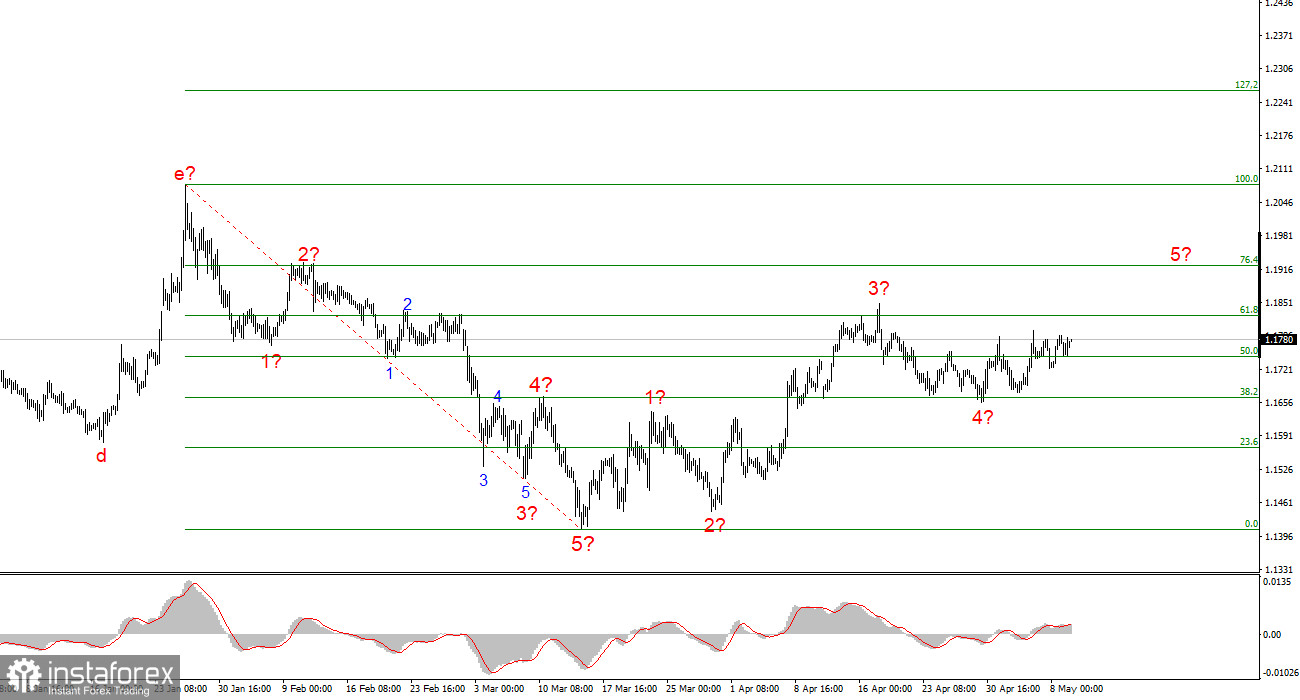
The wave pattern on the 4-hour chart for EUR/USD has changed somewhat. There is still no indication of a cancellation of the bullish trend segment (shown in the lower chart), which began in January of last year, but the trend structure now appears highly ambiguous. In such situations, I always recommend switching to a lower timeframe (upper chart) and focusing on the simplest and smallest wave structures in order to make a short-term forecast, which is sufficient for opening trades. Wave structures can become extremely complex and allow for many possible scenarios. The easiest approach is to trade standard "five-three" patterns.
In the chart above, I can identify a classic five-wave impulsive structure with an extended third wave. After the completion of this structure, a corrective sequence of at least three waves began to form. However, this structure is currently taking on an impulsive five-wave appearance, which is entirely acceptable. Therefore, I now expect the formation of wave 5 with targets near the 1.1900 level. After that, a correction is expected, followed by another upward move.
The EUR/USD pair showed no net change on Monday compared with Friday's close. Nevertheless, market activity was relatively high today. The reason was that the new week began with two geopolitical developments that could hardly be considered positive for the euro.
First, another round of negotiations between Tehran and Washington ended in failure, as the sides rejected each other's proposals for ending the war. Second, over the weekend there were new UAE strikes against Iran, as well as new attacks by U.S. destroyers on Iranian ports and vessels. As in previous instances last week, these attacks appeared rather unusual. It seems that both sides are merely demonstrating strength and unwillingness to compromise. In other words, none of these attacks has resulted in a genuine escalation of the conflict. The sides exchange strikes and then announce that negotiations are continuing.
As a result, the week began with a decline in the pair amid rising geopolitical tensions, but by the morning EUR/USD had already started to recover, and during the U.S. session the pair fully erased its losses, since no actual escalation occurred.
What else was noteworthy on Monday? Essentially, nothing significant. The Eurozone economic calendar was empty, but at the same time the market is gradually beginning to prepare for the next ECB meeting, where interest rates could be raised in response to rising inflation. Since the geopolitical conflict still appears to be following a path toward de-escalation, the ECB is preparing for tighter policy, and the U.S. economy continues to deliver unimpressive results, I believe demand for the euro will continue to grow.
On Friday, the market completely ignored the important Nonfarm Payrolls and unemployment reports, which is itself a signal — the market remains inclined toward further euro purchases.
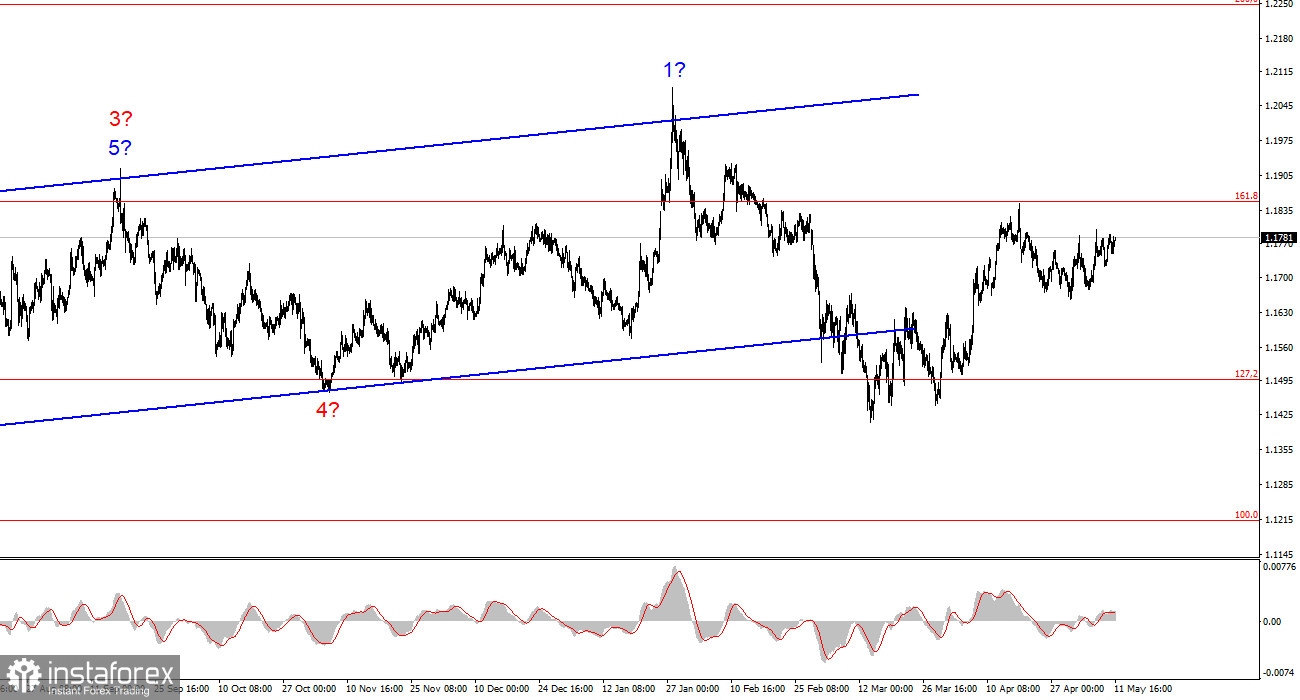
Based on the EUR/USD analysis, I conclude that the pair remains within a bullish trend segment (lower chart), while in the short term it remains within a corrective structure. The corrective wave sequence appears relatively complete, though it may still develop into a more complex and prolonged formation. The geopolitical backdrop in the Middle East continues to improve, which is the main reason behind buyer optimism. I expect further growth in the instrument with targets near the 1.1900 level.
On the lower timeframe, the entire bullish trend segment is visible. The wave structure is not entirely standard because the corrective waves vary significantly in size. For example, the higher-degree wave 2 is smaller than the internal wave 2 within wave 3. However, such situations do occur. I would remind traders that it is best to focus on clear and understandable structures on the charts rather than trying to identify every individual wave. Recent waves are difficult to classify precisely, which is why my analysis relies more heavily on the higher timeframe.
* Analisis pasaran yang disiarkan di sini adalah bertujuan untuk meningkatkan kesedaran anda, tetapi tidak untuk memberi arahan untuk membuat perdagangan.
Kajian analisis InstaSpot akan membuat anda mengetahui sepenuhnya aliran pasaran! Sebagai pelanggan InstaSpot, anda disediakan sejumlah besar perkhidmatan percuma untuk dagangan yang cekap.


