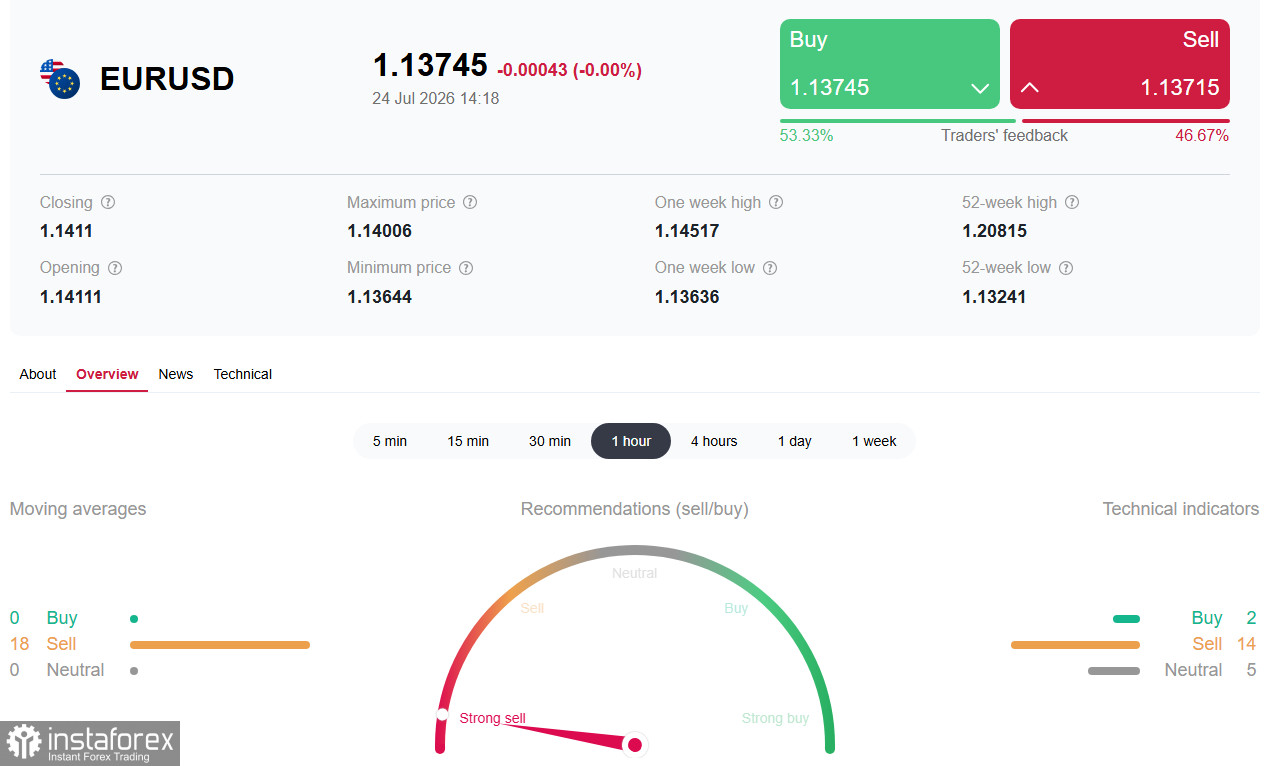
EUR/USD is ending an eventful week in a state of uncertainty, consolidating near 1.1370 at the start of Friday's U.S. session after an unsuccessful attempt to recover above 1.1400. The euro finds itself caught between two powerful but opposing forces. On the one hand, hawkish signals from the European Central Bank (ECB) and improving business activity across the euro area are providing support. On the other hand, the escalating conflict in the Middle East and the sharp rise in oil prices are fuelling inflation concerns and strengthening the U.S. dollar.
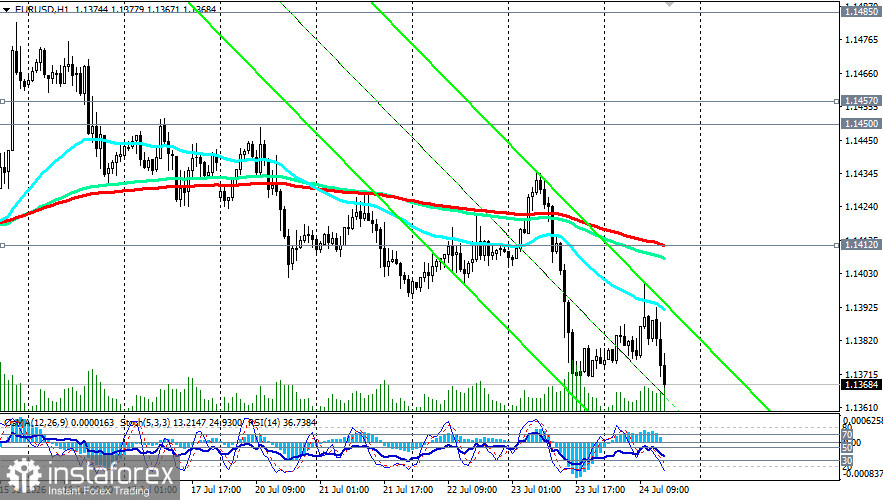
After a modest rebound from its three-week low, EUR/USD has resumed its decline toward the 2026 low of 1.1325, recorded on June 24, and has been unable to establish a foothold above key resistance levels. This week's failed attempt to break above 1.1450 confirmed that bearish sentiment remains intact.
The week's key event was Thursday's ECB policy meeting. As expected, the central bank left the deposit rate unchanged at 2.25%. However, ECB President Christine Lagarde adopted a hawkish tone, noting that some Governing Council members had already considered raising rates at this meeting and reaffirming the ECB's commitment to fighting inflation. Markets interpreted her comments as a signal that a September rate hike remains highly likely, with the probability currently estimated at around 90%.
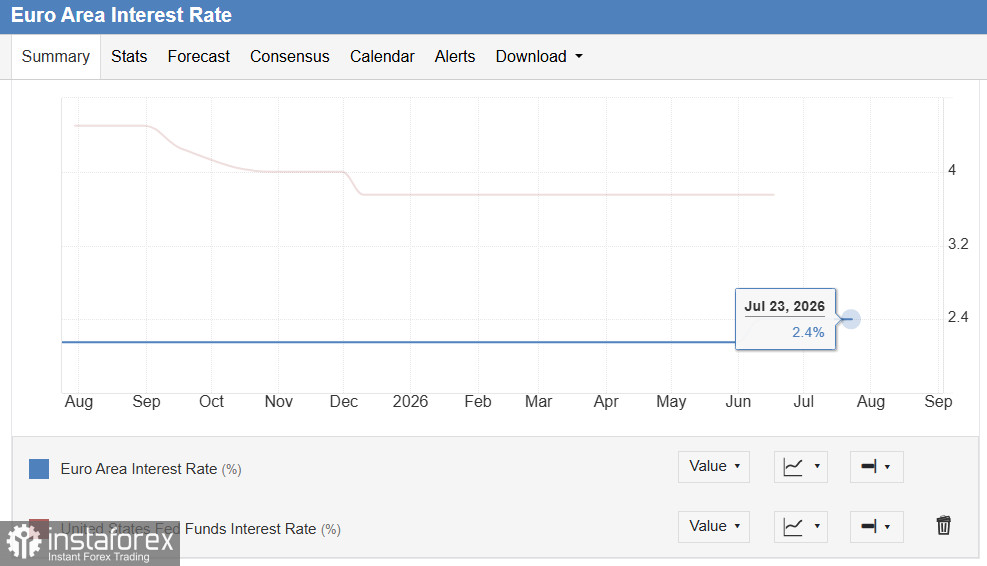
The ECB meeting minutes and Lagarde's remarks suggest that the central bank remains prepared to continue tightening monetary policy despite pausing in July. According to economists, a rate increase in September is viewed as "virtually a done deal." However, many believe that these signals are unlikely to provide significant additional support for the euro because they have already been largely priced into the market.
Lagarde also acknowledged that elevated energy prices and uncertainty surrounding the conflict in the Middle East could keep inflation above the ECB's target for longer than previously expected.
The sharp rise in oil prices has become the main source of pressure on the euro amid the escalation of the conflict between the United States and Iran, which has entered its thirteenth consecutive night of military strikes, along with renewed threats from the Houthis in the Red Sea. Attacks on Saudi oil tankers and the effective blockade of the Bab el-Mandeb Strait have significantly increased the risk of disruptions to global energy supplies.
As a result, Brent crude climbed above $90 per barrel. Higher energy prices are intensifying inflationary pressures, reinforcing expectations that the Federal Reserve will maintain a restrictive monetary policy stance and thereby supporting the U.S. dollar. According to the CME FedWatch Tool, the probability of a Federal Reserve rate hike in September has increased to 80%.
The preliminary euro area PMI data released on Friday exceeded market expectations. The Manufacturing PMI rose to 52.0 from 51.4, while the Services PMI increased to 51.6 from 49.4, returning to expansion territory above the 50-point threshold. Germany reported a similar improvement.
However, the positive impact of these data was offset by rising geopolitical risks and continued strength in the U.S. dollar.
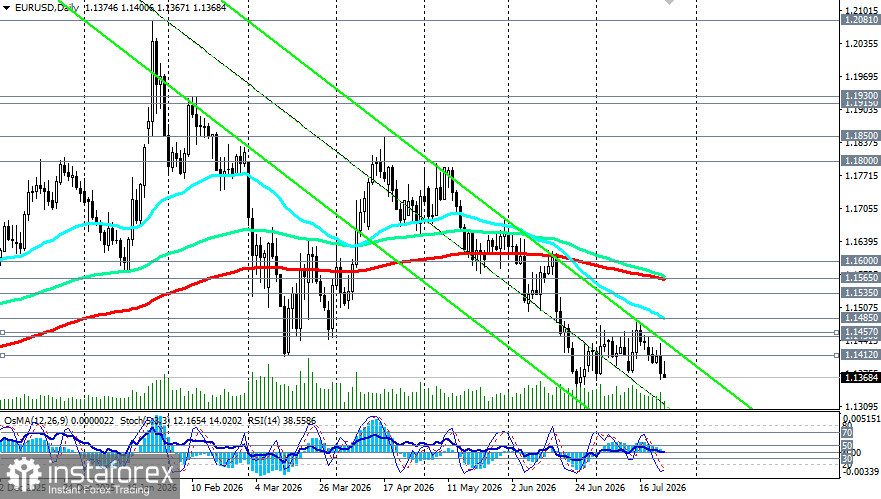
From a technical perspective, EUR/USD maintains a bearish short-term bias while consolidating below key resistance levels.
On the daily chart, the pair remains below both the 50-period EMA (1.1485) and the 200-period EMA (1.1565), a classic indication that the medium-term bearish trend remains in place.
Technical indicators currently suggest the following:
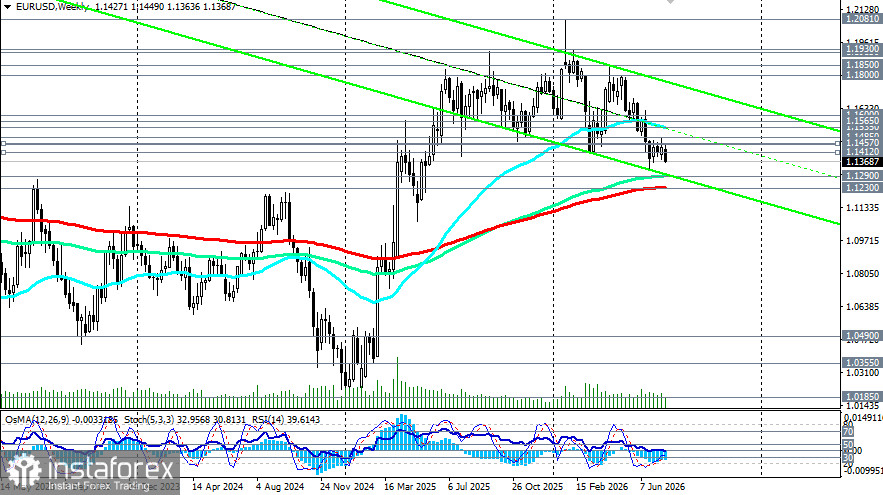
The nearest resistance levels are located at:
A confirmed breakout above 1.1460, supported by technical indicators, could open the way toward 1.1500, 1.1535, and 1.1565.
The nearest support zone is located between:
A confirmed break below this area could expose 1.1230 (the weekly 200-period EMA), followed by 1.1200.
Date | Event | Forecast / Expectation | Expected Impact on EUR/USD |
July 24 | U.S. S&P Global PMI Data | Generally positive | Limited impact due to geopolitical developments |
July 28–29 | Federal Reserve Meeting | Interest rate expected to remain at 3.50%–3.75% | Dovish signals would support the euro; hawkish signals would pressure it |
July 30 | Bank of England Meeting | — | Indirect impact through U.S. dollar movements |
July 31 | Euro Area July CPI | Inflation expected to slow | May influence ECB rate expectations |
Throughout the week | Geopolitical developments | — | Escalation would pressure EUR/USD; de-escalation would support it |
EUR/USD has entered a decisive phase in which bullish momentum generated by the ECB's hawkish signals and improving economic data is confronting bearish pressure from geopolitical risks and rising energy prices. The 1.1350 level remains the key short-term pivot. Next week, market attention will focus on the Federal Reserve meeting and developments in the Middle East, both of which could determine the pair's next directional move.
For short-term traders: Short positions remain preferable following a confirmed break below 1.1350, with downside targets at 1.1325 and 1.1290. Long positions should be considered only after sustained trading above 1.1420, supported by favourable fundamental developments.
For medium-term investors: A wait-and-see approach remains appropriate until there is greater clarity regarding geopolitical developments and the outcome of the Federal Reserve meeting. A correction toward the 1.1325–1.1290 level may provide an opportunity to establish long positions, provided the ECB maintains its hawkish stance and the U.S. dollar weakens.
Risk management: Remain cautious amid elevated volatility driven by geopolitical events and macroeconomic data releases. Use disciplined stop-loss orders and closely monitor developments in the Middle East, together with comments from Federal Reserve and ECB officials.
*La presente analisi del mercato ha un carattere esclusivamente informativo e non rappresenta una guida per l`effettuazione di una transazione.
Le recensioni analitiche di InstaSpot ti renderanno pienamente consapevole delle tendenze del mercato! Essendo un cliente InstaSpot, ti viene fornito un gran numero di servizi gratuiti per il trading efficiente.