




La leggenda nel team InstaSpot!!
Legenda! Pensi che sia troppo patetico? Ma come dobbiamo chiamare un uomo, che è diventato il primo dell'Asia a vincere il campionato mondiale di scacchi a 18 anni e che è diventato il primo Gran Maestro indiano a 19? Fu l'inizio di un duro cammino verso il titolo di campione del mondo, l'uomo che divenne per sempre una parte della storia di scacchi. Un'altra leggenda nel team InstaSpot!





Il Borussia è una delle squadre di calcio più titolate in Germania, che ha ripetutamente dimostrato ai tifosi che lo spirito di competizione e leadership porta al successo. Fai trading nello stesso modo in cui lo fanno i professionisti dello sport - fiduciosamente e attivamente. Segui il Borussia FC e sii avanti con InstaSpot!

The dominance of the U.S. dollar is waning. Of course, the process of central banks moving away from holding dollar reserves and governments shifting away from using the dollar for international transactions is a long one—it may take years or even decades. But as the saying goes, the first step has been taken.
This week, it was revealed that the Swiss National Bank (SNB) made a historic pivot from the dollar to the euro. Instead of purchasing U.S. dollars, the SNB is now buying euros to stabilize the Swiss franc's exchange rate. It's important to note that both the SNB and Switzerland as a whole are considered strongholds of financial stability. While SNB policy doesn't carry the global weight of actions taken by the Federal Reserve, its decisions can still influence other central banks and potentially set a broader trend.
According to the latest report, in Q2, the Swiss central bank purchased over 5 billion Swiss francs' worth of foreign currencies. Notably, not all of it was allocated to the beloved and traditionally favored U.S. dollar. For the first time since 2020, the SNB's reserves in dollars fell below its holdings in euros: 37% in USD versus 39% in EUR. This sharp pivot is largely attributed to trade policy under Donald Trump.
In August of this year, Trump imposed 39% tariffs on all Swiss goods. It's reasonable to conclude that both political and economic motives drove the SNB's shift away from the dollar. Politically, Trump's actions have eroded trust in the dollar, making it less attractive as a reserve currency. Economically, SNB currency interventions aim to weaken the franc to make Swiss exports more competitive abroad.
In other words, the SNB likely considers the franc to be overvalued. With Trump's tariffs in play, Swiss exports to the U.S. could grind to a halt completely. Switzerland remains one of the richest and most financially stable countries in the world. Even without Trump's tariffs, Swiss goods are expensive. But with tariffs—combined with a strong franc—they are pricing themselves out of global markets. Thus, the SNB is doing everything in its power to slow down the decline of Swiss exports to the United States.
But Donald Trump isn't sitting idle either. He has repeatedly stated that the dollar is too strong and that he's working to weaken it to boost American exports. Technically, currency interventions designed to influence trade are prohibited. If a central bank acts to manipulate its currency's value for trade advantages, other countries may retaliate with similar interventions or impose sanctions.
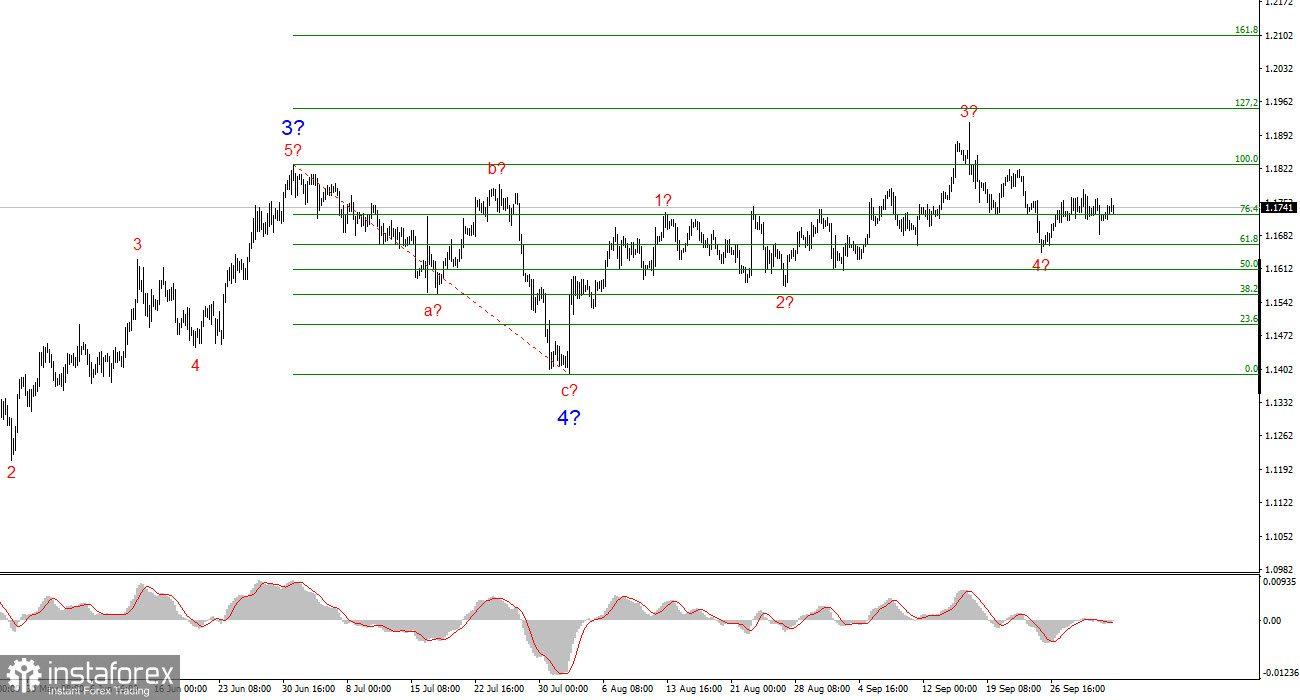
Based on the analysis, EUR/USD continues to build a bullish trend segment. Wave structure still heavily depends on news flow, Trump's decisions, and geopolitical dynamics within the White House. The current trend phase may extend all the way to the 1.2500 level. At present, a corrective wave 4 appears to be forming—or already completed. The bullish wave structure remains valid, and therefore, I am looking only for buying opportunities in the near term. By year-end, I expect EUR/USD to reach 1.2245, which corresponds to the 200.0% Fibonacci.
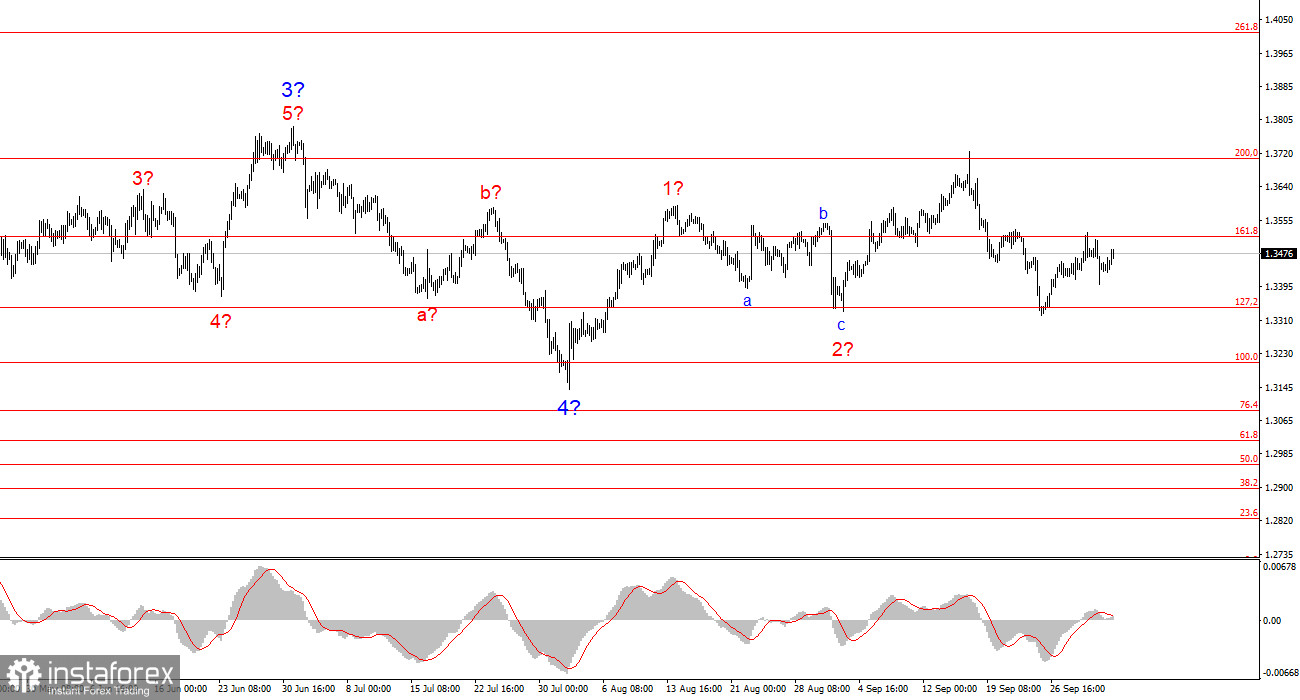
The wave pattern for GBP/USD has evolved. We are still within an impulsive upward segment, but its internal structure has become unreadable. If wave 4 turns out to be a complex, three-wave formation, it will balance the structure—but it may also be significantly larger and longer than wave 2. In my opinion, the best reference level is 1.3341, which aligns with the 127.2% Fibonacci. Two failed breakouts of this level indicated that the market was poised for new buying opportunities. Price targets are still above the 1.3800 level.
*La presente analisi del mercato ha un carattere esclusivamente informativo e non rappresenta una guida per l`effettuazione di una transazione.
Le recensioni analitiche di InstaSpot ti renderanno pienamente consapevole delle tendenze del mercato! Essendo un cliente InstaSpot, ti viene fornito un gran numero di servizi gratuiti per il trading efficiente.


