




The legend in the InstaSpot team!
Legend! You think that's bombastic rhetoric? But how should we call a man, who became the first Asian to win the junior world chess championship at 18 and who became the first Indian Grandmaster at 19? That was the start of a hard path to the World Champion title for Viswanathan Anand, the man who became a part of history of chess forever. Now one more legend in the InstaSpot team!





Borussia is one of the most titled football clubs in Germany, which has repeatedly proved to fans: the spirit of competition and leadership will certainly lead to success. Trade in the same way that sports professionals play the game: confidently and actively. Keep a "pass" from Borussia FC and be in the lead with InstaSpot!

Do not put all your eggs in one basket. Investors seem to have remembered that proverb and are running out of the overcrowded US AI equity segment. According to Bank of America, citing EPFR Global, outflows from US equity funds totalled $17.2bn in the week to July 1, marking the fastest capital flight since March.
EuroStoxx 600 dynamics
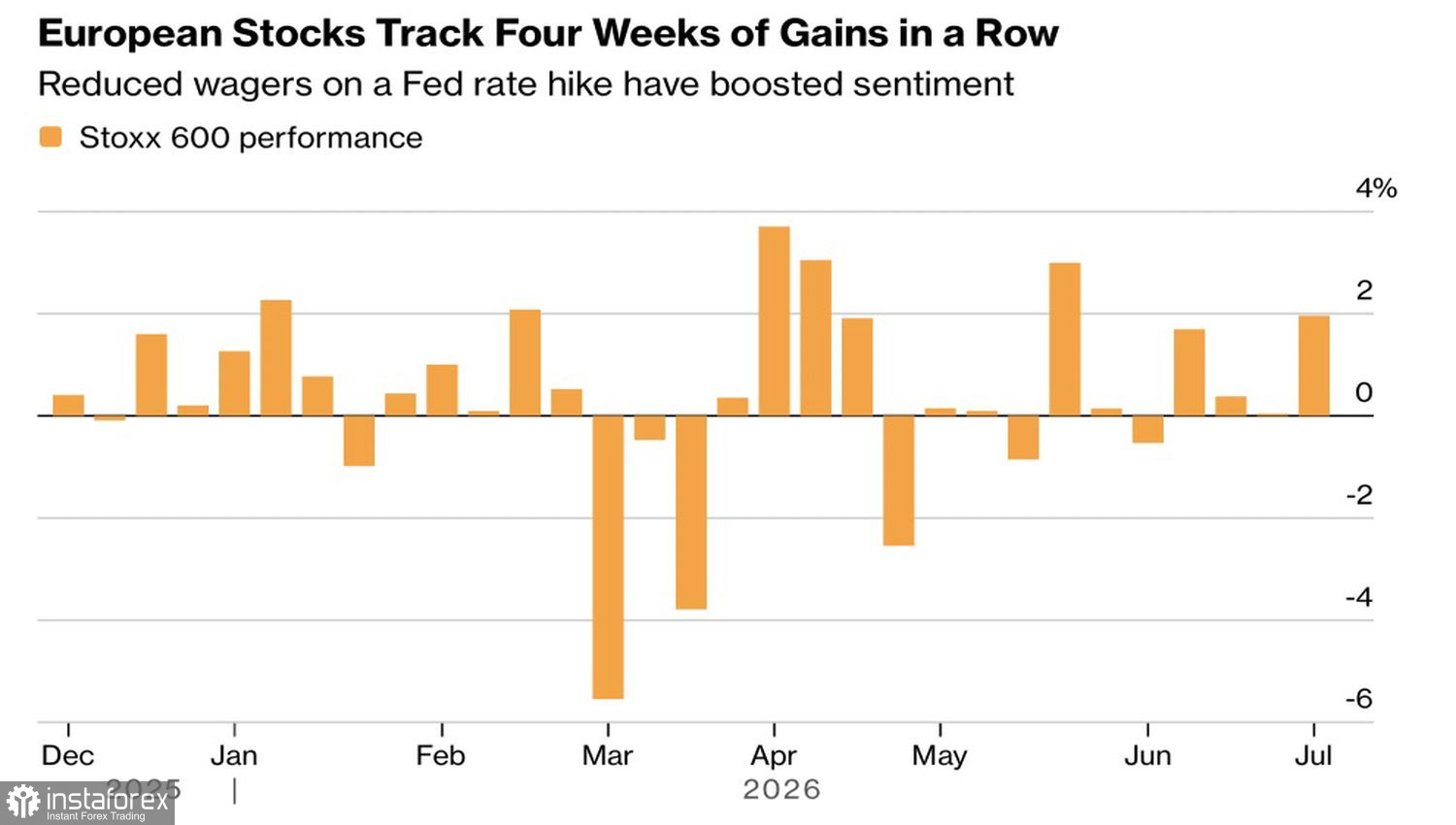
The money has not disappeared so much as relocated. Japanese stocks attracted $1.9bn, the largest inflow in seven weeks. Europe did not miss out either: the Stoxx Europe 600 closed at a record and recorded a fourth consecutive week of gains. Investors are buoyed by the belief that the Federal Reserve will not rush into more interest rate hikes. Thursday's softer-than-expected US labor market report only reinforced those hopes.
The main intrigue, however, is playing out within the US equity market itself. Fund managers are locking in profits in overbought AI names and reallocating to undervalued stories. JP Morgan strategists say that the excessive outperformance of chipmakers versus AI hyperscalers has created an unstable valuation gap that will eventually compress. Beneficiaries of the rotation include auto, industrials, and healthcare.
S&P 500 and Russell 2000 dynamics
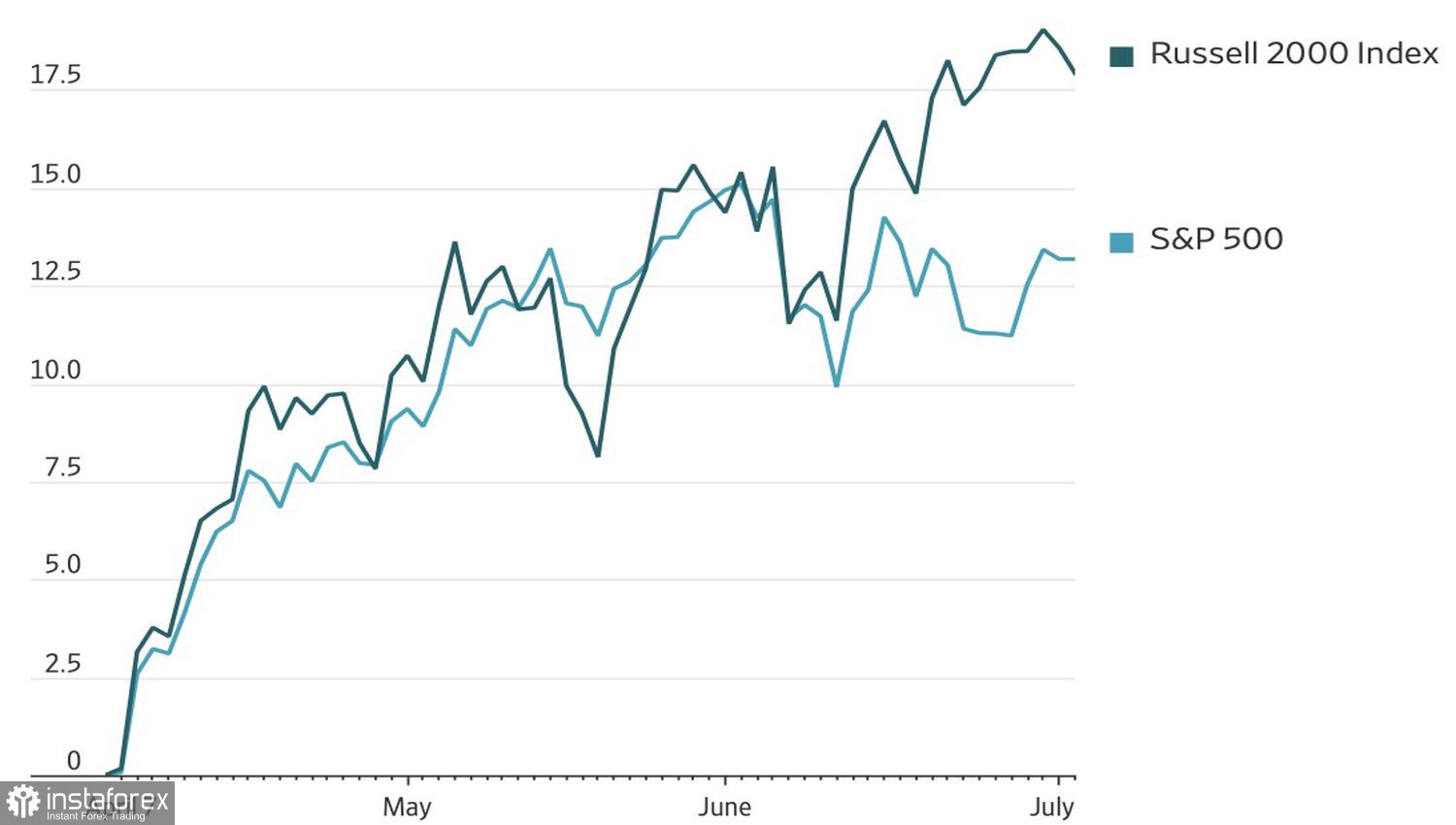
The shift in sentiment is most visible in the Russell 2000. The small-cap index has risen by roughly 22% in H1, notching its best half-year performance since 1991. It has outperformed the Nasdaq by almost 9 percentage points, the widest gap since 2006. Last week, the index closed at record highs on four consecutive sessions.
For a long time, the market was dominated by trillion-dollar AI-tied giants. The Russell 2000 rally hints that the upside can broaden across sectors rather than remain the preserve of a handful of chip names such as Intel and Micron Technology.
That said, it is too early to get carried away. Market participants remain cautious ahead of the semiconductor earnings season. The outflow from US equities is a warning sign, but because money is staying in equities, simply migrating across regions and sectors, a collapse in the S&P 500 is premature to call. This looks more like a change of leaders within the rally than its end.
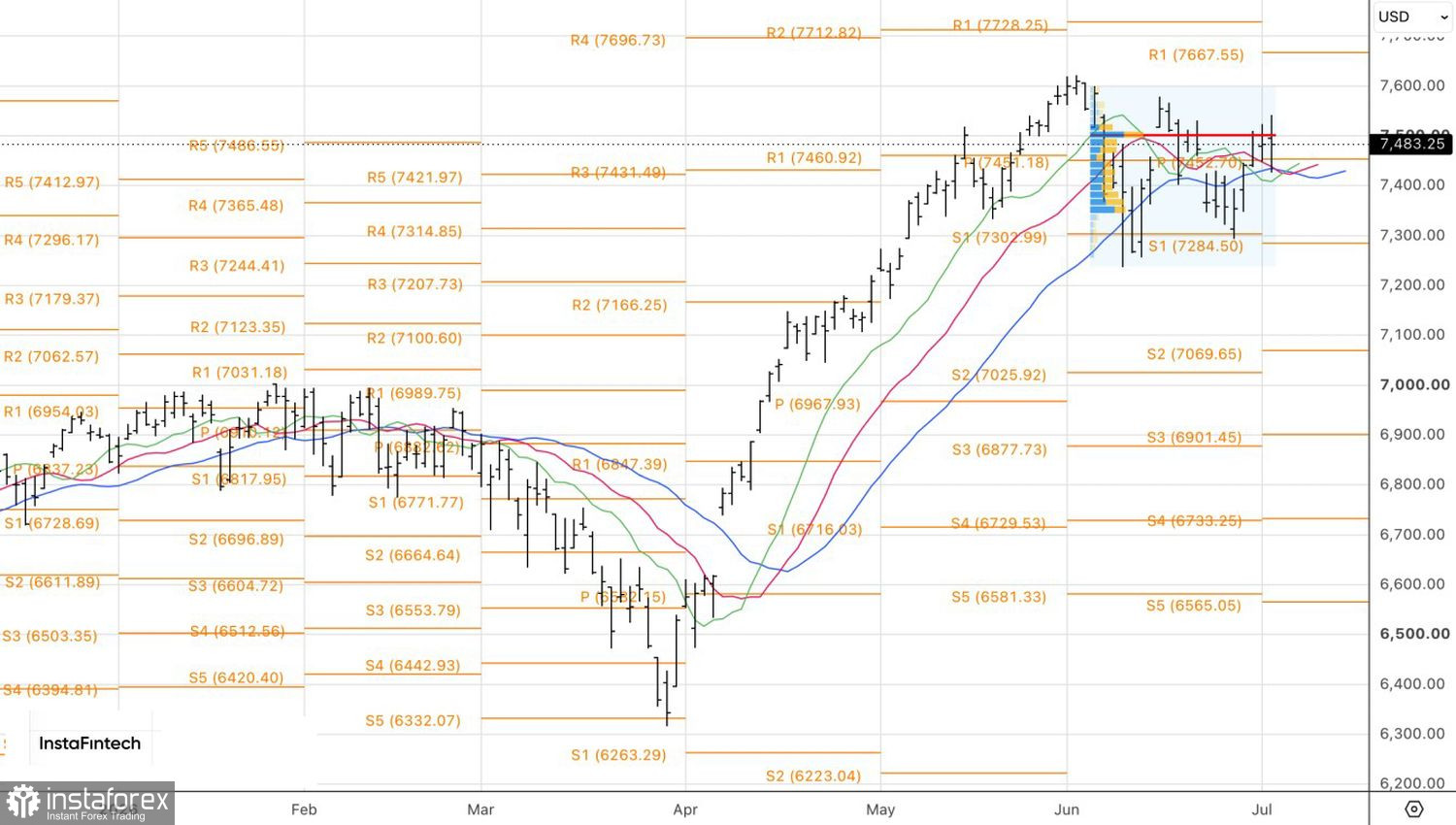
In short, the broad index is balancing between easing rate expectations, which favor bulls, and internal rotation that removes its old tech-heavy support. Where will the next alpha come from? It appears investors are now looking beyond Silicon Valley.
Technically, the daily chart shows that the S&P 500 is stuck in the dead zone, between the moving averages and fair value. Consolidation above 7,500 would generate a buy signal, while a drop below 7,425 would be grounds for selling.
*The market analysis posted here is meant to increase your awareness, but not to give instructions to make a trade.
InstaSpot analytical reviews will make you fully aware of market trends! Being an InstaSpot client, you are provided with a large number of free services for efficient trading.


