




我们的团队有超过700万的操盘手!
我们每天都在一起努力改善交易。我们得到了很高的成绩,并继续前进。
世界各地数以百万计的操盘手的认可是我们工作的最大赞赏! 您做出了您的选择,我们将尽一切努力来满足您的期望!
我们是一个共同的伟大团队!
InstaSpot. 自豪地为您工作!



Have interest rates reached a level that slows down inflation and economic growth? Investors believe that in the United States—yes, but in Europe—no. They do not trust the Federal Reserve with its plan to raise borrowing costs by 50 basis points to 5.75%. However, they trust the European Central Bank (ECB) with its +50 basis points and a deposit rate peak at 4%. However, in reality, everything may turn out differently. When the Reserve Bank of Australia and Bank of Canada paused, they also believed that their rates were at a restrictive level. But new data showed otherwise. As a result, both Ottawa and Canberra resumed cycles of monetary restrictions. Why is the market so confident that the Federal Reserve won't do the same?
That's the nature of economic cycles: a downturn is followed by an upturn, and an upturn is followed by a downturn. Central banks actively participate in these processes. When the economy overheats and inflation becomes too high, they take away the punch bowl just as the party gets going—they start raising interest rates. This needs to be done to create a buffer. After all, during a crisis, monetary policy will have to be relaxed. And if your borrowing costs are already zero, unconventional tools like QE will be needed. They have their drawbacks.
The federal funds rate is already high. However, if the forecasts of the Federal Open Market Committee (FOMC) were realized, it would have risen to 5.75%, the highest level in the past 22 years. The market doesn't believe that will happen. Its upper limits for the Fed and the ECB are below recent peaks.
Market expectations for ECB and Fed interest rates
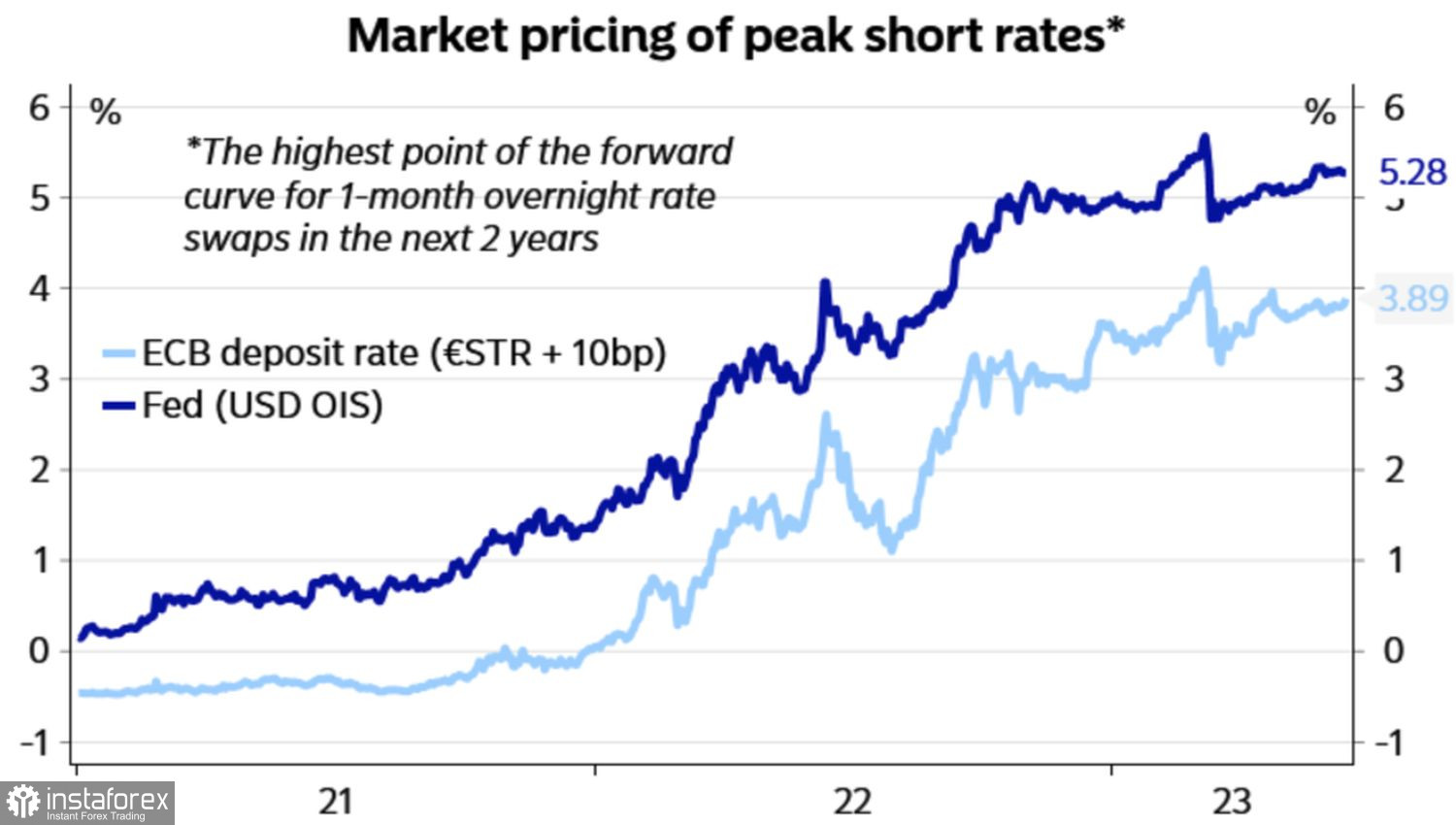
According to investors, the aggressive forecast made by the FOMC in June was intended to dispel any thoughts of a "dovish" pivot. And the central bank succeeded: the money market does not anticipate monetary expansion by the end of the year. This factor is already priced into EUR/USD quotes and does not support the U.S. dollar. On the other hand, the expected ECB rate does not rise above 4%. This circumstance limits the euro's potential for growth to the $1.11 mark, as viewed by the Societe Generale. For the pair to rise to 1.15, the European economy needs to appear stronger than the U.S.
However, investors overlook the important point of stagnant core inflation at a certain level. Indeed, in different developed countries, the indicator has reached a plateau without significant declines. This allows central banks to resume or continue cycles of tightening monetary policy. Goldman Sachs warns that investors' expectations of a rapid slowdown in inflation are overstated.
Core inflation dynamics
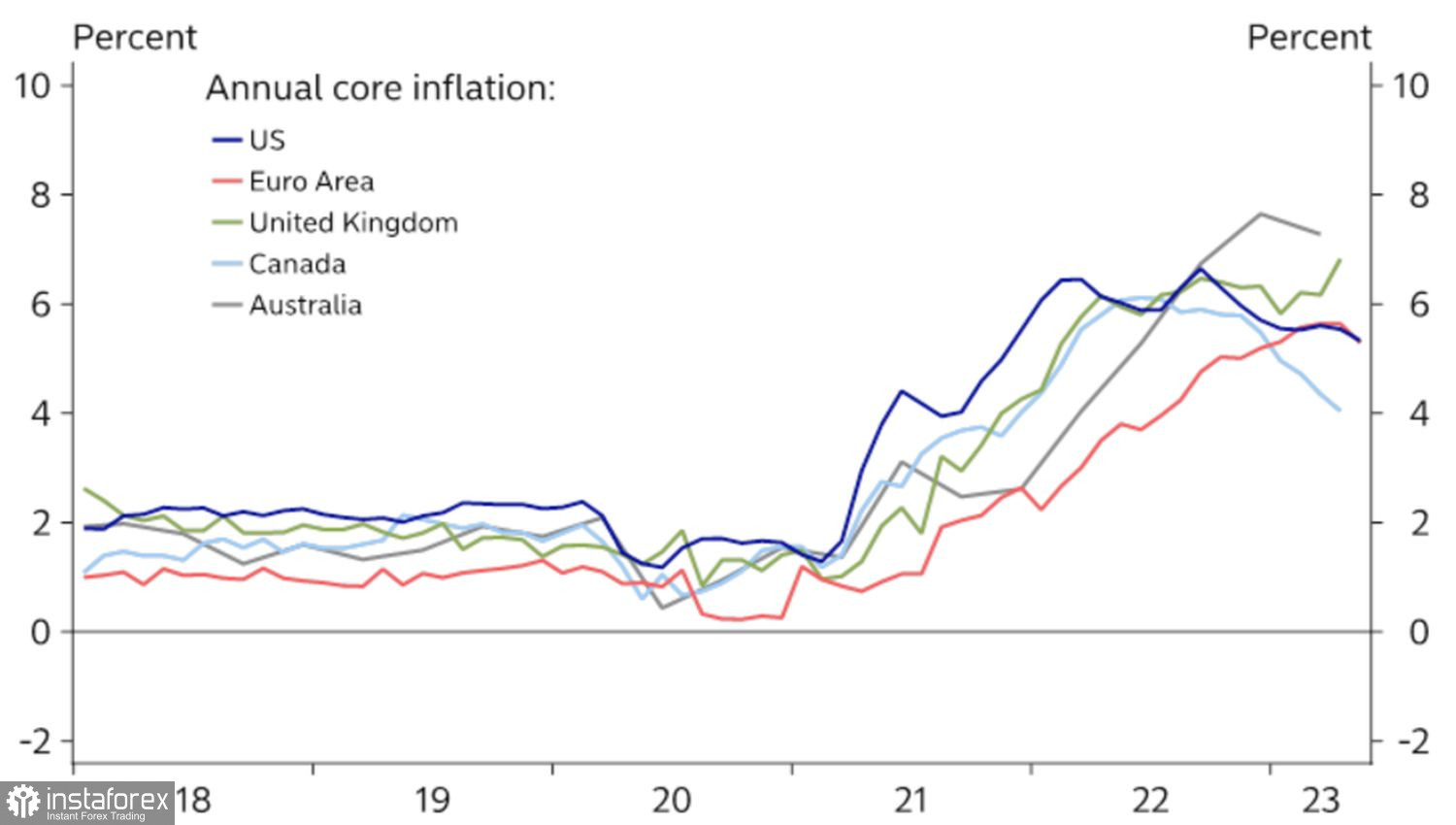
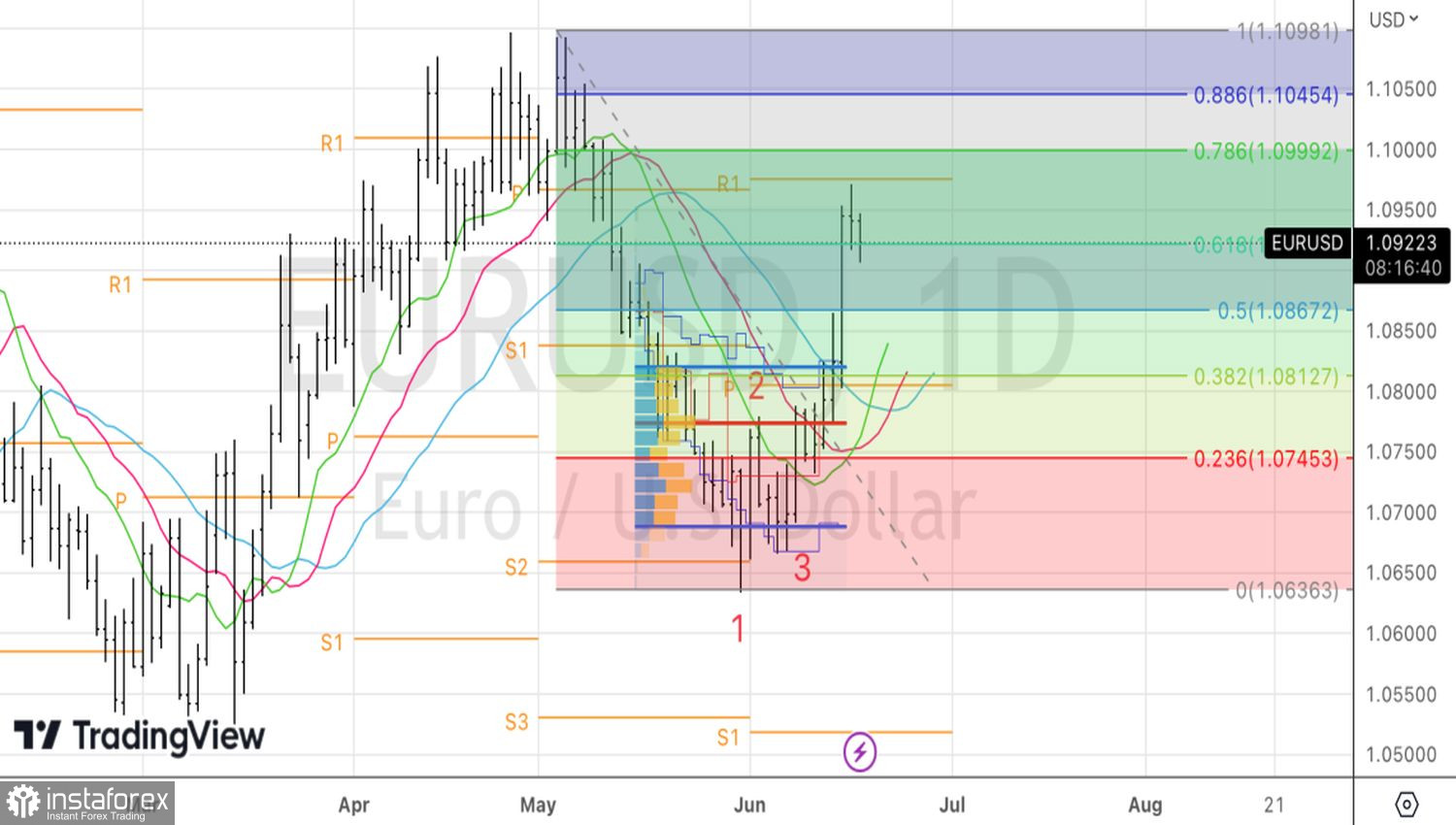
If the crucial indicator for central banks has indeed anchored, the Fed can raise borrowing costs even higher than 5.75%. The increasing probability of this outcome, as strong statistics emerge from the United States, will serve the U.S. dollar faithfully.
Technically, on the daily chart, EUR/USD is experiencing a reversal of a doji bar. Breaking support levels at 1.091 and 1.0895 will allow for the accumulation of short positions formed from the convergence area of 1.0965-1.0975.
*这里的市场分析是为了增加您对市场的了解,而不是给出交易的指示。
InstaSpot分析评论将让您充分了解市场趋势! 作为InstaSpot的客户,您将获得大量的免费服务以实现有效的交易。