




Our team has over 7,000,000 traders!
Every day we work together to improve trading. We get high results and move forward.
Recognition by millions of traders all over the world is the best appreciation of our work! You made your choice and we will do everything it takes to meet your expectations!
We are a great team together!
InstaSpot. Proud to work for you!





Actor, UFC 6 tournament champion and a true hero!
The man who made himself. The man that goes our way.
The secret behind Taktarov's success is constant movement towards the goal.
Reveal all the sides of your talent!
Discover, try, fail - but never stop!
InstaSpot. Your success story starts here!

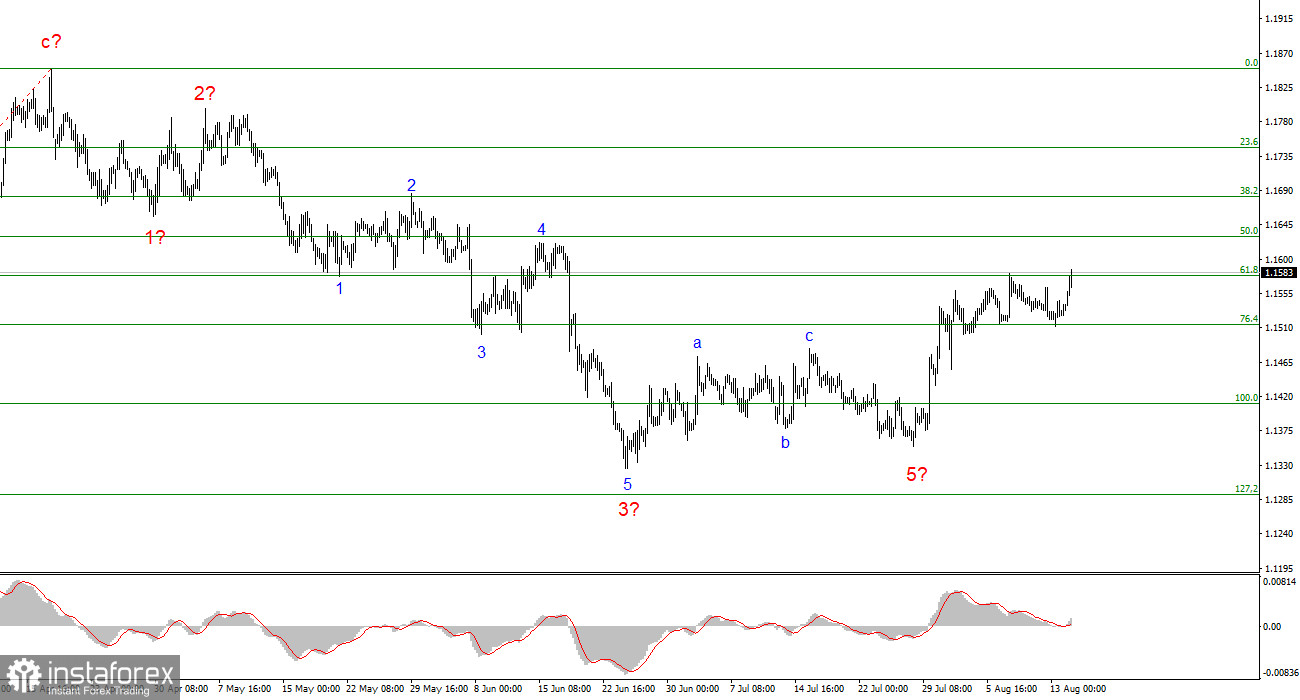
The 4-hour wave structure for EUR/USD is becoming more complex. There is still no question of invalidating the upward trend segment (lower chart) that began in January last year. On the contrary, we have seen a complete A-B-C corrective structure, which has most likely ended. We never saw wave 5 of C develop. More precisely, this wave took a truncated form, which also occurs from time to time. Let me remind you that classical wave structures are generally found only in textbooks. In real-world trading, traders and analysts need to be more flexible in their analysis. Therefore, I have been saying for a month now that traders should prepare for a rise in the euro. If the current wave structure is correct, the pair is at the very beginning of a new upward trend segment.
On the smaller timeframe, I can identify a classic five-wave downward structure with a truncated wave 5. I expected the euro to decline to the 1.13 level, but the fundamental backdrop turned against the dollar, and sellers simply lacked the strength to develop a convincing wave 5. Therefore, we can consider July 28 to be the starting point of a new upward wave sequence.
The U.S. currency no longer has any clear factors supporting it.
EUR/USD rose by 60 basis points during Friday's session, which is not particularly significant in itself. However, these 60 points suggest that the downward wave sequence may have ended. The trend segment that began on July 28 now looks like the beginning of an impulsive trend segment rather than a corrective one. Consequently, the euro may have potential for not only short-term but also long-term growth. The fundamental backdrop is also fully supportive of the euro. Over the past two weeks, market participants have been uncertain about the future prospects of the euro and the dollar, but the balance has ultimately shifted in favor of the single European currency. Let me briefly review the events of the past two weeks.
First, the Nonfarm Payrolls report fell short of expectations for the fourth consecutive time. Then the GDP report showed a slowdown to 1.5% on a quarterly basis. Inflation then slowed to 3.4%.The Producer Price Index also slowed in July. Overall, nearly all key economic reports released over the past month have shown results that do not support Fed monetary policy tightening, at least in September. Although they were also "weak." I am not saying that the FOMC will now completely abandon its "hawkish" plans, assuming such plans existed at all. I am simply saying that "hawkish" plans need to be supported by economic data, rather than merely by Kevin Warsh's statements about the unacceptably high level of inflation in the United States.
High inflation has persisted in the United States for five years and has remained above the Fed's target throughout this period. However, if the Fed is unable to raise interest rates, inflation may remain elevated, while Kevin Warsh and other policymakers may continue to emphasize the need to bring it down. The market once again drew incorrect conclusions following the June meeting. It assumed that the new Fed chair's comments about high inflation indicated a commitment to taking measures to reduce it. However, the labor market supports a more accommodative monetary policy stance, while Kevin Warsh, a Trump appointee, has also advocated for lower interest rates.
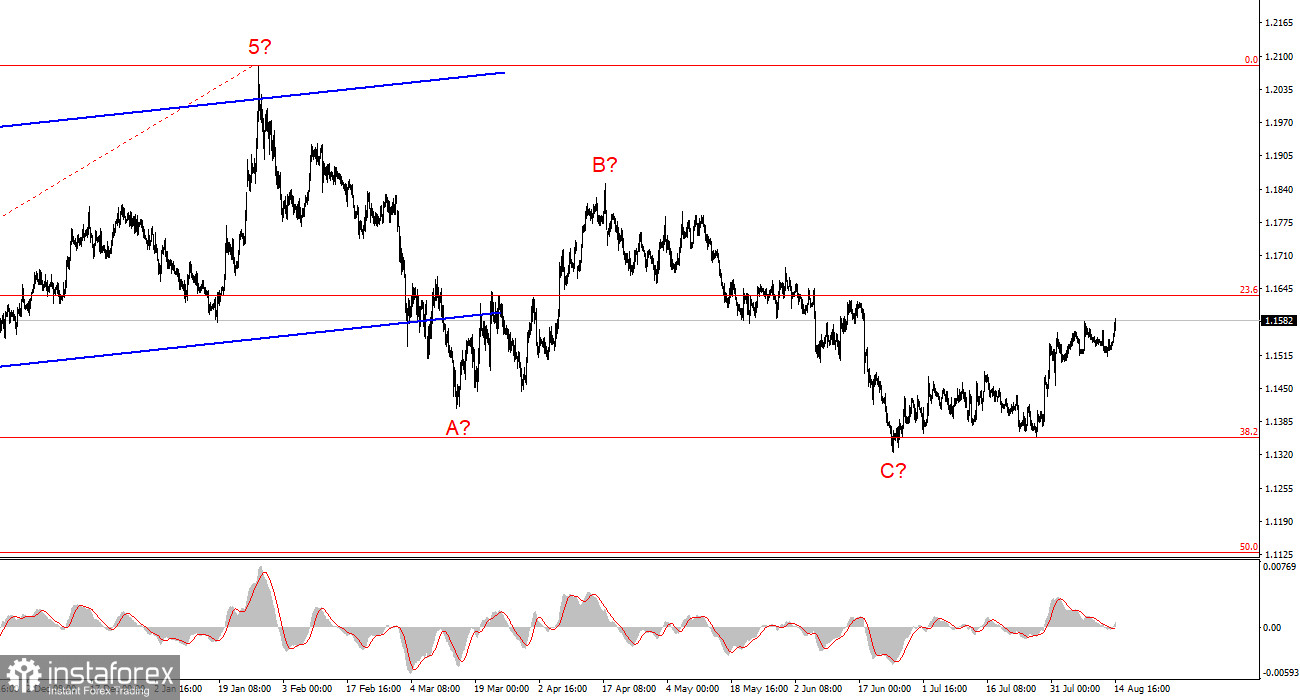
Based on my EUR/USD analysis, I conclude that the pair remains within the upward trend segment (lower chart) and, over the shorter term, has presumably transitioned into a new upward wave sequence. In my view, this is an excellent time to establish long positions. Wave 5 of C has taken a truncated form. Unless the downward trend segment that began on January 28 develops into a more extended five-wave structure—which would require strong fundamental news in favor of the dollar—EUR/USD is at the very beginning of a new, prolonged upward trend segment, with targets extending as high as the 1.25 level.
On the higher timeframe, an upward trend segment can be seen, followed by the development of a corrective wave sequence. The A-B-C structure has presumably been completed. If so, a new impulsive upward trend segment has begun to develop.
*এখানে পোস্ট করা মার্কেট বিশ্লেষণ আপনার সচেতনতা বৃদ্ধির জন্য প্রদান করা হয়, ট্রেড করার নির্দেশনা প্রদানের জন্য প্রদান করা হয় না।
ইন্সটাফরেক্স বিশ্লেষণমূলক পর্যালোচনাগুলো আপনাকে মার্কেট প্রবণতা সম্পর্কে পুরোপুরি সচেতন করবে! ইন্সটাফরেক্সের একজন গ্রাহক হওয়ায়, দক্ষ ট্রেডিং এর জন্য আপনাকে অনেক সেবা বিনামূল্যে প্রদান করা হয়।


