




¡La leyenda en el equipo de InstaSpot!
¡Leyenda! ¿Cree que es una retórica grandilocuente? Pero, ¿cómo deberíamos llamar a un hombre, que se convirtió en el primer asiático en ganar el campeonato mundial de ajedrez júnior a los 18 años y en el primer Gran Maestro indio a los 19 años? Ese fue el comienzo de un camino difícil hacia el título de Campeón del Mundo para Viswanathan Anand, el hombre que se convirtió en parte de la historia del ajedrez para siempre. ¡Ahora una leyenda más en el equipo de InstaSpot!





Borussia es uno de los clubes de fútbol con más títulos en Alemania, que ha demostrado repetidamente a los fanáticos: el espíritu de competencia y liderazgo que ciertamente conducirán al éxito. Opere de la misma manera que los profesionales del deporte: con confianza y de forma activa. ¡Mantenga un "pase" del Borussia FC y lidere con InstaSpot!
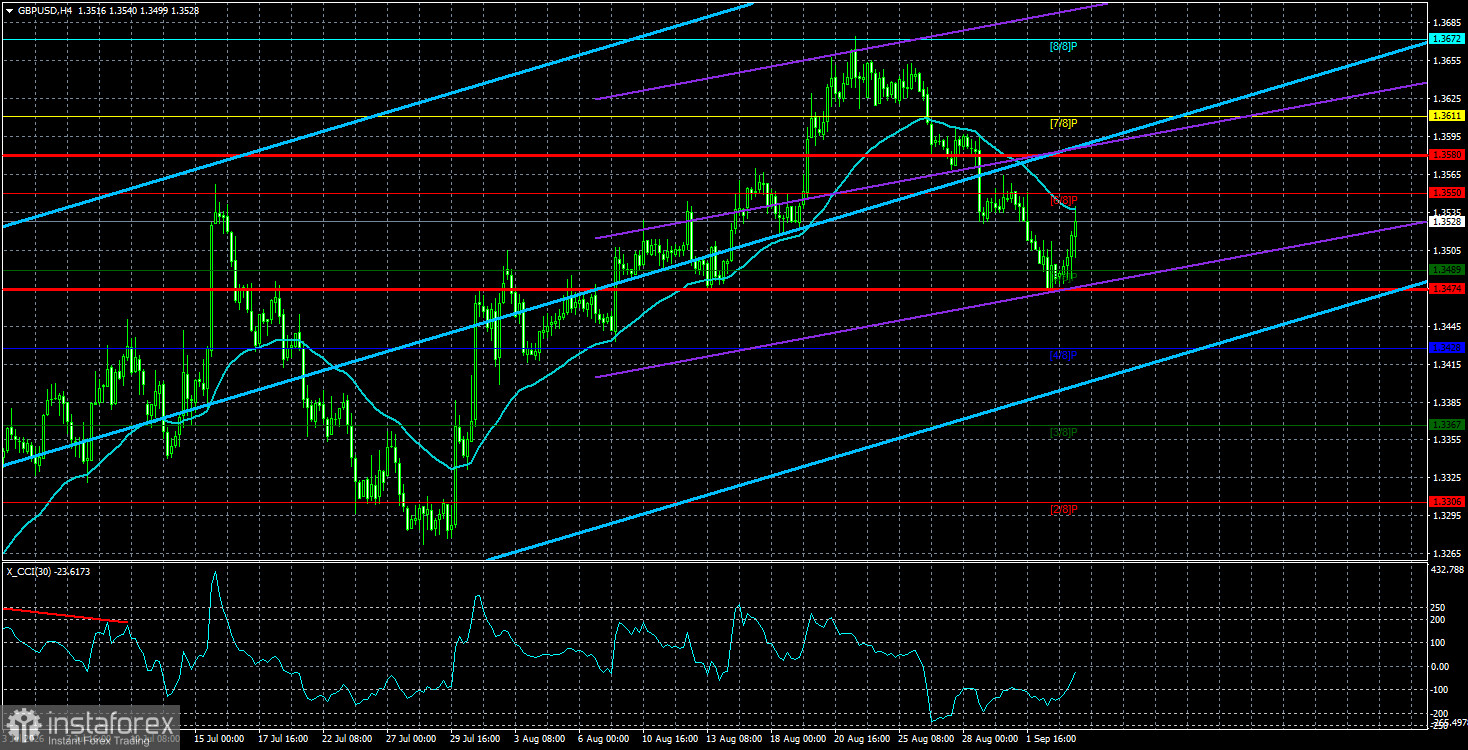
The GBP/USD currency pair remained in decline on Thursday, which, in our view, is a banal technical correction. We believe there were no reasons (especially this week) for the US currency to rise. Moreover, there were none even last Friday. Let us examine in detail what is happening in the FX market and why the dollar is strengthening.
We should start with last Friday. On that day, Kevin Warsh spoke, the annual Nonfarm Payrolls report was published, and the dollar managed to materially strengthen across the market. Obviously, the market reacted to those events, which caused the dollar's rise. However, the Federal Reserve chair did not say anything new or "hawkish" that would increase the likelihood of monetary tightening in September or later this year. Warsh repeatedly talks about the unacceptability of high inflation in the US, but if it is "unacceptable," why did the FOMC not vote to raise the key rate in July? Only three of the 12 committee members took a hawkish stance.
Thus, Warsh's words about the unacceptability of high inflation should not be given a hawkish tone. One might think Jerome Powell enjoyed high inflation... Nevertheless, inflation in the US has exceeded the norm for more than five years. Why, then, did the Fed under Powell not raise rates to the necessary levels? Because inflation is not the only consideration. Suppose the Fed decides to raise the rate after the September meeting. Borrowing will become more expensive; loans will cost more; US bond yields will continue to rise; investment will fall; economic growth will slow; and the labor market will deteriorate further. To reduce inflation, one must sacrifice the economy, investments, the labor market, and allow further growth of public debt. For what purpose? To reduce inflation that Trump himself provoked by starting a war in the Middle East?
How does Trump view inflation, and is there any point in Fed actions to offset the consequences of Trump's policies? Trump believes current inflation is acceptable and rarely talks about it. The US president is not concerned with this indicator. Why then sacrifice what is truly important? As for the Fed, the central bank can raise the rate. But what if tomorrow Trump starts a new war? What is the point of fighting inflation if presidential actions can destroy any efforts?
A few words about geopolitics: the Middle East conflict continues. Neither Iran nor the US intends to yield, so the conflict may become protracted. Perhaps in five or ten years Trump could pressure Iran, but Trump is 80 years old... He has 2.5 years left in office... He cannot become US president a third time... A new US president is unlikely to pursue such extreme policies... Americans are unlikely to make the same mistake a third time at the ballot box... Everything suggests the conflict will continue while Trump remains president and retains full power. He retains full power only until November this year. As for the dollar, traders and investors have long since priced in and worked through the war in the Middle East. We would not expect a strong dollar rally in the event of further escalation.
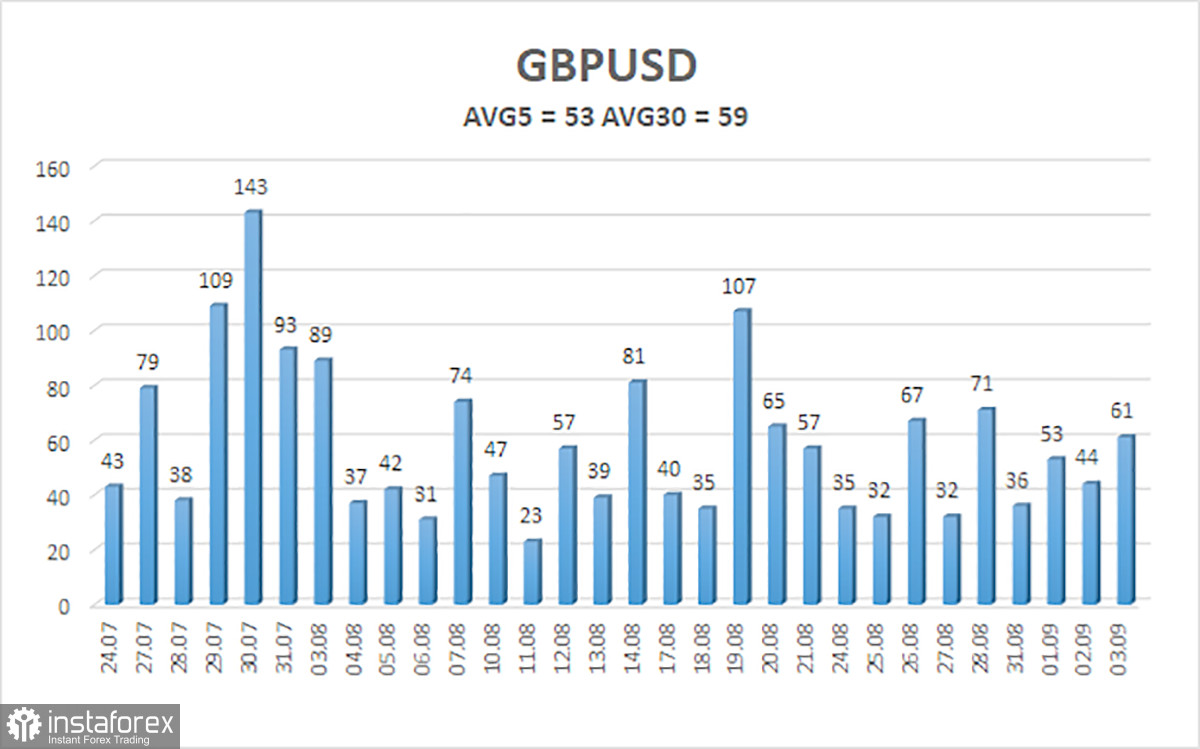
The average volatility of the GBP/USD pair over the last 5 trading days is 53 pips. For the pound/dollar, this value is "low." On Friday, September 4, we therefore expect movement within a range bounded by 1.3474 and 1.3580. The major linear regression channel has turned upward, indicating an uptrend. The CCI indicator entered oversold territory, warning of a possible end to the correction.
S1 – 1.3489
S2 – 1.3428
S3 – 1.3367
R1 – 1.3550
R2 – 1.3611
R3 – 1.3672
The GBP/USD pair retains an upward tendency. Trump's policies will continue to pressure the US economy, so we do not expect long-term dollar strength. 2026 has been positive for the dollar due to geopolitics, but every tale comes to an end. On the weekly TF, there remains a flat between 1.3150 and 1.3780 within a four-year uptrend, which allows us to expect continued pound appreciation in the medium term. Long positions with targets at 1.3611 and 1.3672 can be considered when price is above the moving average. Price below the moving average allows short trades with targets at 1.3474 and 1.3428.
*El análisis de mercado publicado aquí tiene la finalidad de incrementar su conocimiento, más no darle instrucciones para realizar una operación.
¡Los informes analíticos de InstaSpot lo mantendrá bien informado de las tendencias del mercado! Al ser un cliente de InstaSpot, se le proporciona una gran cantidad de servicios gratuitos para una operación eficiente.


