




¡La leyenda en el equipo de InstaSpot!
¡Leyenda! ¿Cree que es una retórica grandilocuente? Pero, ¿cómo deberíamos llamar a un hombre, que se convirtió en el primer asiático en ganar el campeonato mundial de ajedrez júnior a los 18 años y en el primer Gran Maestro indio a los 19 años? Ese fue el comienzo de un camino difícil hacia el título de Campeón del Mundo para Viswanathan Anand, el hombre que se convirtió en parte de la historia del ajedrez para siempre. ¡Ahora una leyenda más en el equipo de InstaSpot!





Borussia es uno de los clubes de fútbol con más títulos en Alemania, que ha demostrado repetidamente a los fanáticos: el espíritu de competencia y liderazgo que ciertamente conducirán al éxito. Opere de la misma manera que los profesionales del deporte: con confianza y de forma activa. ¡Mantenga un "pase" del Borussia FC y lidere con InstaSpot!
While the war initially caused major disruptions in global energy markets and a sharp spike in oil prices, recent diplomatic steps between Washington and Tehran have helped ease fears of a prolonged supply crisis. Even before a preliminary peace agreement was signed, it became clear that the US economy was coping with the conflict better than many experts had predicted.
Although the confrontation renewed inflationary pressures and raised broad concerns about a potential slowdown in growth, most key economic indicators published since the start of the conflict point to continued strong activity.
Despite a noticeable acceleration in inflation and weaker consumer sentiment, the labor market remains relatively stable, business activity continues to expand, and household spending has not yet contracted, even though real purchasing power has been hit by higher energy prices.
The contrast between gloomy forecasts and resilient actual data has become a defining feature of the US economy in recent months.
Curiously, the oil shock did not lead to an economic downturn.
Historically, sharp oil price spikes have often foreshadowed recessions in the United States. For several months, it appeared that the current conflict with Iran might follow a similar path: oil prices surged amid the closure of the Strait of Hormuz, disrupting shipments that account for nearly a fifth of the world's energy supplies.
However, recent developments have materially improved the outlook. The US and Iran signed a memorandum of understanding aimed at ending the conflict, and shipping through the Strait of Hormuz has gradually resumed after the US lifted its naval blockade. As a result, West Texas Intermediate (WTI) oil prices have fallen sharply from wartime peaks and are now trading around $69 a barrel — roughly the pre-conflict level — easing the inflationary pressure created by the hostilities.
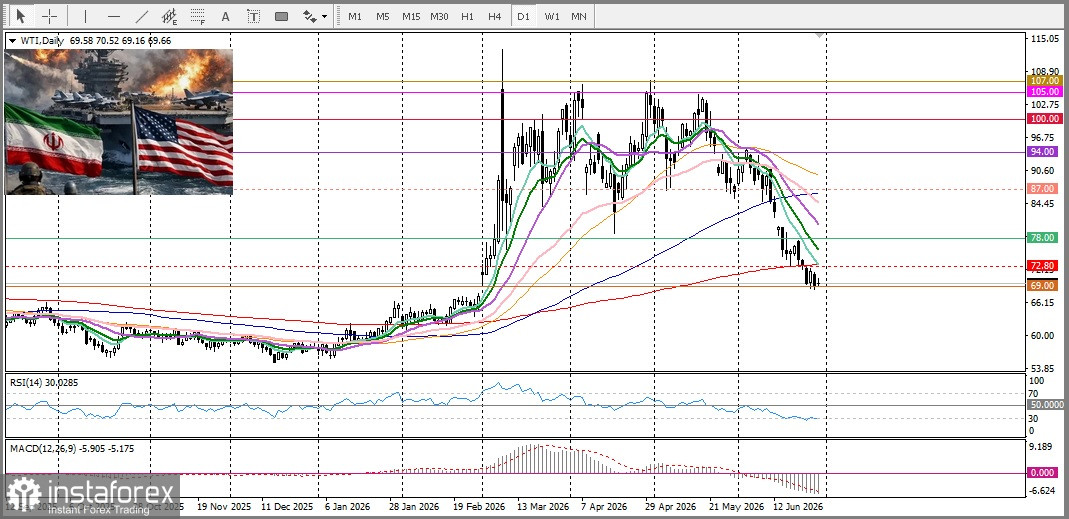
The decline in energy prices fuels the view that the US may avoid the worst-case scenarios many economists feared earlier in the year.
At the same time, activity indicators continue to point to growth. The ISM manufacturing PMI rose to 54 in May, while the services PMI climbed to 54.5. Both readings indicate ongoing expansion and starkly contrast with recession fears that intensified after the conflict began. As Jonathan Golub, chief equity market strategist at Seaport Research Partners, noted, business demand is in a stage of "clear expansion." Consumers likewise show no signs of sharp weakening, despite higher gasoline prices.
Part of this resilience may reflect structural changes in the US economy. Eswar Prasad, professor of trade policy and economics at Cornell University, told Fortune recently: "The US is no longer the manufacturing powerhouse it once was." He emphasized that the growing role of the services sector has helped cushion the blow from higher energy costs, and the US position as a net exporter of crude oil provides an additional buffer amid the current oil shock.
¡Los informes analíticos de InstaSpot lo mantendrá bien informado de las tendencias del mercado! Al ser un cliente de InstaSpot, se le proporciona una gran cantidad de servicios gratuitos para una operación eficiente.


