




¡La leyenda en el equipo de InstaSpot!
¡Leyenda! ¿Cree que es una retórica grandilocuente? Pero, ¿cómo deberíamos llamar a un hombre, que se convirtió en el primer asiático en ganar el campeonato mundial de ajedrez júnior a los 18 años y en el primer Gran Maestro indio a los 19 años? Ese fue el comienzo de un camino difícil hacia el título de Campeón del Mundo para Viswanathan Anand, el hombre que se convirtió en parte de la historia del ajedrez para siempre. ¡Ahora una leyenda más en el equipo de InstaSpot!





Borussia es uno de los clubes de fútbol con más títulos en Alemania, que ha demostrado repetidamente a los fanáticos: el espíritu de competencia y liderazgo que ciertamente conducirán al éxito. Opere de la misma manera que los profesionales del deporte: con confianza y de forma activa. ¡Mantenga un "pase" del Borussia FC y lidere con InstaSpot!
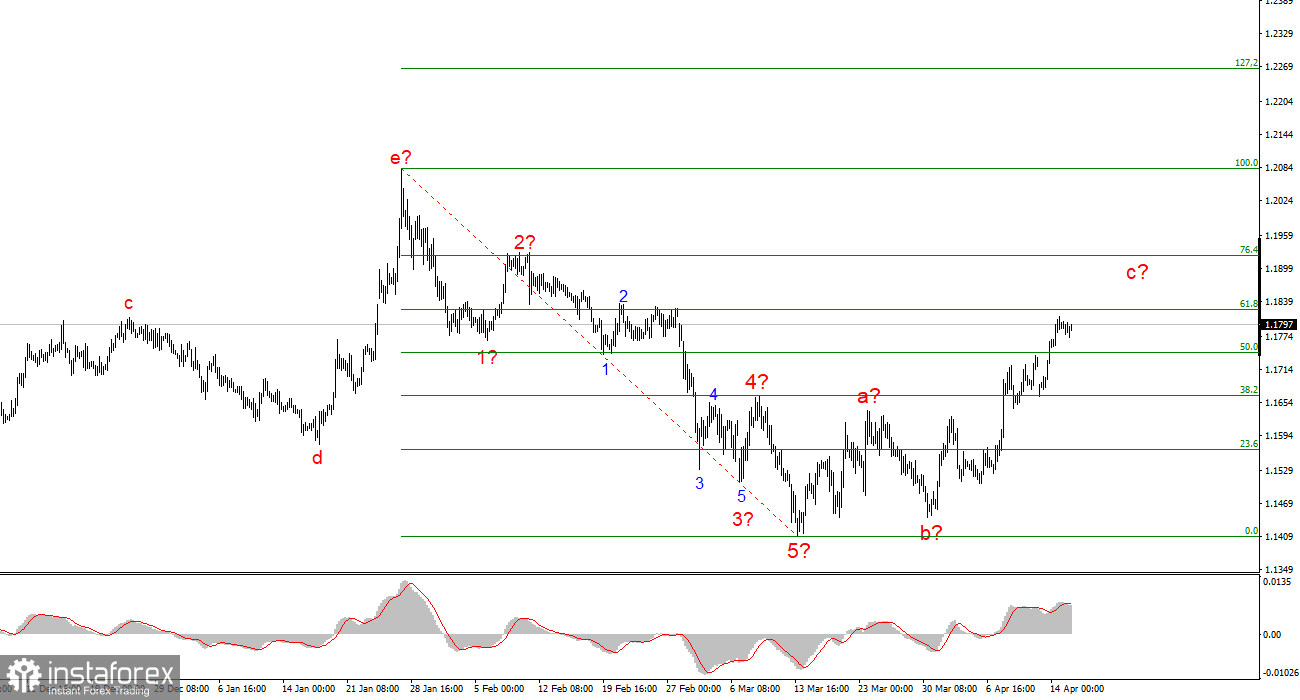
The wave pattern on the 4-hour chart for EUR/USD has changed. There is still no talk of canceling the upward trend segment (lower chart), which began in January last year, but the wave structure now looks very ambiguous. In such situations, I always recommend switching to a lower timeframe (upper chart) and analyzing simpler, smaller wave structures to make short-term forecasts—which is sufficient for opening trades. Wave structures can be very complex and allow for multiple scenarios. It is easiest to trade based on standard "five-three" patterns.
In the chart above, I can identify a classic five-wave impulsive structure with an extension in the third wave. If this is indeed the case, then the formation of this structure is complete, and a corrective structure of at least three waves is currently developing. Therefore, in the near term, an increase in quotes should be expected, but within a correction relative to the last trend segment. For now, recent wave formations do not fit well into the higher-level structure, but clarity should come over time. The euro may continue recovering toward the 1.1824 level.
The EUR/USD pair maintained a bullish bias throughout Wednesday, although price movements were minimal. At this stage, it can be assumed that the corrective wave is nearing completion. However, what should be expected next from EUR/USD? It is worth noting that after an impulsive trend segment, a correction does not always have to follow. If that were the case, higher-level trends would never change—which is impossible. Therefore, the probability that a new impulsive trend segment began on March 16 is also quite high. Geopolitics will help clarify this question.
It must be acknowledged that the situation in the Middle East has become significantly less tense in recent weeks. Although the conflict has not officially ended, active strikes have ceased. Donald Trump and J.D. Vance are increasingly speaking about a large-scale agreement and the end of the war, while Iran remains silent. However, there is no escalation, which means there is potential for de-escalation. Against this backdrop, the euro has managed to recover, but further movement will require either positive or negative news from the Middle East.
In my view, the conflict will gradually fade on its own, which would be the most positive scenario. The White House cannot concede to Tehran, admit its inability to force Iran to abandon nuclear development, or acknowledge defeat in the war (since the main objectives have not been achieved). Iran, in turn, is not willing to initiate a new conflict but also has no intention of complying with Washington's demands. This creates a stalemate, from which Washington is trying to exit while saving face. The key issue remains the Strait of Hormuz.
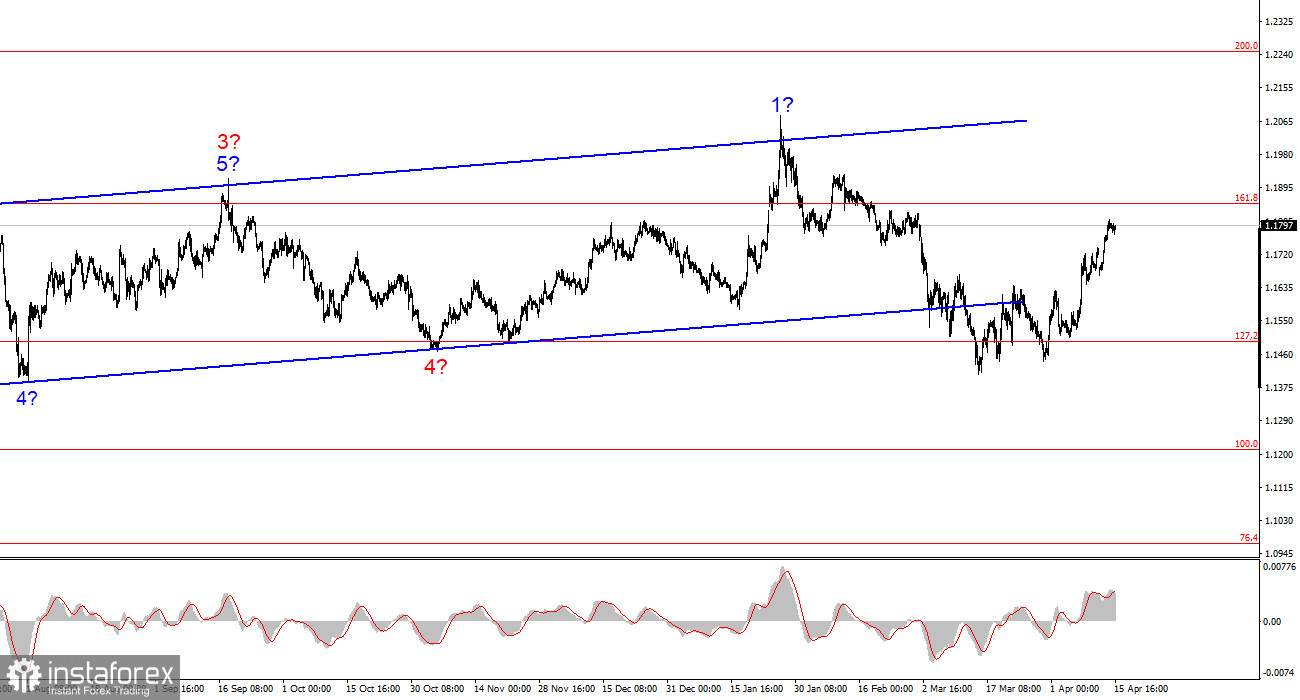
Based on the analysis of EUR/USD, I conclude that the instrument remains within an upward trend segment (lower chart) and, in the short term, within a corrective structure. The corrective wave structure appears largely complete and could become more complex and extended only if a stable ceasefire is established between Iran, the US, Israel, and all other countries in the Middle East. Otherwise, I believe a new downward wave structure could begin from current levels. A failed attempt to break above 1.1824 may lead to a pullback from recent highs.
On the lower timeframe, the entire upward trend segment is visible. The wave structure is not entirely standard, as corrective waves differ in size. For example, the higher-degree wave 2 is smaller than the internal wave 2 within wave 3. However, such cases do occur. It is better to focus on clear structures on charts rather than strictly adhering to every wave count. The trend may reverse in the near future.
Key principles of my analysis:
*El análisis de mercado publicado aquí tiene la finalidad de incrementar su conocimiento, más no darle instrucciones para realizar una operación.
¡Los informes analíticos de InstaSpot lo mantendrá bien informado de las tendencias del mercado! Al ser un cliente de InstaSpot, se le proporciona una gran cantidad de servicios gratuitos para una operación eficiente.


