




¡Nuestro equipo cuenta con más de 7,000,000 operadores!
Cada día, trabajamos juntos para mejorar las operaciones. Obtenemos grandes resultados y seguimos adelante.
El reconocimiento de millones de operadores en todo el mundo es el mejor agradecimiento a nuestro trabajo! ¡Usted hizo su elección y haremos todo lo que esté a nuestro alcance para satisfacer sus expectativas!
¡Juntos somos un gran equipo!
InstaSpot. ¡Orgulloso de trabajar para usted!





¡Actor, 6 veces ganador del torneo UFC y un verdadero héroe!
El hombre que se hizo a sí mismo. El hombre que sigue nuestro camino.
El secreto detrás del éxito de Taktarov es el constante movimiento hacia el objetivo.
¡Revele todo los lados de su talento!
Descubra, intente, fracase, ¡pero nunca se rinda!
InstaSpot. ¡Su historia de éxito comienza aquí!
A couple of months ago, I regularly mentioned that a lot in the currency market depends on American data and, therefore, on the US dollar. Currently, the dollar likely influences about 95% of all movements. For the past month and a half, we have observed straightforward movements based solely on one factor—geopolitics. If the situation in the Middle East deteriorates, the dollar rises. If a glimmer of hope appears, the dollar decreases. Next week, the situation is unlikely to change, but it will be compounded by important reports on the US labor market and unemployment.
Recall that for over a year, Nonfarm Payrolls data has essentially remained at the zero mark. For example, on average last year, 15,000 to 20,000 new jobs were created each month. This is not just low; it's practically zero. The data for February was a significant disappointment, with a 92,000-job reduction. I am not even looking at the March forecasts, as there has been no connection between expectations and reality over the past year. Along with this, the US unemployment rate may increase again, to 4.5%. However, even such economic data may not pose any problems for the American currency.
Investors continue to flee from risk, moving their capital into the US dollar. They are currently unconcerned about how quickly the US economy is growing or how many jobs are created each month. They simply need to safeguard their capital. Therefore, a worsening situation in the Middle East next week will very likely trigger a new decline in both instruments.
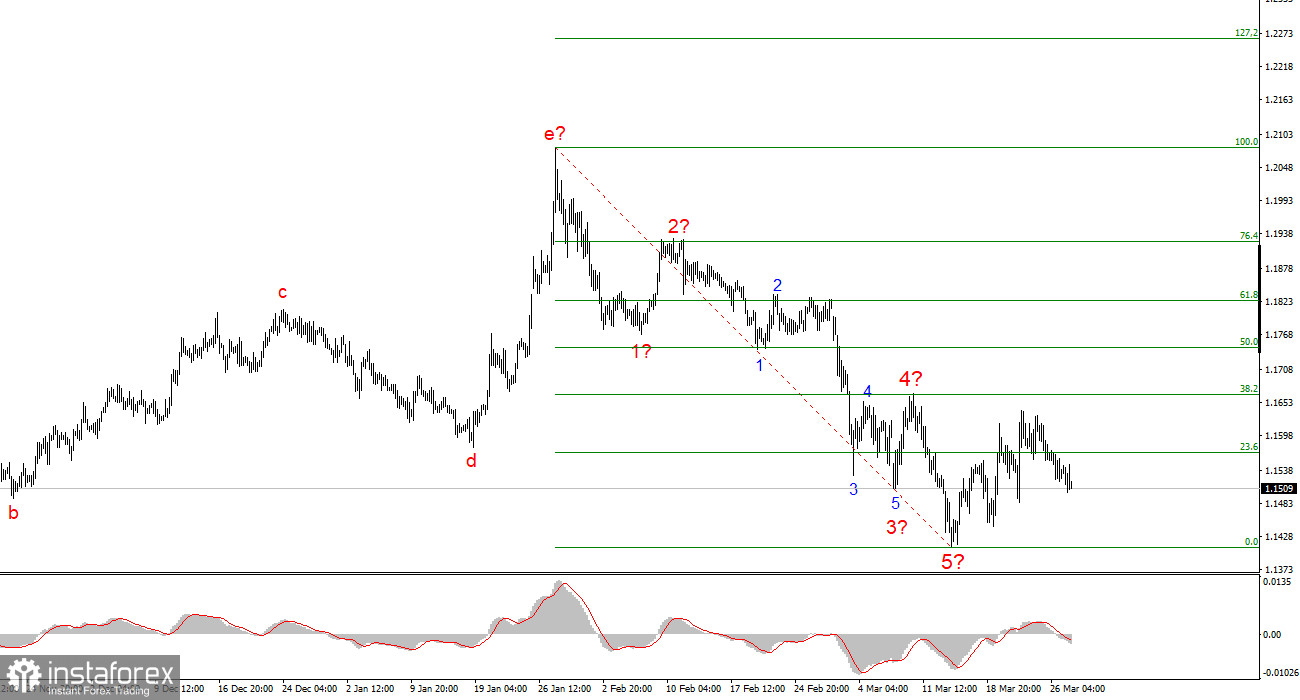
Based on the analysis of EUR/USD, I conclude that the instrument remains within an upward segment of the trend and, in the short term, has completed the formation of a downward wave set. Since the five-wave impulse structure is complete, my readers can expect price increases over the next week or two, with targets around 1.1666 and 1.1745, corresponding to the 38.2% and 50.0% Fibonacci. Further movements of the instrument will depend entirely on events in the Middle East.
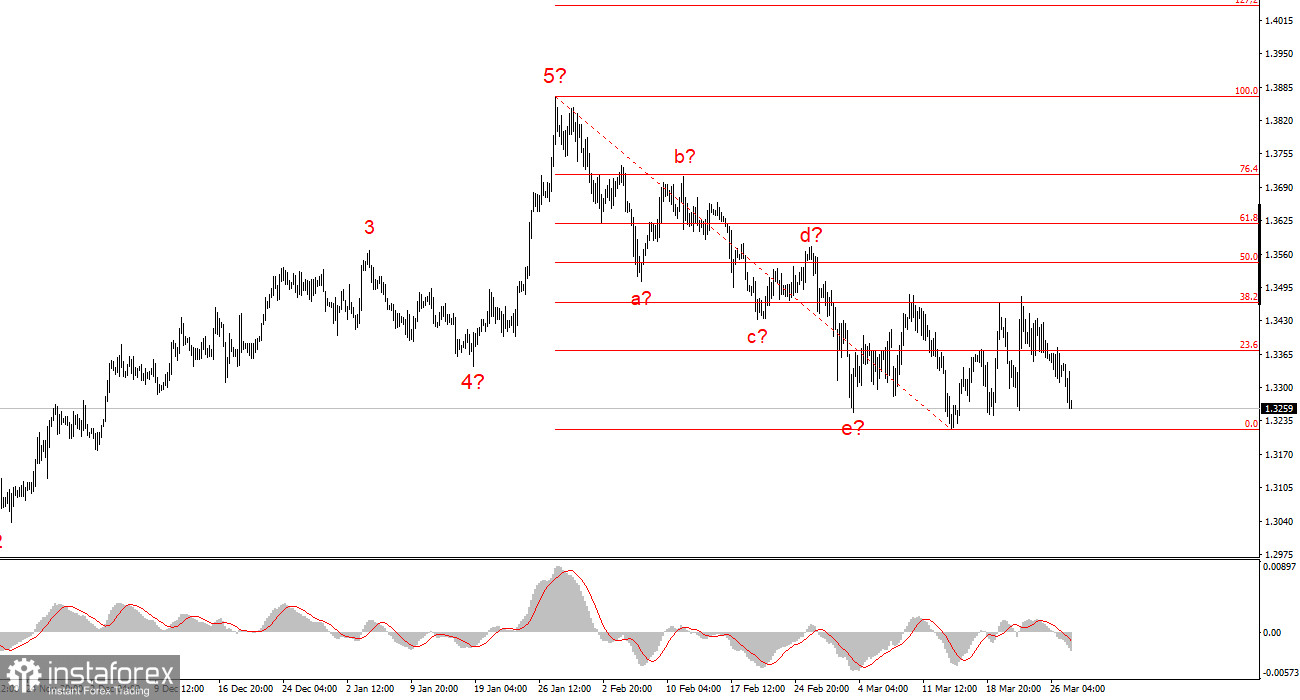
The wave structure of the GBP/USD instrument has become quite complex and difficult to read. We now see a seven-wave downward structure on the charts, which certainly does not represent clear trading signal. Most likely, there is an extension or complication within one of the waves. However, this does not make the wave pattern any clearer. If the wave pattern has once become complicated to the point of unreadability, it may become even more complicated multiple times. Therefore, I believe we should focus on the wave analysis of the EUR/USD instrument, which looks much clearer. Consequently, I also expect the pound to rise with targets around 1.3541 and 1.3620. It is also crucial to keep in mind the geopolitical factor, which can send both instruments into a new decline at any moment.
*El análisis de mercado publicado aquí tiene la finalidad de incrementar su conocimiento, más no darle instrucciones para realizar una operación.
¡Los informes analíticos de InstaSpot lo mantendrá bien informado de las tendencias del mercado! Al ser un cliente de InstaSpot, se le proporciona una gran cantidad de servicios gratuitos para una operación eficiente.


