




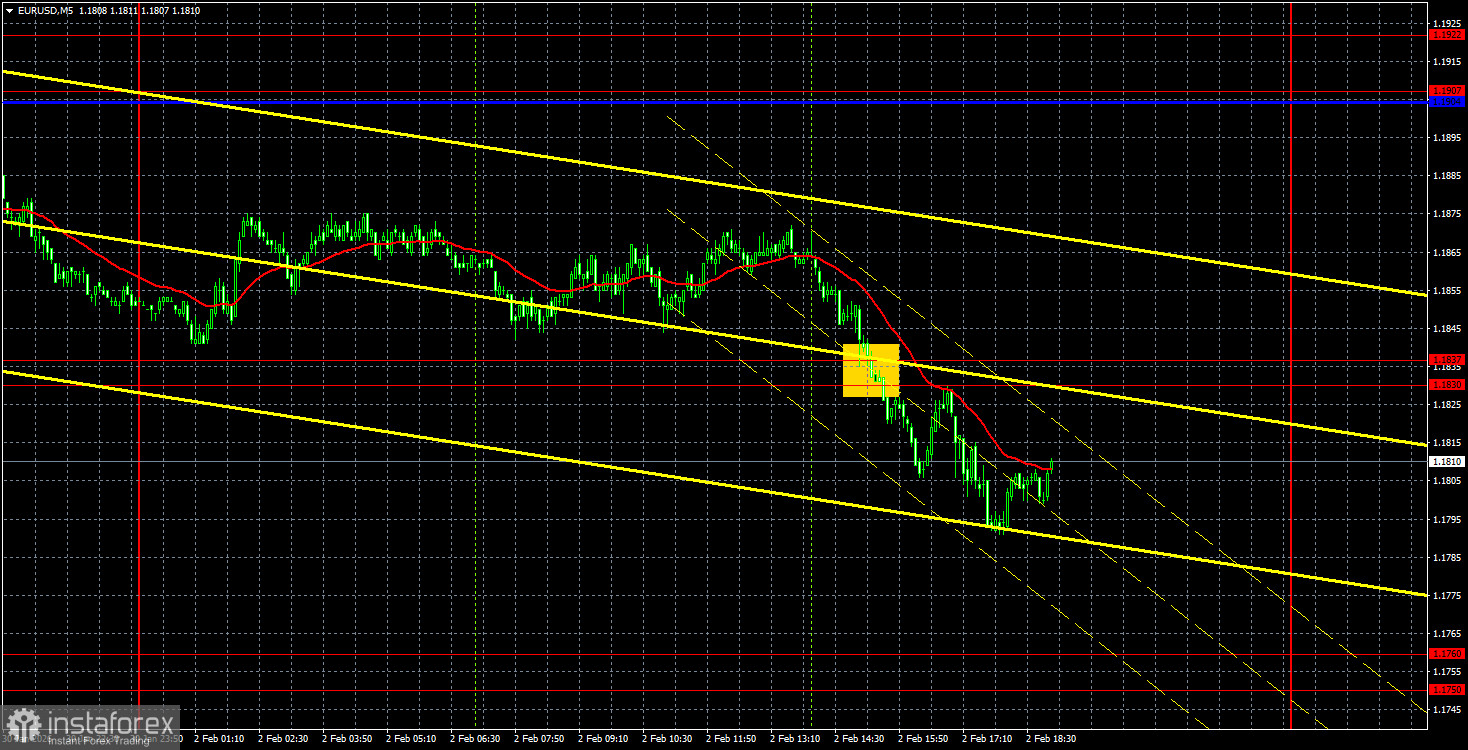
The EUR/USD currency pair continued its downward movement throughout Monday. It cannot be said that this movement was entirely illogical, but it was not completely predictable either. In the morning, several reports were published in the European Union that were immediately deemed completely secondary. Therefore, despite the relatively positive figures, the market ignored them. This is logical. During the American session, an important ISM Manufacturing Index was released, which unexpectedly rose from 48.5 to 52.6. Another victory for Trump?
We previously discussed Donald Trump's economic victories. On paper, the US economy looks quite excellent. GDP is expected to soon start growing at double-digit rates, and business activity indices have returned to positive territory. The problem lies only with the labor market and unemployment. So why did a new wave of protests against Trump begin across America over the weekend? Because all these "shiny" numbers pertain mainly to wealthy segments of the population rather than ordinary Americans. Ordinary Americans are facing inflation, rising prices, tightening policies, immigration raids, and so on. Thus, even strong U.S. economic data will not prevent the dollar from entering a downward trend over the next 2-3 years.
On the 5-minute timeframe, only one trading signal was formed yesterday. At the beginning of the American session, the price broke through the area of 1.1830-1.1837, allowing for short positions. The pair did not move far down, but the sell signal was not invalidated. Theoretically, this trade could be carried over to Tuesday, but one should not forget about the stop loss. Also, the dollar may resume its decline at any moment.
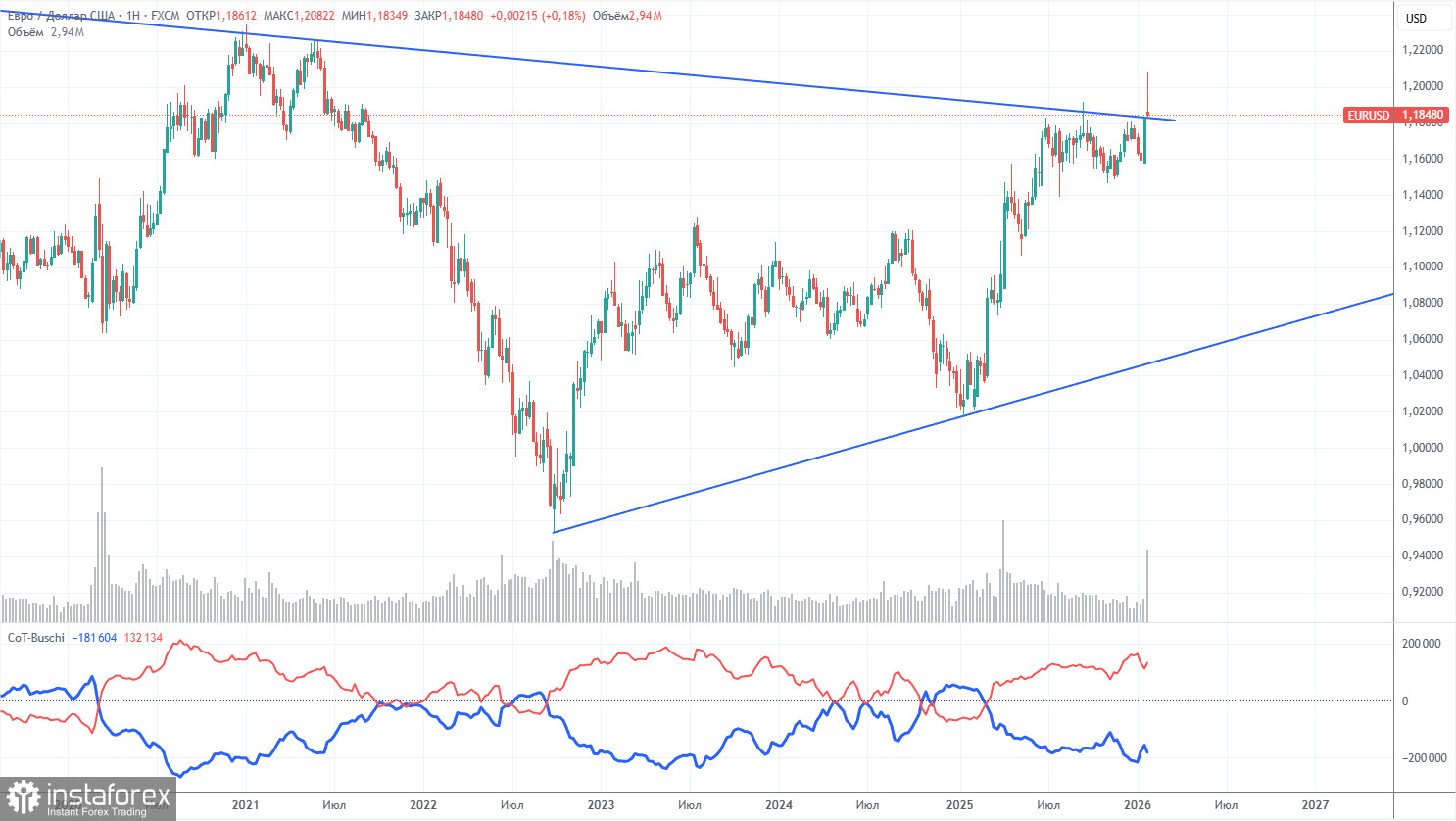
The last COT report dates back to January 27. The illustration above clearly shows that the net position of non-commercial traders remains "bullish." Since Trump took office as President of the United States for the second time, only the dollar has been falling. We cannot say with 100% certainty that the decline of the American currency will continue, but current developments around the world suggest this is a possibility.
We still do not see any fundamental factors supporting the strengthening of the European currency, while there remain sufficient factors for the decline of the American dollar. The global downward trend persists, but what relevance does the price movement of the last 18 years have now? A new upward trend has formed over the last three years, having broken the global downward trend line. Perhaps this trend line was the reason for the downward pullback.
The positioning of the red and blue lines of the indicator continues to indicate the persistence of the "bullish" trend. Over the last reporting week, the number of long positions in the "Non-commercial" group increased by 15,100, while the number of shorts decreased by 5,300. Consequently, the net position increased by 20,400 contracts over the week.
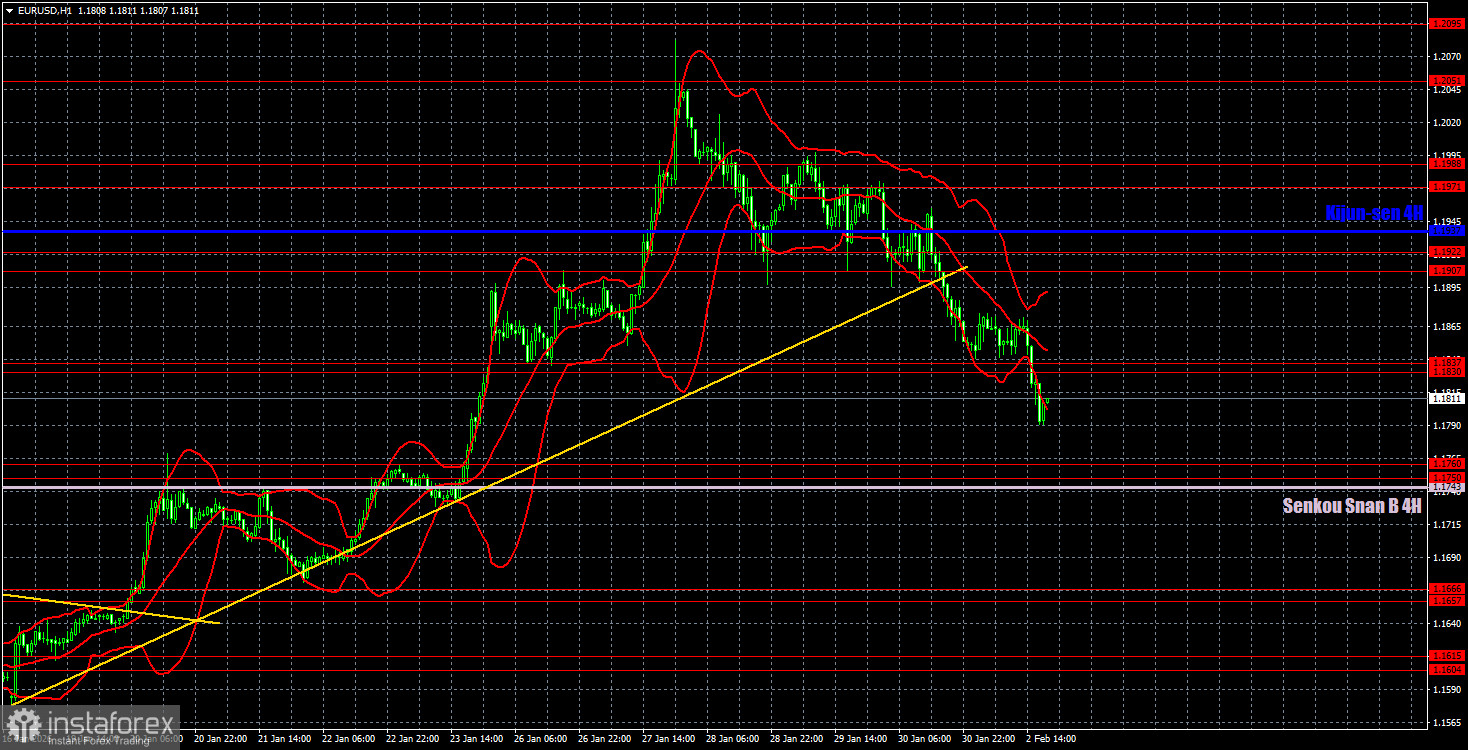
On the hourly timeframe, the EUR/USD pair continues to form an upward trend despite breaking the trend line and correcting. The pair has officially left the sideways channel of 1.1400-1.1830, where it had been for seven months. Thus, we still expect the European currency to grow in 2026. The ECB and the EU may resist this, but Donald Trump is skillfully managing the dollar. Most of his decisions lead to its decline.
For February 3, we highlight the following levels for trading: 1.1362, 1.1426, 1.1542, 1.1604-1.1615, 1.1657-1.1666, 1.1750-1.1760, 1.1830-1.1837, 1.1907-1.1922, 1.1971-1.1988, 1.2051, 1.2095, as well as the Senkou Span B line (1.1743) and Kijun-sen (1.1937). The Ichimoku indicator lines may shift throughout the day, which should be taken into account when determining trading signals. Don't forget to set the Stop Loss order to breakeven if the price moves in the correct direction by 15 pips. This will protect against potential losses if the signal turns out to be false.
On Tuesday, there are no interesting events planned in the EU and Germany, while the United States will publish the JOLTs report on job openings. This is an interesting report, but nothing more. It is published with a two-month delay, while the market has access to more recent labor market data and unemployment figures.
On Tuesday, traders can operate in the 1.1830-1.1837 range. New long positions will become relevant upon consolidation above this area, with targets at 1.1904-1.1922. Short positions can be considered upon a new rebound from the area with a target of 1.1750-1.1760.
*El análisis de mercado publicado aquí tiene la finalidad de incrementar su conocimiento, más no darle instrucciones para realizar una operación.
¡Los informes analíticos de InstaSpot lo mantendrá bien informado de las tendencias del mercado! Al ser un cliente de InstaSpot, se le proporciona una gran cantidad de servicios gratuitos para una operación eficiente.