




¡La leyenda en el equipo de InstaSpot!
¡Leyenda! ¿Cree que es una retórica grandilocuente? Pero, ¿cómo deberíamos llamar a un hombre, que se convirtió en el primer asiático en ganar el campeonato mundial de ajedrez júnior a los 18 años y en el primer Gran Maestro indio a los 19 años? Ese fue el comienzo de un camino difícil hacia el título de Campeón del Mundo para Viswanathan Anand, el hombre que se convirtió en parte de la historia del ajedrez para siempre. ¡Ahora una leyenda más en el equipo de InstaSpot!





Borussia es uno de los clubes de fútbol con más títulos en Alemania, que ha demostrado repetidamente a los fanáticos: el espíritu de competencia y liderazgo que ciertamente conducirán al éxito. Opere de la misma manera que los profesionales del deporte: con confianza y de forma activa. ¡Mantenga un "pase" del Borussia FC y lidere con InstaSpot!
The U.S. Bureau of Labor Statistics (BLS) plans to release the September inflation report on Friday, October 24. This will be the only report BLS intends to publish during the ongoing government shutdown, which underscores its significance—especially with the Federal Reserve scheduled to meet on October 29. Without updated inflation data, any justification for a rate cut from the Fed may evaporate.
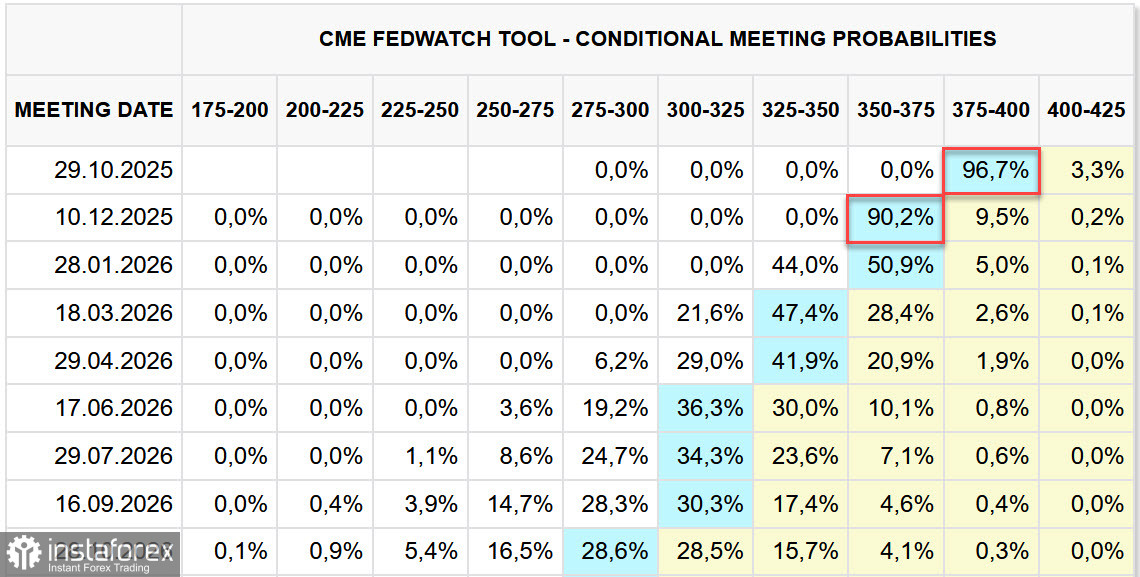
The market is currently convinced that the Fed will lower rates two more times before year-end. That's why BLS is determined to prevent market imbalance or a panic-driven reaction surrounding this key data.
That said, markets are already in a state of heightened uncertainty. On Friday, both U.S. stock indices and the cryptocurrency market sharply declined, while gold resumed its climb on Monday, hitting a new all-time high. Risk appetite has fallen drastically, primarily due to the renewed escalation of the U.S.–China trade war.
As usual, the escalation began with Trump—he announced 100% tariffs on all imports from China. According to the president, this move was triggered by China's refusal to compromise and its announcement of tighter export controls on strategically vital rare-earth metals.
However, the Chinese response expressed nothing resembling fear. Officials noted that exports to the U.S. account for only about 10% of China's total export volume—and a significant share of that can easily be rerouted to other markets.
There remain several mutually exclusive scenarios for the U.S. economic outlook. One scenario suggests that a cooling labor market is a sign of looming recession amid inflation fueled by tariff-driven cost pass-through to consumers. Another scenario argues that the U.S. economy is resilient and that any inflation will be limited, as companies absorb part of the added costs by accepting reduced profitability, while rate cuts from the Fed would give the economy a fresh boost.
It's important to clarify where possible. For instance, the deterioration in labor market data is largely attributed to aggressive government immigration policies. Currently, approximately 1,500 people are deported daily—roughly 500,000 annually. The U.S. population growth has effectively stalled, and the labor supply is rapidly shrinking. Yet the unemployment rate has remained stable—not due to falling demand, but due to reduced supply.
Equity markets had been rising sharply until recently, primarily driven by explosive investment into the tech sector, particularly artificial intelligence. However, this growth was concentrated in just seven major tech companies, while the remaining 493 firms in the S&P 500 index showed virtually no gains.
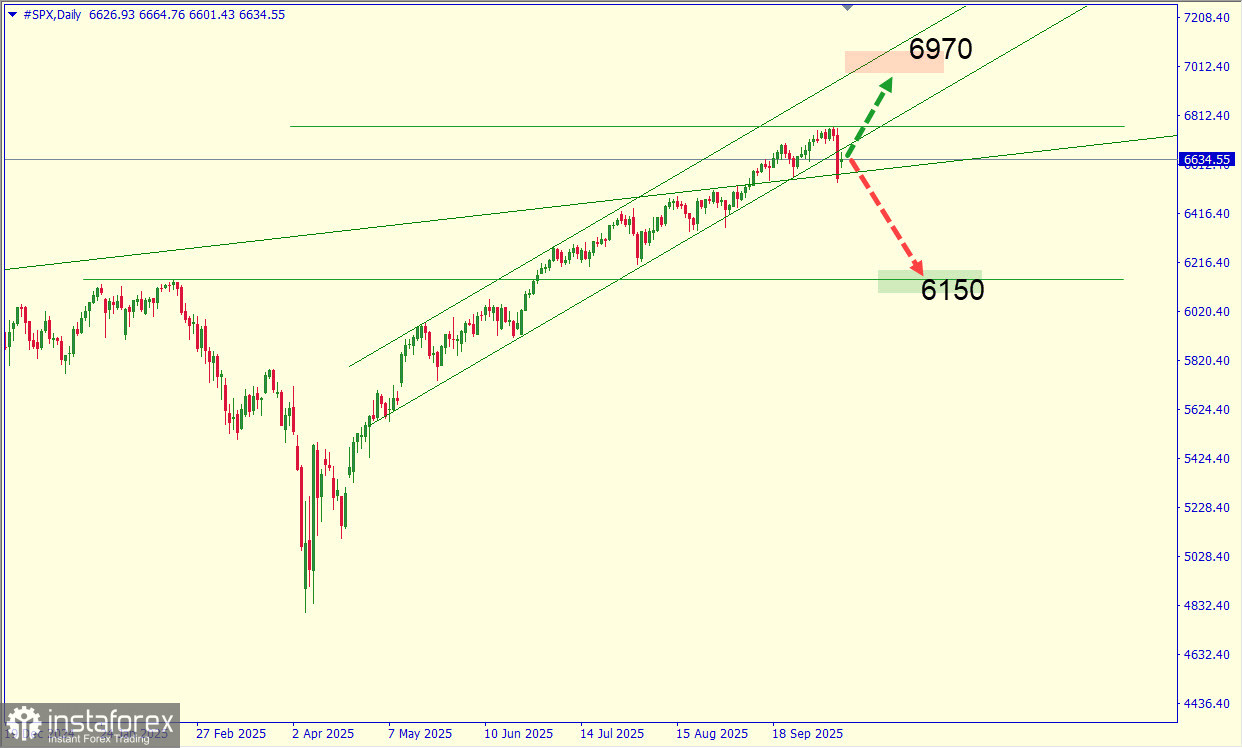
It now seems increasingly unlikely that the S&P 500 will continue rising toward the 6970 mark. A corrective move toward the 6150 level appears more probable.
Despite everything, we believe that the U.S. dollar retains fundamental support in an environment of elevated uncertainty. Supporting this conclusion are several factors:
The U.S. economy remains far from recession. If Trump and Xi Jinping fail to find common ground at their scheduled meeting in South Korea later this month, the most likely negative outcome will be a substantial U.S. stock market correction—not a collapse of the dollar.
In particular, stock indices would be hit hardest, as much of the U.S. tech sector's hardware is currently imported, unlike during the dot-com boom of the early 2000s, when more domestic production helped absorb shocks.
China's efforts to strictly control exports—especially of rare-earth materials—might undermine much of the optimism surrounding AI-driven economic growth.
*El análisis de mercado publicado aquí tiene la finalidad de incrementar su conocimiento, más no darle instrucciones para realizar una operación.
¡Los informes analíticos de InstaSpot lo mantendrá bien informado de las tendencias del mercado! Al ser un cliente de InstaSpot, se le proporciona una gran cantidad de servicios gratuitos para una operación eficiente.


