




The legend in the InstaSpot team!
Legend! You think that's bombastic rhetoric? But how should we call a man, who became the first Asian to win the junior world chess championship at 18 and who became the first Indian Grandmaster at 19? That was the start of a hard path to the World Champion title for Viswanathan Anand, the man who became a part of history of chess forever. Now one more legend in the InstaSpot team!





Borussia is one of the most titled football clubs in Germany, which has repeatedly proved to fans: the spirit of competition and leadership will certainly lead to success. Trade in the same way that sports professionals play the game: confidently and actively. Keep a "pass" from Borussia FC and be in the lead with InstaSpot!

Last week delivered a fresh macroeconomic blow to the euro. The Eurostat data published July 15–17, confirmed a deterioration in the euro area's fundamentals amid persistent geopolitical tensions and costly energy imports.
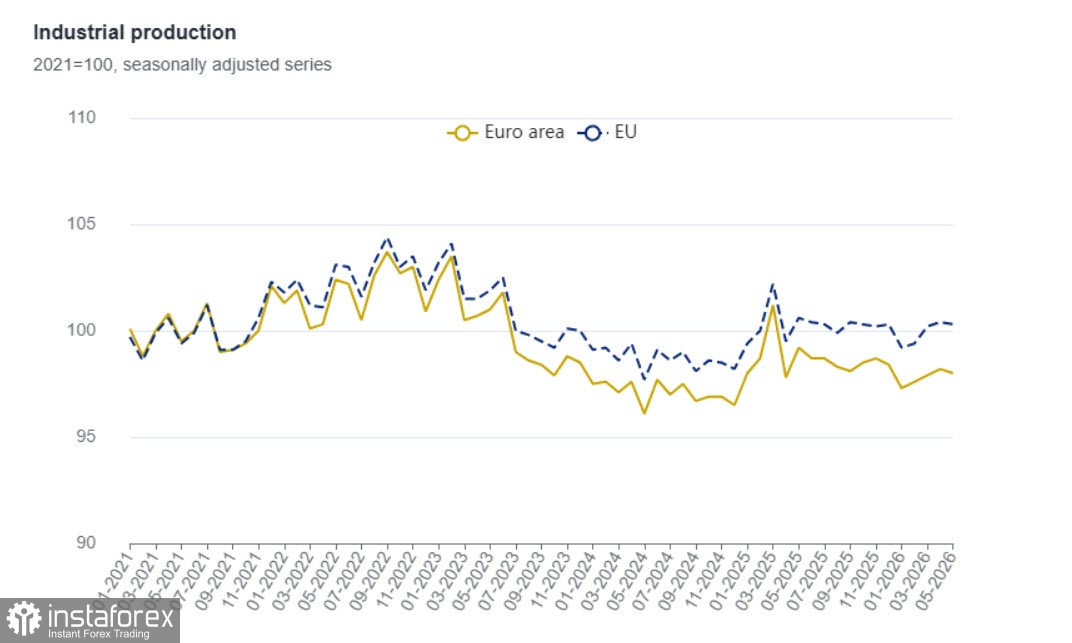
Industrial production in the euro area fell 0.2% month-on-month in May, disappointing markets that had expected 0.2% growth. On an annual basis, output was even weaker, declining 1.2%. That returns European industry to contraction after a short April rebound (+0.1% month-on-month). Germany's readings made a significant negative contribution given weak export orders and persistent problems in the automotive sector. For the EU as a whole, output fell 0.1% month-on-month and 0.3% year-on-year.
External trade figures also worsened: in May the euro area recorded a €7.8 billion deficit versus a €15.0 billion surplus a year earlier. The sharp deterioration is explained by explosive import growth — imports rose 10.0% year-on-year to €251.4 billion, while exports increased only 0.1%. Behind that lies simple but worrying arithmetic: Europe continues to import expensive energy from abroad while losing competitiveness in finished goods exports. The deficit is the deepest since April 2023.
Core price pressure in services remains firm at 3.2%, and the trade balance deficit shows that the euro area's structural problems have not gone away.
Tensions in the Strait of Hormuz remain elevated; Brent has risen above $85 per barrel, and tanker traffic has fallen materially. For an energy-importing Europe that means continued high costs and, consequently, the risk of a renewed inflationary wave in the second half. At the same time, hawkish Fed rhetoric and rising US Treasury yields continue to support the dollar.
The overwhelming majority of analysts and market participants agree that the ECB will leave its key rate unchanged at 2.25% at Thursday's meeting. June's 25-basis-point increase made the ECB the first of the major central banks to raise rates in response to the war, and the regulator is now pausing to assess the effect of measures already taken. Over the past week markets have become convinced that a July pause is effectively decided. However, escalation in the Middle East and oil returning toward $90 have raised hawkish expectations for September; a 25-basis-point move in September is now fully priced. ECB officials, judging by public remarks, appear more worried about missing an upside inflation shock than about risks to a weak but stable economy.
A net short position on the euro has persisted for a second week, but the bearish skew is modest. The implied price shows no momentum.
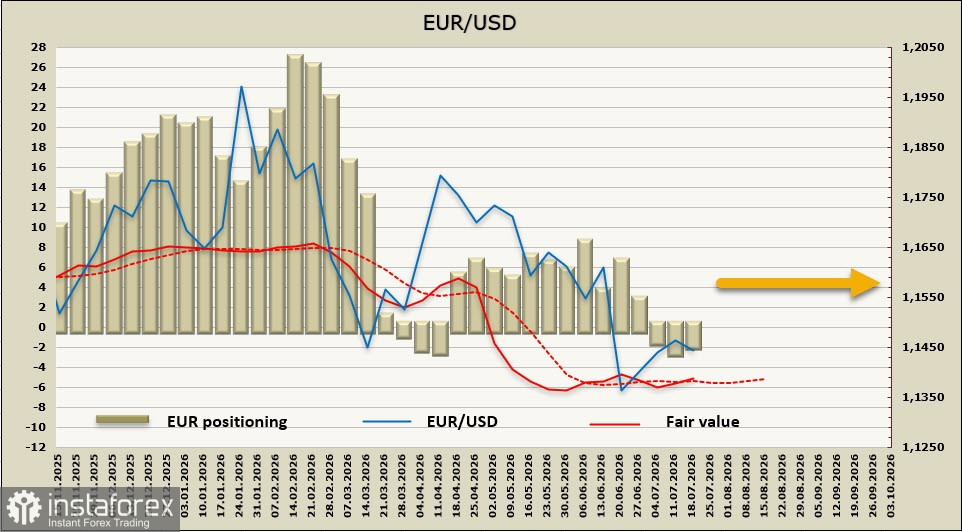
Despite the implied price not signaling a sharp near-term drop, we proceed from the view that the euro is under growing pressure. We expect consolidation to be short-lived. On a second attempt, EUR/USD should break and hold below 1.1353 and begin a move toward support at 1.1128.
*Analiza tržišta koja se ovde nalazi namenjena je boljem razumevanju tržišta i ne pruža instrukcije za vršenje trgovanja.
Uz InstaSpot-ove analitičke preglede uvek ćete biti u toku sa tržišnim trendovima! Klijentima InstaSpot-a su dostupni mnogobrojni besplatni servisi za uspešno trgovanje.


