




La leggenda nel team InstaSpot!!
Legenda! Pensi che sia troppo patetico? Ma come dobbiamo chiamare un uomo, che è diventato il primo dell'Asia a vincere il campionato mondiale di scacchi a 18 anni e che è diventato il primo Gran Maestro indiano a 19? Fu l'inizio di un duro cammino verso il titolo di campione del mondo, l'uomo che divenne per sempre una parte della storia di scacchi. Un'altra leggenda nel team InstaSpot!





Il Borussia è una delle squadre di calcio più titolate in Germania, che ha ripetutamente dimostrato ai tifosi che lo spirito di competizione e leadership porta al successo. Fai trading nello stesso modo in cui lo fanno i professionisti dello sport - fiduciosamente e attivamente. Segui il Borussia FC e sii avanti con InstaSpot!

Last week delivered a fresh macroeconomic blow to the euro. The Eurostat data published July 15–17, confirmed a deterioration in the euro area's fundamentals amid persistent geopolitical tensions and costly energy imports.
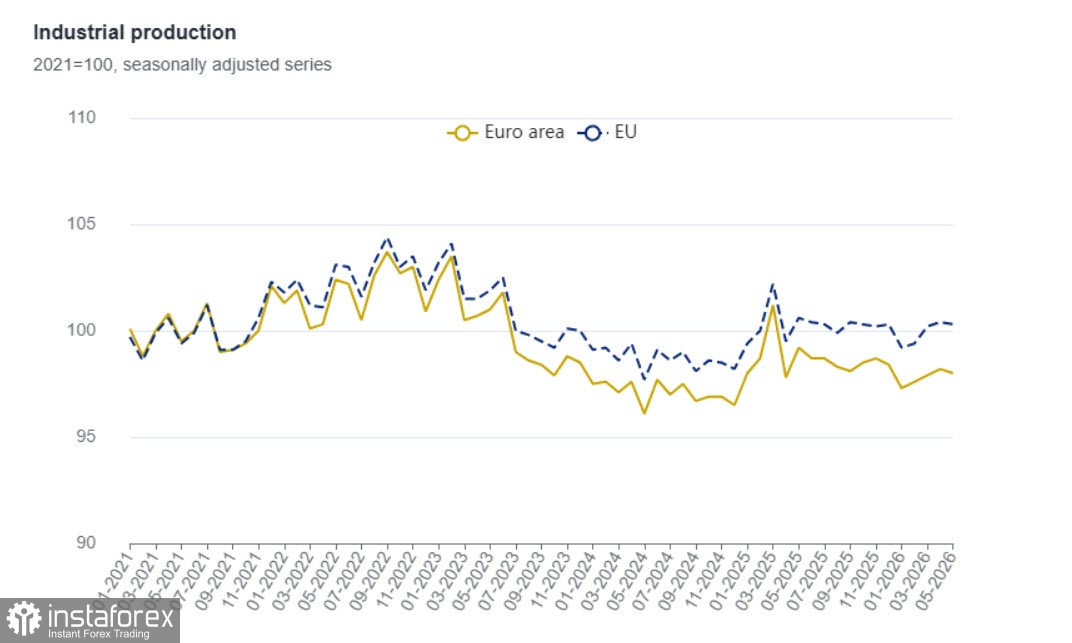
Industrial production in the euro area fell 0.2% month-on-month in May, disappointing markets that had expected 0.2% growth. On an annual basis, output was even weaker, declining 1.2%. That returns European industry to contraction after a short April rebound (+0.1% month-on-month). Germany's readings made a significant negative contribution given weak export orders and persistent problems in the automotive sector. For the EU as a whole, output fell 0.1% month-on-month and 0.3% year-on-year.
External trade figures also worsened: in May the euro area recorded a €7.8 billion deficit versus a €15.0 billion surplus a year earlier. The sharp deterioration is explained by explosive import growth — imports rose 10.0% year-on-year to €251.4 billion, while exports increased only 0.1%. Behind that lies simple but worrying arithmetic: Europe continues to import expensive energy from abroad while losing competitiveness in finished goods exports. The deficit is the deepest since April 2023.
Core price pressure in services remains firm at 3.2%, and the trade balance deficit shows that the euro area's structural problems have not gone away.
Tensions in the Strait of Hormuz remain elevated; Brent has risen above $85 per barrel, and tanker traffic has fallen materially. For an energy-importing Europe that means continued high costs and, consequently, the risk of a renewed inflationary wave in the second half. At the same time, hawkish Fed rhetoric and rising US Treasury yields continue to support the dollar.
The overwhelming majority of analysts and market participants agree that the ECB will leave its key rate unchanged at 2.25% at Thursday's meeting. June's 25-basis-point increase made the ECB the first of the major central banks to raise rates in response to the war, and the regulator is now pausing to assess the effect of measures already taken. Over the past week markets have become convinced that a July pause is effectively decided. However, escalation in the Middle East and oil returning toward $90 have raised hawkish expectations for September; a 25-basis-point move in September is now fully priced. ECB officials, judging by public remarks, appear more worried about missing an upside inflation shock than about risks to a weak but stable economy.
A net short position on the euro has persisted for a second week, but the bearish skew is modest. The implied price shows no momentum.
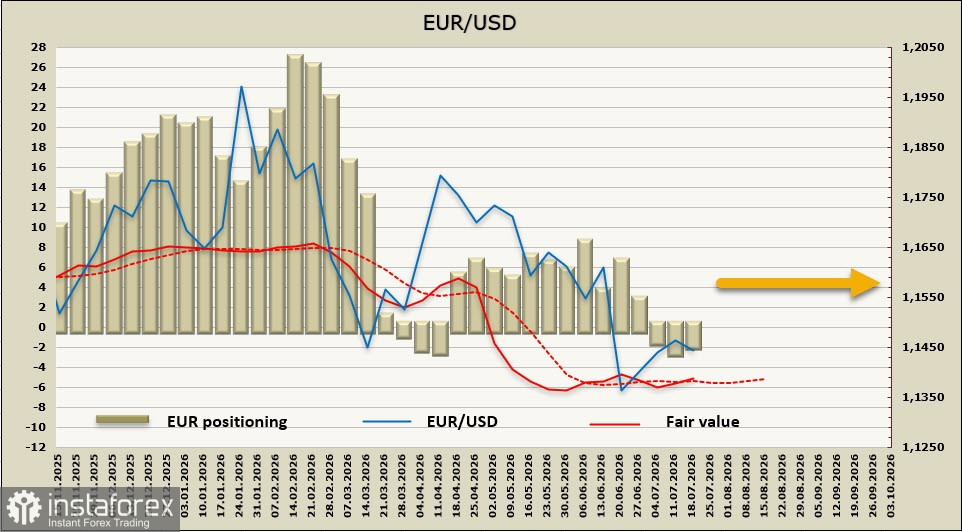
Despite the implied price not signaling a sharp near-term drop, we proceed from the view that the euro is under growing pressure. We expect consolidation to be short-lived. On a second attempt, EUR/USD should break and hold below 1.1353 and begin a move toward support at 1.1128.
*La presente analisi del mercato ha un carattere esclusivamente informativo e non rappresenta una guida per l`effettuazione di una transazione.
Le recensioni analitiche di InstaSpot ti renderanno pienamente consapevole delle tendenze del mercato! Essendo un cliente InstaSpot, ti viene fornito un gran numero di servizi gratuiti per il trading efficiente.


