



ہمارے ٹیم میں 7000000 سے ذائد تاجران شامل ہیں
ہم تجارت کی بہتری کے لئے ہر روز اکھٹے کام کرتے ہیں اور بہترین نتائج حاصل کرتے ہوئے آگے کی جانب بڑھتے ہیں
دُنیا بھر سے سے لاکھوں ہمارے بہترین کام کو سند عطاء کرتے ہیں آپ اپنا انتحاب کریں باقی ہم آپ کی توقعات پر پورا اترنے کے لئے اپنی بہترین کوشش کریں گے
ہم مل کر ایک بہترین ٹیم بناتے ہیں
انسٹا فاریکس آپ سے کام کرتے ہوئے فخر محسوس کرتا ہے



ایکٹر - یو سی ایف 6 ٹورنامنٹ چیمپین اور واقعی ہیرو
ایک فرد کے جس نے اپنا آپ منوایا ہے وہ فرد کہ جو ہماری راہ پر چلا ہے.
ٹکٹا روو کی کامیابی کا راز یہ ہے کہ وہ اپنے اہداف کی جانب مسلسل بڑھتا رہتا ہے
اپنے ہنر یا ٹیلنٹ کے تمام پہلو آشکار کررہے ہیں
پہچانیں ، کوشش کریں ، ناکام ہوں لیکن کبھی نہ رُکیں
انسٹا فاریکس آپ کی کامیابی کی کہاں یہاں سے شروع ہوتی ہے

The worst weekly rout for the S&P 500 since June and for the Nasdaq 100 since January was driven by Brent crude topping $110/bbl and investor disappointment in the AI theme. The Philadelphia-SE semiconductor index closed its eighth consecutive five-day losing streak, the longest run of losses since 2006. At the same time, the VIX volatility index is approaching the key 20 level. Fear has crept into the equity market.
Semiconductor index losing streak
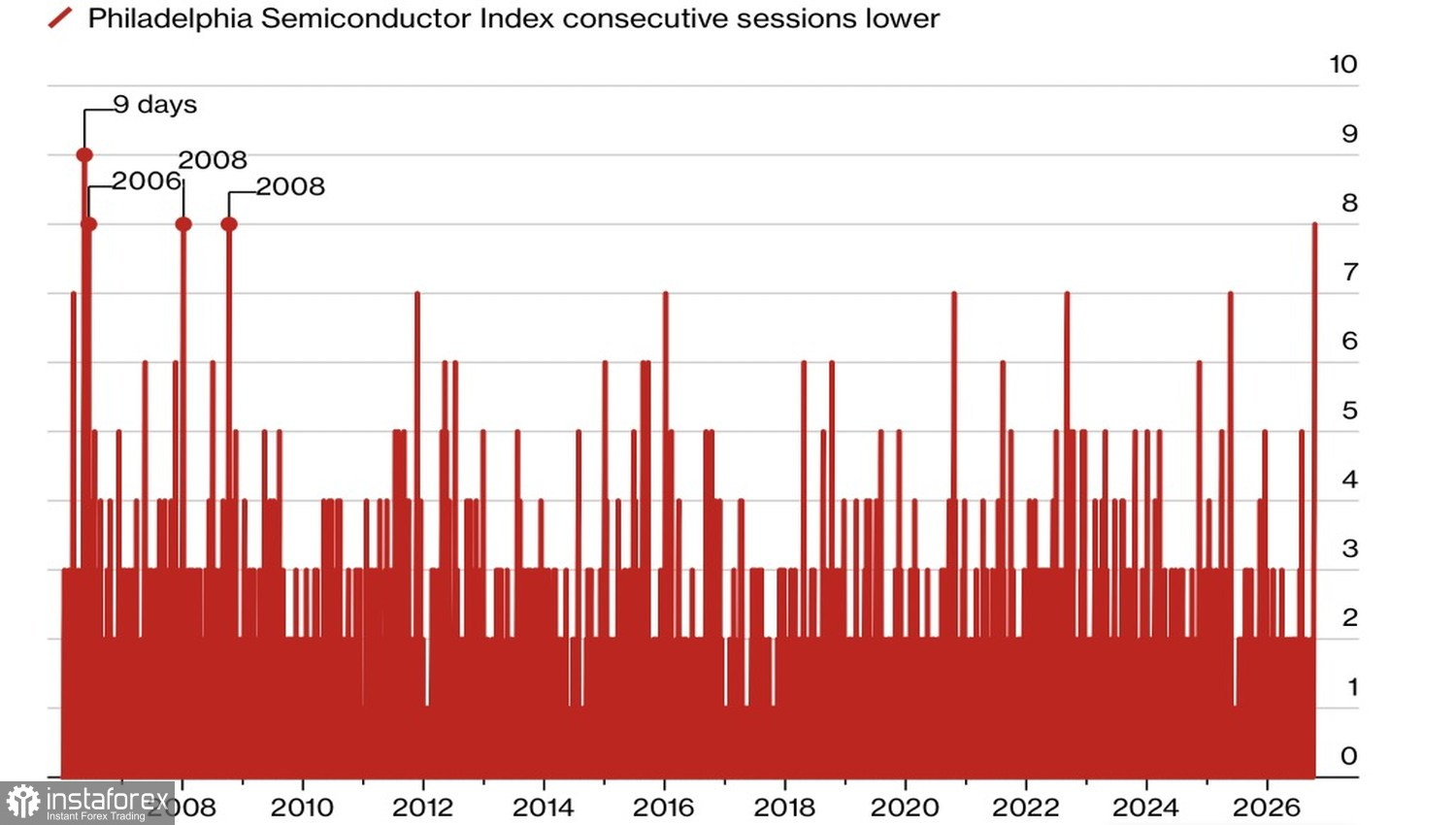
History repeats itself. Investors have seen this pattern before, albeit long ago. The US railroad bubble of the 1880s and the dot-com bubble around the turn of the century both burst and devastated equity markets, with recovery taking many years. The script is always similar: massive investments fuel linear revenue growth for the sector, but eventually capital spending slows, revenues falter, and investors, used to ever-higher expectations, turn disappointed and sell.
Something similar appears to be playing out today. Expected future earnings have come to exceed current prices by a wide margin. As a result, the P/E ratio may decline, but tempting headline multiples don't tell the full story. The concern is not the price but earnings. As with railroads and dot-coms, stellar financial results can prove temporary.
S&P 500 and expected earnings dynamics
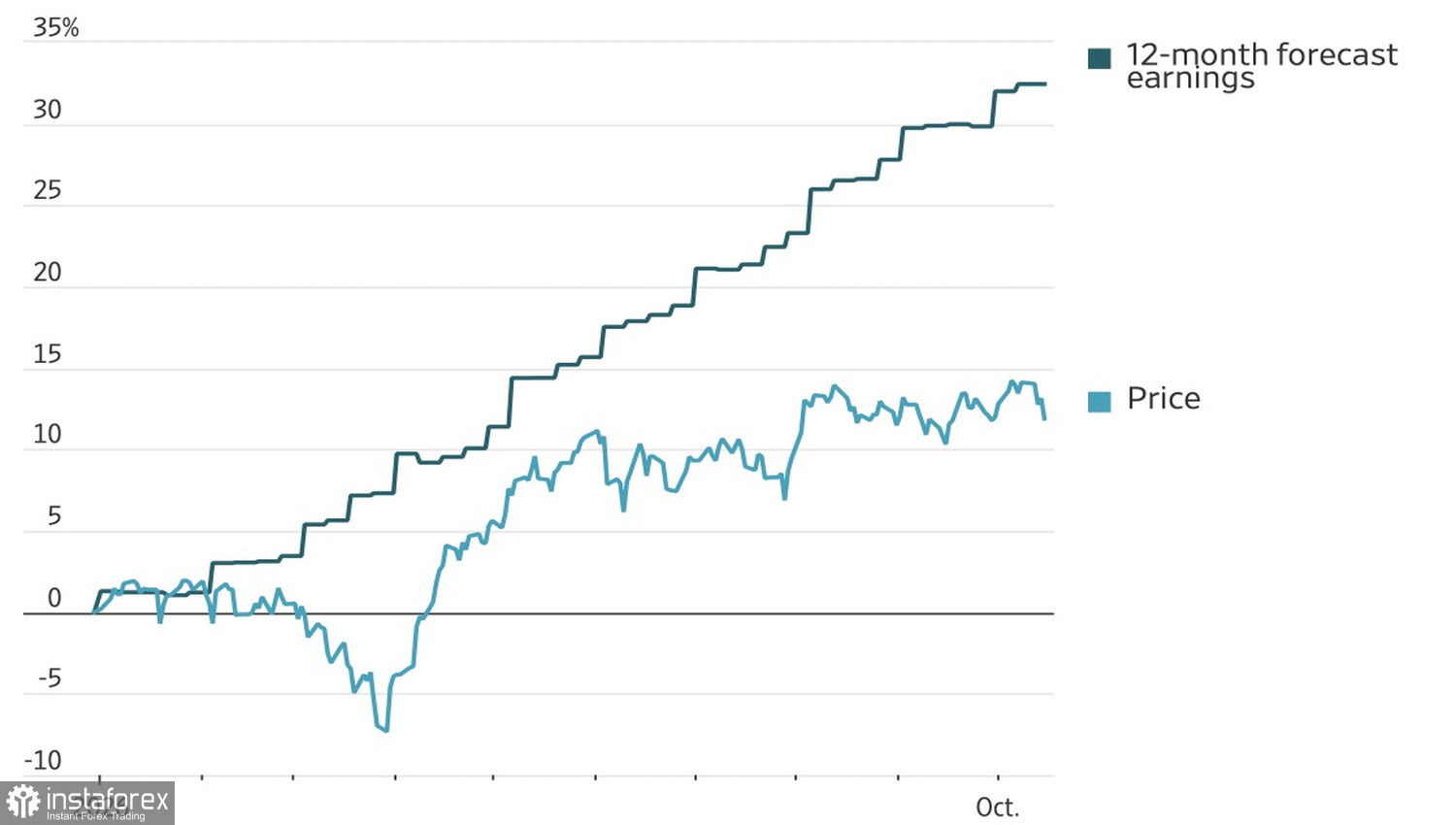
Understanding this process makes investors cautious. Greed has given way to fear, and the key question is whether corporate results will disappoint in the near term — in Q3? If so, selling among the Magnificent Seven would be entirely rational.
Minack Advisors estimates that forecasted earnings for the largest AI beneficiaries, including Amazon, Alphabet, Broadcom, Meta, Microsoft, Nvidia, Oracle, and Palantir, plus 11 closely related names, have risen by $700 billion. That compares with roughly $500 billion of expected earnings for the rest of the S&P 500.
Further pressure on the broad index comes from Brent back above $110/bbl, the first time since May. Then, the world economy was panicking over supply disruptions. Now, Middle East exports have recovered to about 80% of pre-shock levels. Investors still fear escalation, an inflation resurgence, and higher Fed rates. Combined with fading enthusiasm for AI, that has prompted broad sell-offs in US equities.
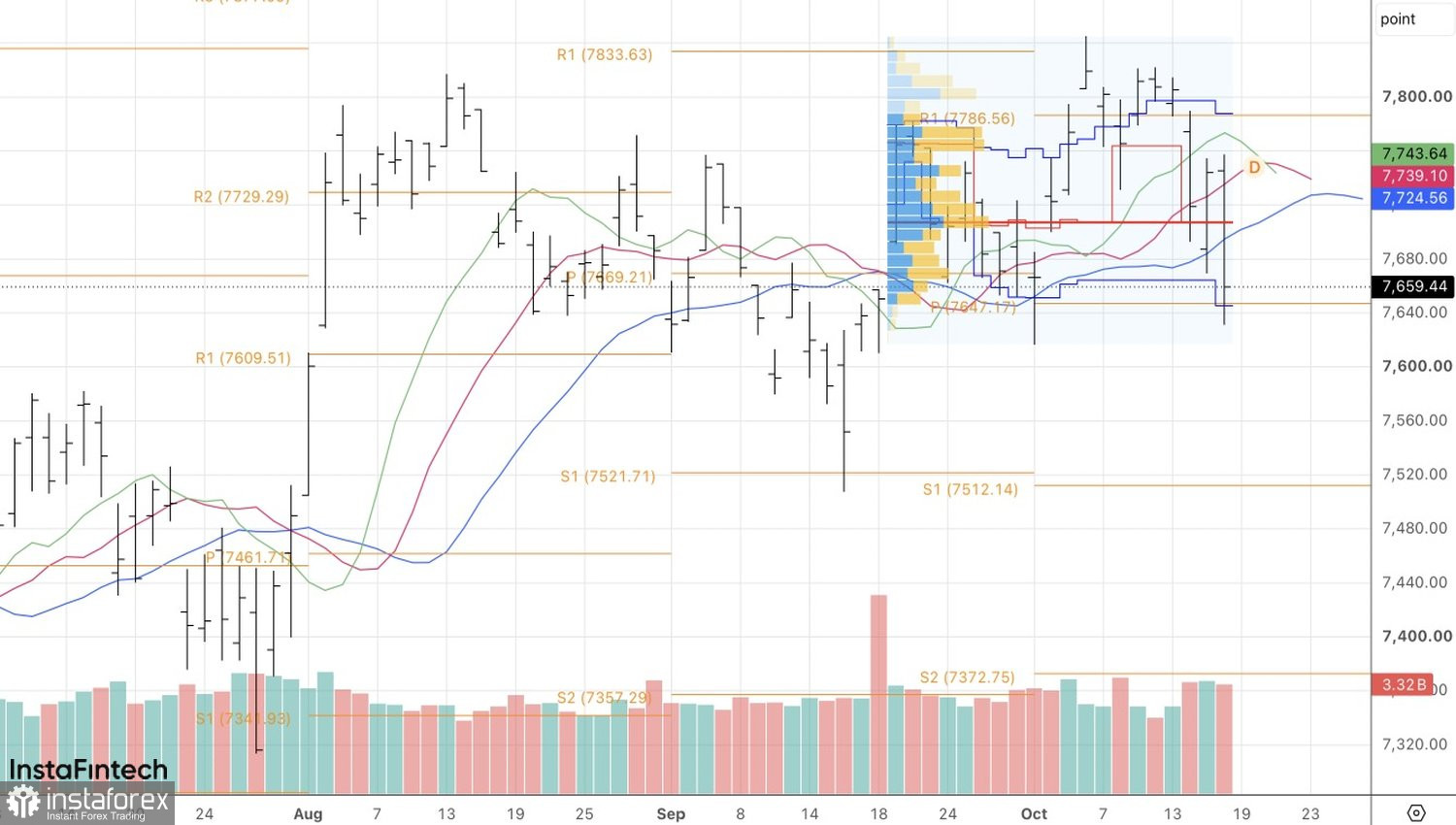
Technically, the daily chart shows that the S&P 500 has formed a bearish engulfing bar that broke fair value to the downside. That signals the bears' strength and supports a sell bias while the price remains below 7,710.
*تعینات کیا مراد ہے مارکیٹ کے تجزیات یہاں ارسال کیے جاتے ہیں جس کا مقصد آپ کی بیداری بڑھانا ہے، لیکن تجارت کرنے کے لئے ہدایات دینا نہیں.
InstaSpot analytical reviews will make you fully aware of market trends! Being an InstaSpot client, you are provided with a large number of free services for efficient trading.


