




ہمارے ٹیم میں 7000000 سے ذائد تاجران شامل ہیں
ہم تجارت کی بہتری کے لئے ہر روز اکھٹے کام کرتے ہیں اور بہترین نتائج حاصل کرتے ہوئے آگے کی جانب بڑھتے ہیں
دُنیا بھر سے سے لاکھوں ہمارے بہترین کام کو سند عطاء کرتے ہیں آپ اپنا انتحاب کریں باقی ہم آپ کی توقعات پر پورا اترنے کے لئے اپنی بہترین کوشش کریں گے
ہم مل کر ایک بہترین ٹیم بناتے ہیں
انسٹا فاریکس آپ سے کام کرتے ہوئے فخر محسوس کرتا ہے





ایکٹر - یو سی ایف 6 ٹورنامنٹ چیمپین اور واقعی ہیرو
ایک فرد کے جس نے اپنا آپ منوایا ہے وہ فرد کہ جو ہماری راہ پر چلا ہے.
ٹکٹا روو کی کامیابی کا راز یہ ہے کہ وہ اپنے اہداف کی جانب مسلسل بڑھتا رہتا ہے
اپنے ہنر یا ٹیلنٹ کے تمام پہلو آشکار کررہے ہیں
پہچانیں ، کوشش کریں ، ناکام ہوں لیکن کبھی نہ رُکیں
انسٹا فاریکس آپ کی کامیابی کی کہاں یہاں سے شروع ہوتی ہے

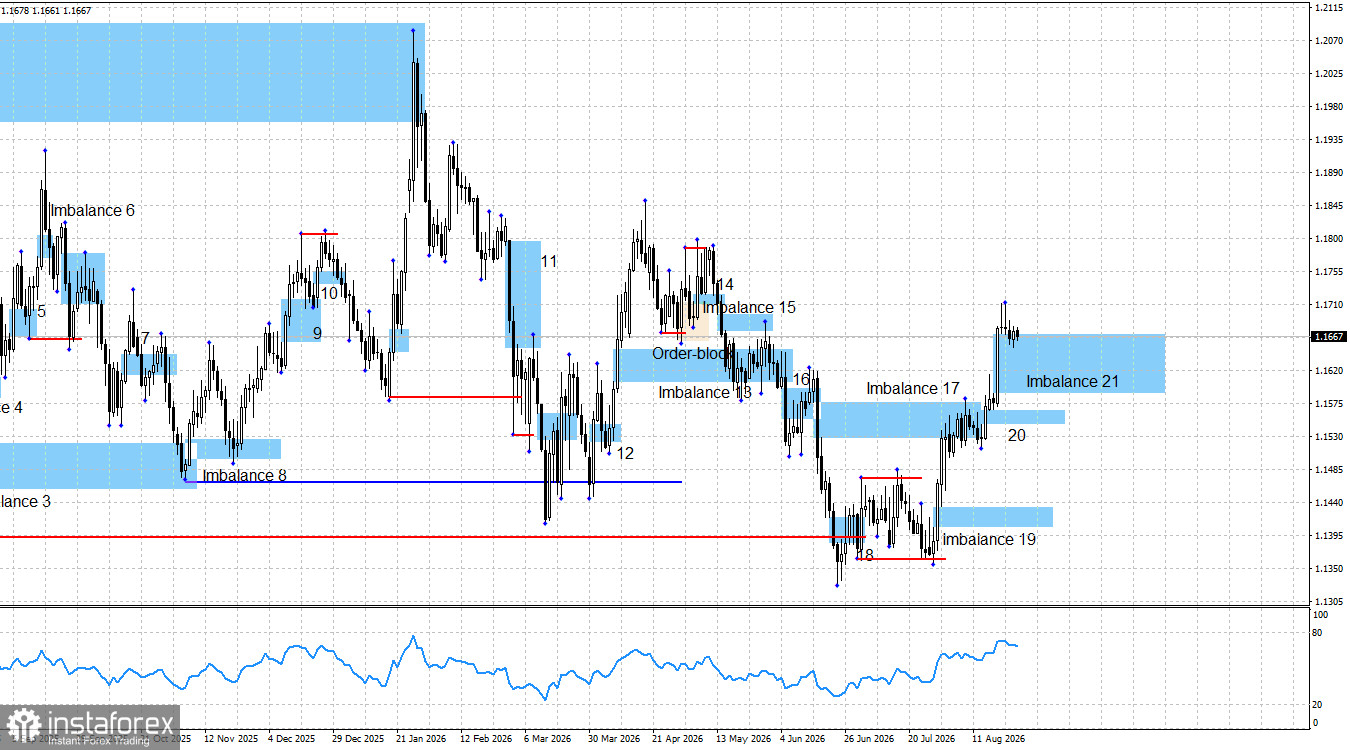
The EUR/USD pair has been rising for a month, with the move beginning after two liquidity sweeps marked by red lines on the chart. Last week, two new imbalances, 20 and 21, were formed. Both are bullish. The nearest imbalance could generate a signal on any day this week. It has essentially already been filled, and all that remains is to wait for a reaction to it or for its invalidation. Imbalance 21 is approximately 80 points wide, which is quite substantial. Therefore, the price may enter the imbalance 21 zone and remain there for some time. It may even decline to 1.1589 before beginning a new advance and forming a bullish signal. In any case, market sentiment remains bullish, which means that traders should look for buy signals.
In my view, the fundamental backdrop continues to fully support the bulls. First, any chart clearly shows that the euro began its advance from relatively low levels compared with its average price over the past year. This means that there is still room for further gains. Second, the market no longer expects the FOMC to tighten monetary policy in September. Third, the market has begun to question whether the Fed under Kevin Warsh can tighten monetary policy at all. Fourth, US economic data have recently been disappointing. Fifth, geopolitical developments are no longer supporting the bears or the dollar. Sixth, the ECB may tighten monetary policy once again this autumn. Seventh, the US Treasury has decided to increase its purchases of long-term bonds, reducing demand for the dollar. Eighth, a new trade war between the US and Canada and between the US and China could begin in the near future. Therefore, I see no reason for a bearish advance.
The latest US labor market data showed weak figures, inflation has slowed, and GDP growth has lost momentum. These three factors have raised doubts about an FOMC rate hike not only in September but also in the foreseeable future. This is precisely the factor that supported the bears as recently as June but has now turned against them. In my view, the bears' only opportunity at this point lies in a new escalation in the Middle East. However, Donald Trump is not seeking military escalation. He now wants to exert economic pressure on Iran.
The current chart structure points to a likely continuation of the bullish momentum. Bearish imbalance 17 was filled, but the reaction to it was weak, and this pattern is now considered invalidated. Bullish imbalance 19 remains unfilled. The new bullish imbalance 20 also failed to provide traders with a buy signal. Another bullish imbalance, 21, has formed and could generate a signal this week. At present, the bulls have a much stronger position and outlook than the bears.
The economic backdrop on Wednesday provided opportunities for both bulls and bears to attack, but the market is currently trying to focus on the most important events. There are two such events this week: a speech by FOMC Chair Kevin Warsh and the annualized Nonfarm Payrolls report. Both events are scheduled for Friday. If Warsh does not take a hawkish stance, or if the market does not believe him, and Nonfarm Payrolls once again come in below forecasts, the dollar's decline could resume, accompanied by the formation of the necessary signal.
There remain a large number of reasons for the bulls to attack in 2026, and even the outbreak of war in the Middle East has not reduced their number. Structurally and globally, Trump's policies, which led to a significant decline in the dollar last year, have not changed. At present, I do not see any significant factors supporting the US currency, despite the FOMC's formally hawkish stance. Geopolitical developments, which supported demand for the US currency through much of the first half of 2026, are no longer doing so. The conflict in the Middle East remains unresolved, but there have been no new hostilities from either Iran or the US.
News Calendar for the US and European Union:
The economic calendar for August 27 contains two releases, both of secondary importance. The impact of the economic backdrop on market sentiment on Thursday is expected to be very weak or absent.
EUR/USD Forecast and Trading Tips:
In my view, the pair remains in the process of forming a bullish trend. The fundamental backdrop shifted sharply in favor of the bears six months ago, but the trend itself cannot be considered invalidated or complete. Therefore, the bulls may well continue their advance following two liquidity sweeps of clearly defined lows. At present, bullish traders have an excellent support zone in the form of imbalance 21. A new buy signal could form this week. I consider 1.1797 and 1.1850 to be the targets for further gains in the euro.
*تعینات کیا مراد ہے مارکیٹ کے تجزیات یہاں ارسال کیے جاتے ہیں جس کا مقصد آپ کی بیداری بڑھانا ہے، لیکن تجارت کرنے کے لئے ہدایات دینا نہیں.
InstaSpot analytical reviews will make you fully aware of market trends! Being an InstaSpot client, you are provided with a large number of free services for efficient trading.


