




ہمارے ٹیم میں 7000000 سے ذائد تاجران شامل ہیں
ہم تجارت کی بہتری کے لئے ہر روز اکھٹے کام کرتے ہیں اور بہترین نتائج حاصل کرتے ہوئے آگے کی جانب بڑھتے ہیں
دُنیا بھر سے سے لاکھوں ہمارے بہترین کام کو سند عطاء کرتے ہیں آپ اپنا انتحاب کریں باقی ہم آپ کی توقعات پر پورا اترنے کے لئے اپنی بہترین کوشش کریں گے
ہم مل کر ایک بہترین ٹیم بناتے ہیں
انسٹا فاریکس آپ سے کام کرتے ہوئے فخر محسوس کرتا ہے





ایکٹر - یو سی ایف 6 ٹورنامنٹ چیمپین اور واقعی ہیرو
ایک فرد کے جس نے اپنا آپ منوایا ہے وہ فرد کہ جو ہماری راہ پر چلا ہے.
ٹکٹا روو کی کامیابی کا راز یہ ہے کہ وہ اپنے اہداف کی جانب مسلسل بڑھتا رہتا ہے
اپنے ہنر یا ٹیلنٹ کے تمام پہلو آشکار کررہے ہیں
پہچانیں ، کوشش کریں ، ناکام ہوں لیکن کبھی نہ رُکیں
انسٹا فاریکس آپ کی کامیابی کی کہاں یہاں سے شروع ہوتی ہے

Yesterday, equity indices posted steep losses for good reason. The S&P 500 fell by 0.45%, and the Nasdaq 100 dropped by 1.16%. The Dow Jones Industrial Average lost 0.25%.
The Middle East conflict sharply escalated, and markets reacted with a classic risk-off move — though not outright panic. Brent crude jumped by more than 3% above $76/bbl after the US launched new air strikes on Iran and revoked authorizations for purchases of Iranian oil worldwide in response to a series of attacks on vessels in the Strait of Hormuz.
The US response was large in scale. US Central Command reported that American forces completed a series of offensive strikes on Iran, hitting more than 80 targets. This was not a narrow retaliatory action but a broad operation that meaningfully raises the stakes in the conflict.
Equity market reaction, however, was noticeably more subdued than one might have expected given the escalation. The MSCI Asia index fell by only about 0.4%, S&P 500 and Nasdaq100 futures were down roughly 0.2%, and European contracts slipped by about 0.3%. That contrasts with the earlier episodes of panic at the start of the war. As long as the framework agreement remains formally in place and ship transit volumes continue to recover rather than collapse, the market response will be limited. Notably, several vessels still transited the Strait of Hormuz in the early hours of Wednesday despite the strikes on tankers.
Reactions were sharper in specific segments, especially in Asia. South Korea's KOSPI plunged by more than 6%, approaching technical bear-market territory. The sell-off reflects not only geopolitics but also ongoing capital rotation: investors are pulling money out of overheated memory-chip names and reallocating into lagging tech stories — for example, Alibaba surged by more than 10% in Hong Kong. The geopolitical shock overlaid an already-underway re-pricing of the AI sector, accelerating profit-taking in the most overheated names.
Yields on 10-year government bonds rose in Australia, Japan and New Zealand as those central banks hiked interest rates as expected. US Treasuries stabilised after Tuesday's sell-off. The dollar index remained steady after a 0.2% gain the previous day. Gold is trading in a narrow range above $4,100/oz as investors await clearer signals from the Fed on policy rather than rushing into safe-haven positions. Bitcoin fell by roughly 1.5%.
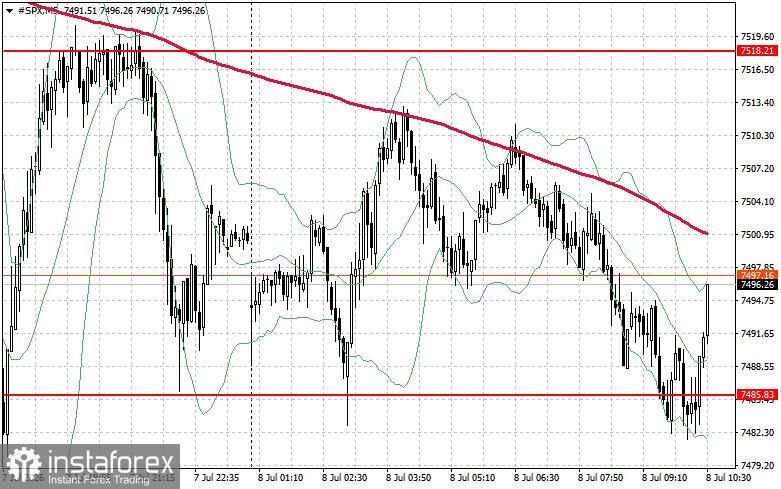
Technically, the daily chart suggests that the immediate task for buyers is to overcome the resistance level of $7,518. That would confirm upside and open the path to $7,544. Maintaining control above $7,574 would further strengthen buyers' positions. On the downside, buyers must defend the $7,494 area. A break below that level would likely push the index back to $7,474 and open the way to $7,451.
*تعینات کیا مراد ہے مارکیٹ کے تجزیات یہاں ارسال کیے جاتے ہیں جس کا مقصد آپ کی بیداری بڑھانا ہے، لیکن تجارت کرنے کے لئے ہدایات دینا نہیں.
InstaSpot analytical reviews will make you fully aware of market trends! Being an InstaSpot client, you are provided with a large number of free services for efficient trading.


