




انسٹا فاریکس ٹیم میں لیجنڈ!
لیجنڈ!آپ کو لگتا ہے کہ یہ حیرت انگیز بیانات ہے؟ لیکن ہمیں ایسے شخص کو کیا کہنا چاہئے ، جو 18 سال میں جونیئر ورلڈ شطرنج چیمپئن شپ جیتنے والا پہلا ایشین بن گیا تھا اور 19 میں پہلا ہندوستانی گرینڈ ماسٹر بنا؟ ورلڈ چیمپیئن ٹائٹل کے لئے یہ مشکل آغاز تھا جو وشونااتھ آنند کے لئے تھا ، وہ شخص جو ہمیشہ کے لئے شطرنج کی تاریخ کا حصہ بن گیا تھا۔ انسٹا فاریکس ٹیم میں اب ایک اور لیجنڈ!





Borussia is one of the most titled football clubs in Germany, which has repeatedly proved to fans: the spirit of competition and leadership will certainly lead to success. Trade in the same way that sports professionals play the game: confidently and actively. Keep a "pass" from Borussia FC and be in the lead with InstaSpot!

It's too late to be afraid. Rumors are circulating in the market that the White House may implement a universal 20% levy instead of reciprocal tariffs—pushing the average import duty to its highest level since the 1930s and triggering a global economic shock. Yet, the S&P 500 remains surprisingly calm and resilient on the eve of America's "Liberation Day." Why? And how will the broad stock index react to the event of the year?
There are several explanations for the S&P 500's resilience. Investors are confident that Donald Trump won't go too far. He is unlikely to pursue a tariff policy so aggressive that it would threaten U.S. economic growth. Investors must see more signs of a cooling U.S. GDP to continue selling the broader index. Finally, greater clarity on import tariffs will reduce uncertainty, which is good for stocks.
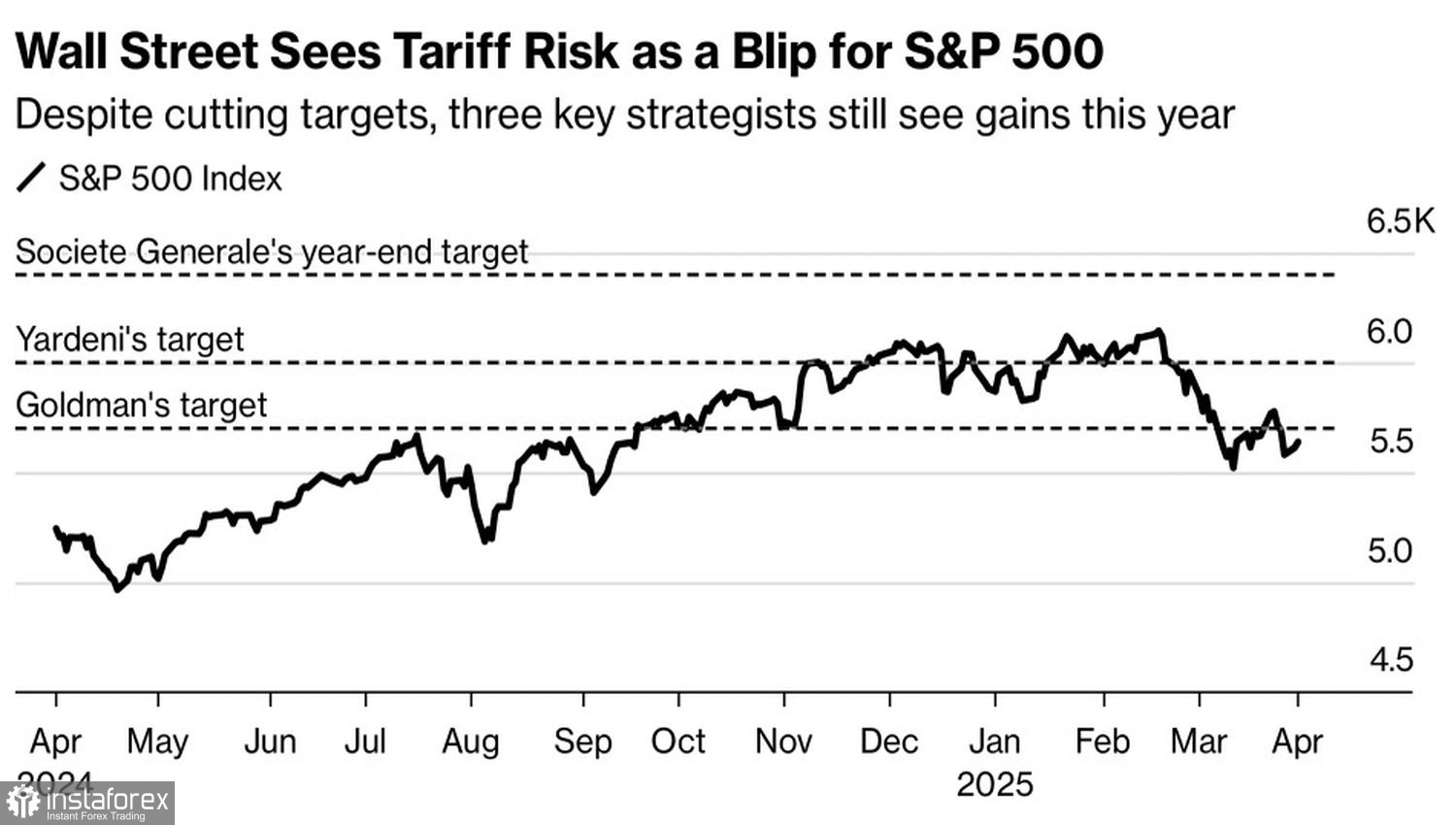
It's no surprise that while major banks and firms are lowering their forecasts for the S&P 500, they still expect the index to rise by year-end. Yardeni Research now sees a target of 6000 by the end of 2025, down from 6400; Societe Generale forecasts 6400 instead of 6750; and Goldman Sachs lowered its outlook to 5700 from 6200.
UBS Wealth Management believes the worst will happen in the short term, but tariffs will gradually be rolled back by midyear amid negotiations and concessions from other countries. This would create ideal conditions for a renewed uptrend in the S&P 500 between July and December. That scenario seems plausible—but what if other nations don't bend to the White House's demands? They could redirect exports elsewhere, with the U.S. ultimately suffering.
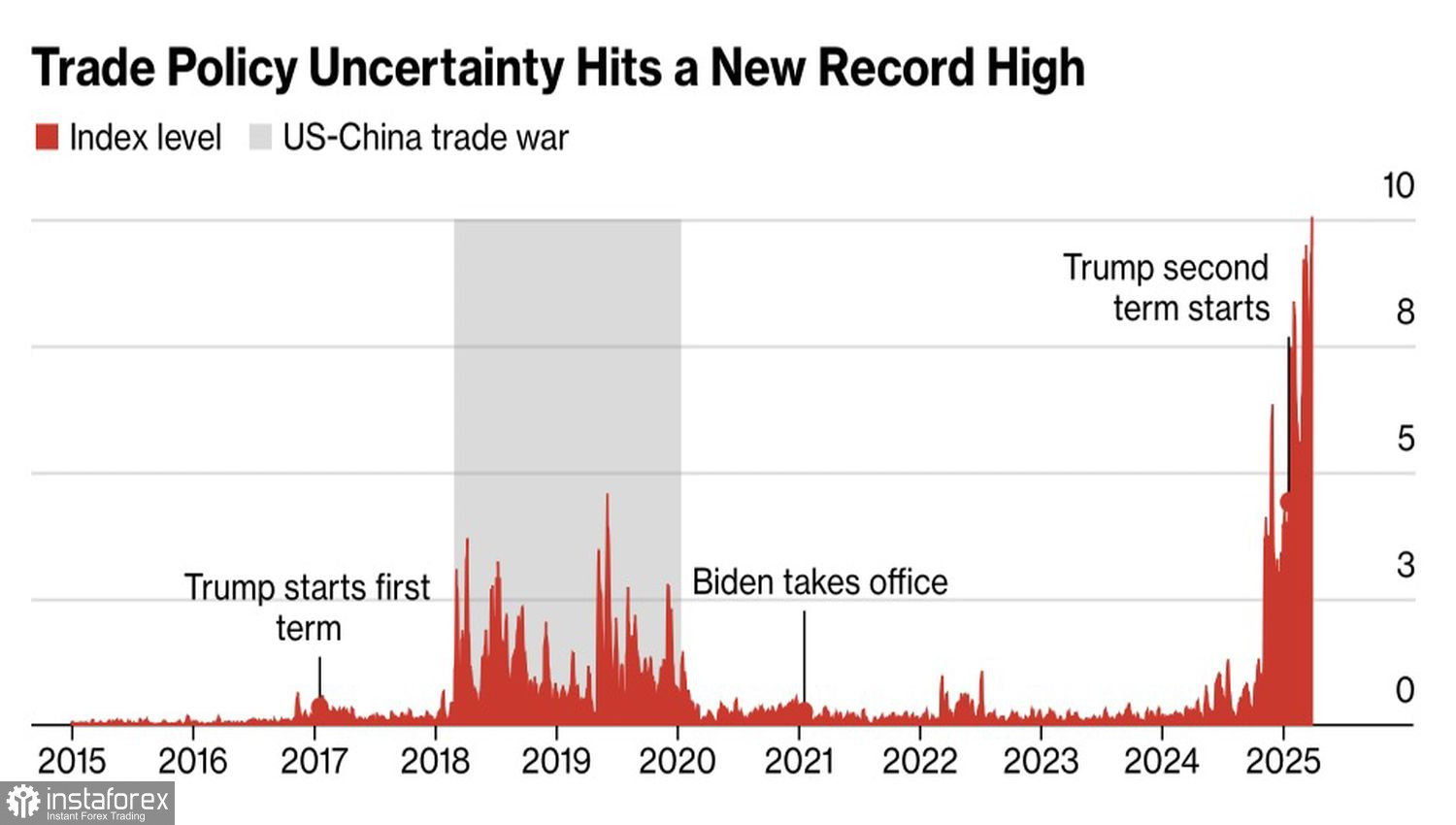
Indeed, the experience of Trump's first trade war with China shouldn't be used as a template. Back then, Washington's allies were largely supportive, and fiscal stimulus helped supercharge the U.S. economy just before the tariffs were implemented. A key difference now is the significantly higher spike in trade policy uncertainty compared to eight years ago.
According to the U.S. administration, tariffs will take effect the day they're announced. The S&P 500's reaction will largely depend on the scale of those tariffs. Only across-the-board 20% levies are likely to shake the index. On the other hand, reciprocal tariffs targeting a group of countries could trigger a rebound in U.S. equities as investors rush to buy the dip.
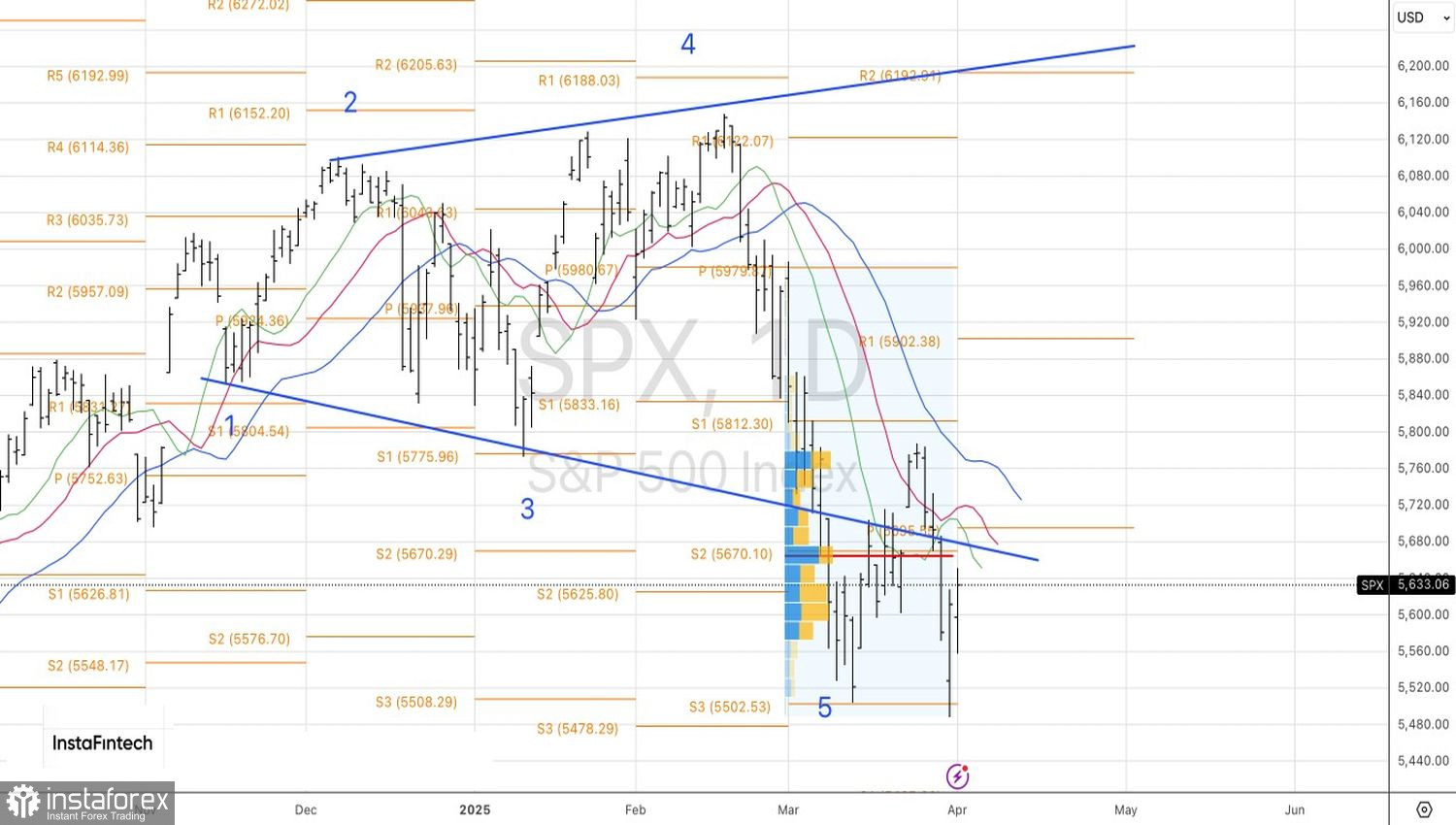
From a technical perspective, the S&P 500 continues to form a Double Bottom pattern on the daily chart. A breakout above the 5670 resistance level would provide an opportunity to build long positions opened during the drop toward the lower end of the 5500–5790 trading range. Conversely, if bulls fail to break through fair value resistance, it would signal weakness.
*تعینات کیا مراد ہے مارکیٹ کے تجزیات یہاں ارسال کیے جاتے ہیں جس کا مقصد آپ کی بیداری بڑھانا ہے، لیکن تجارت کرنے کے لئے ہدایات دینا نہیں.
InstaSpot analytical reviews will make you fully aware of market trends! Being an InstaSpot client, you are provided with a large number of free services for efficient trading.


