




انسٹا فاریکس ٹیم میں لیجنڈ!
لیجنڈ!آپ کو لگتا ہے کہ یہ حیرت انگیز بیانات ہے؟ لیکن ہمیں ایسے شخص کو کیا کہنا چاہئے ، جو 18 سال میں جونیئر ورلڈ شطرنج چیمپئن شپ جیتنے والا پہلا ایشین بن گیا تھا اور 19 میں پہلا ہندوستانی گرینڈ ماسٹر بنا؟ ورلڈ چیمپیئن ٹائٹل کے لئے یہ مشکل آغاز تھا جو وشونااتھ آنند کے لئے تھا ، وہ شخص جو ہمیشہ کے لئے شطرنج کی تاریخ کا حصہ بن گیا تھا۔ انسٹا فاریکس ٹیم میں اب ایک اور لیجنڈ!





Borussia is one of the most titled football clubs in Germany, which has repeatedly proved to fans: the spirit of competition and leadership will certainly lead to success. Trade in the same way that sports professionals play the game: confidently and actively. Keep a "pass" from Borussia FC and be in the lead with InstaSpot!

Anything can happen sooner or later. The S&P 500 entered correction territory in just 16 trading sessions. In the previous 24 instances where stocks dropped 10% from recent record highs but avoided a bear market, it took around eight months to recover to all-time highs. This suggests that the broad stock index is unlikely to regain its uptrend before mid-October.
S&P 500 correction trends
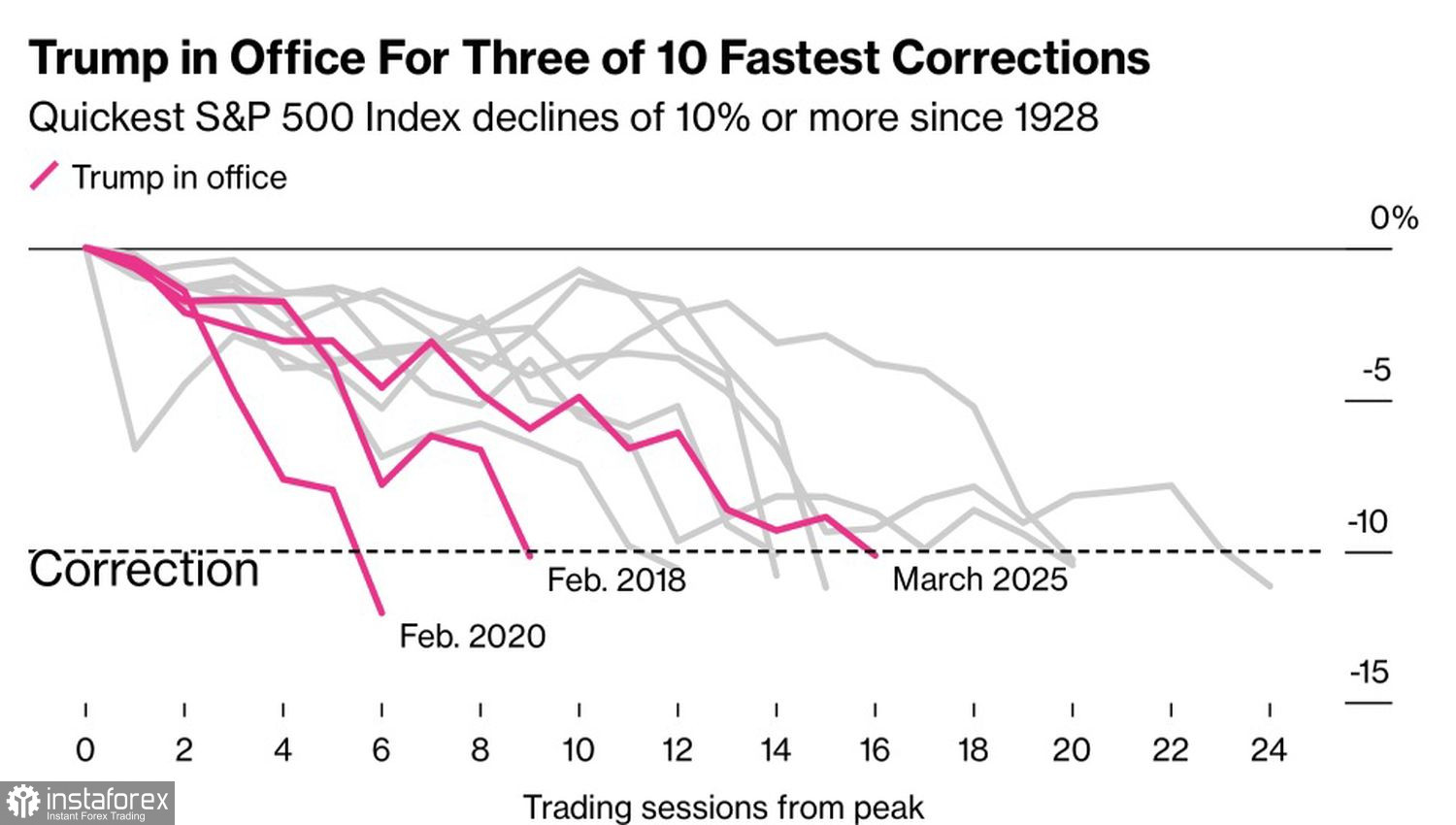
The euphoria that dominated the stock market during the presidential elections in November has now been replaced by pessimism. Investors have realized that events are unfolding differently than they had anticipated. They had envisioned Trump 2.0 as a continuation of Trump 1.0—just like eight years ago, they expected the White House leader to start with tax cuts and deregulation, giving the US economy a boost before pushing it over the edge with tariffs.
In reality, things turned out differently. Import tariffs are not just a negotiation tactic for the Republican leader—he is genuinely committed to bringing factories and production back to the US. This overhaul of a decades-old system is spooking investors, causing them to flee like rats from a sinking ship. As a result, the S&P 500 is not just declining—it is also losing ground to its European and global counterparts.
Economic policy uncertainty is at extreme levels, and markets are questioning whether they can withstand the April 2nd shock when mutual tariffs and import duties on specific industries are set to be announced.
Catching a falling knife?
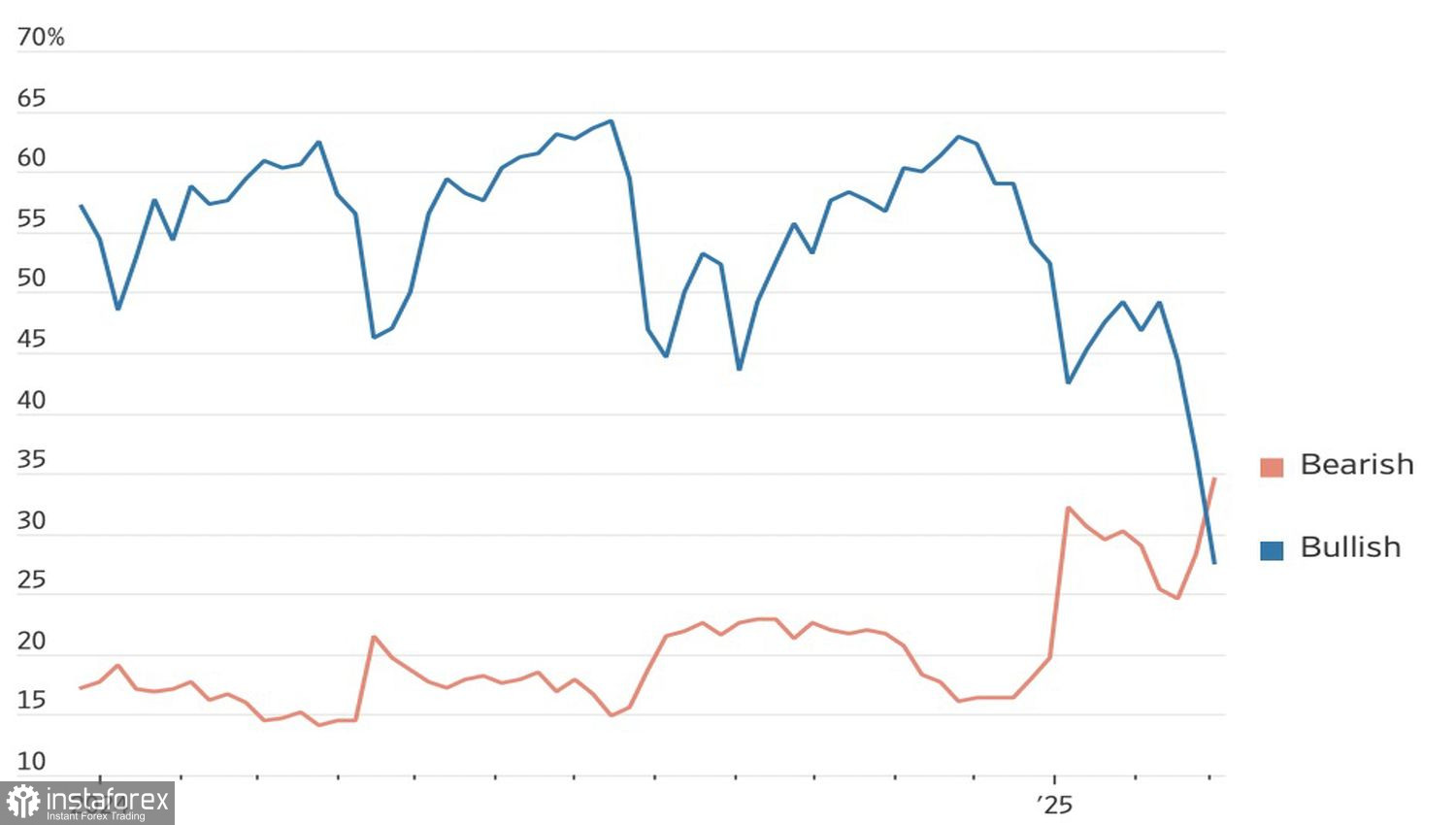
Should investors buy in a bear market under these conditions? According to surveys by the American Association of Individual Investors (AAII), the proportion of stock market bears has surpassed the number of bulls for the first time in a long while. Financial advisors are unanimously recommending selling equities. Pessimism is extreme, and historically, such moments create perfect buying opportunities. However, now might not be the ideal time, as big players don't seem as scared as the retail investors.
US stock market bull vs. bear sentiment trends
The S&P 500 downtrend poses a risk to the US economy. A Harvard University study suggests that a 20% drop in the broad stock index in 2025 could reduce GDP growth by 1 percentage point. The reason? The top 10% of wealthy American households account for half of all consumer spending. When market capitalization falls, their wealth declines, leading to sluggish spending.
Treasury Secretary Scott Bessent derines the stock market correction as "normal" and insists that stock indices will thrive due to strong tax policies and deregulation in the long run, but for now, they remain stuck in a downward spiral.
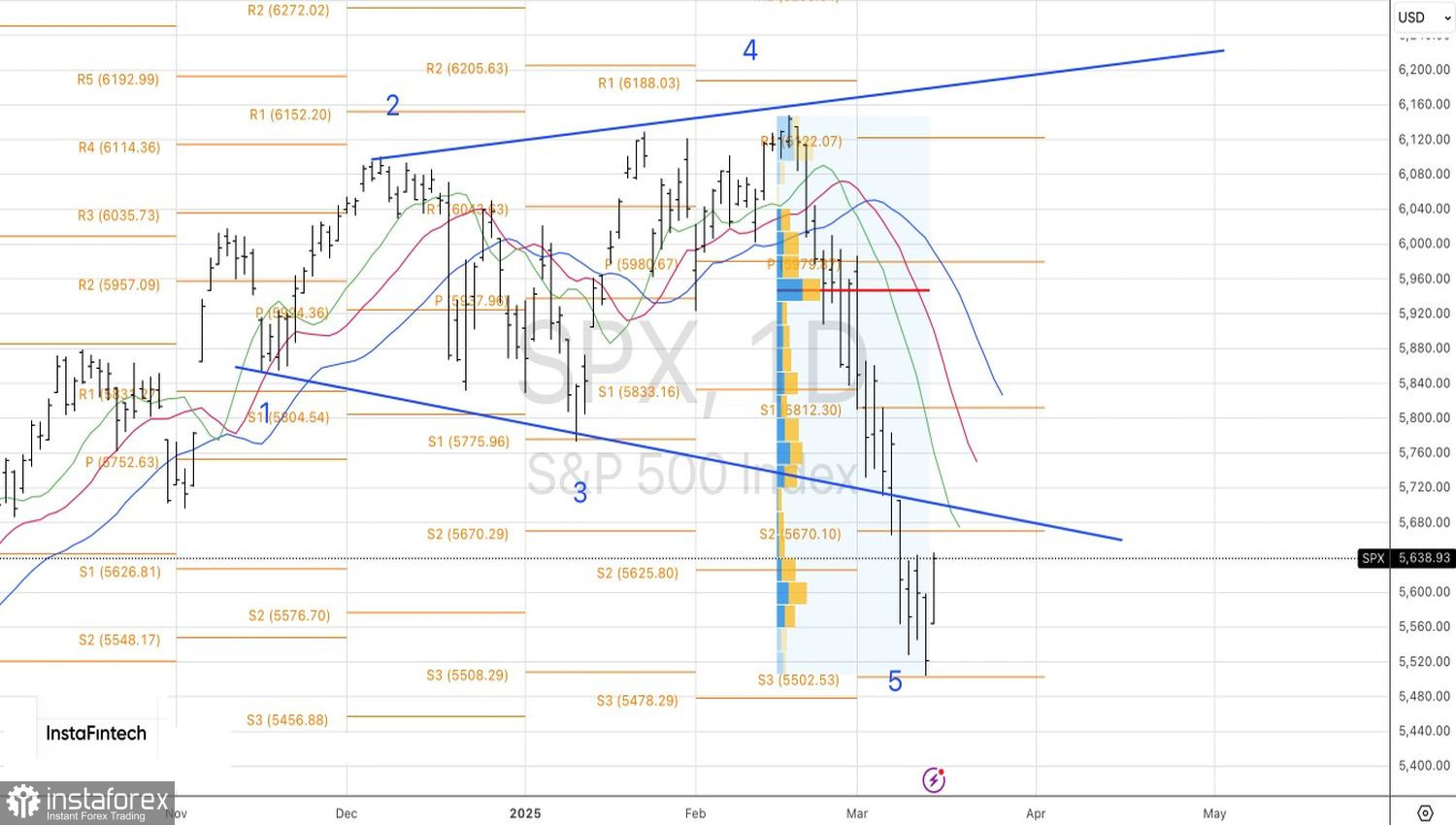
Technical outlook for the S&P 500
On the daily chart, a cluster has formed near the point 5 of the Expanding Wedge pattern. A break above 5,645 would serve as a buy signal for the S&P 500, but short-term gains are likely to be met with selling pressure at resistance levels of 5,670, 5,750, and 5,815.
*تعینات کیا مراد ہے مارکیٹ کے تجزیات یہاں ارسال کیے جاتے ہیں جس کا مقصد آپ کی بیداری بڑھانا ہے، لیکن تجارت کرنے کے لئے ہدایات دینا نہیں.
InstaSpot analytical reviews will make you fully aware of market trends! Being an InstaSpot client, you are provided with a large number of free services for efficient trading.


