




Kumpulan kami mempunyai lebih daripada 7,000,000 pedagang!
Setiap hari kami bekerjasama untuk meningkatkan perdagangan. Kami mendapat keputusan yang tinggi dan bergerak ke hadapan.
Pengiktirafan oleh berjuta-juta pedagang di seluruh dunia adalah penghargaan terbaik untuk kerja kami! Anda membuat pilihan anda dan kami akan melakukan segalanya yang diperlukan untuk memenuhi jangkaan anda!
Kami adalah kumpulan yang terbaik bersama!
InstaSpot. Berbangga bekerja untuk anda!





Pelakon, juara kejohanan UFC 6 dan seorang wira sebenar!
Lelaki yang membuat dirinya sendiri. Lelaki yang mengikut cara kami.
Rahsia di sebalik kejayaan Taktarov adalah pergerakan berterusan ke arah matlamat.
Dedahkan semua segi bakat anda!
Cari, cuba, gagal - tetapi tidak pernah berhenti!
InstaSpot. Kisah kejayaan anda bermula di sini!

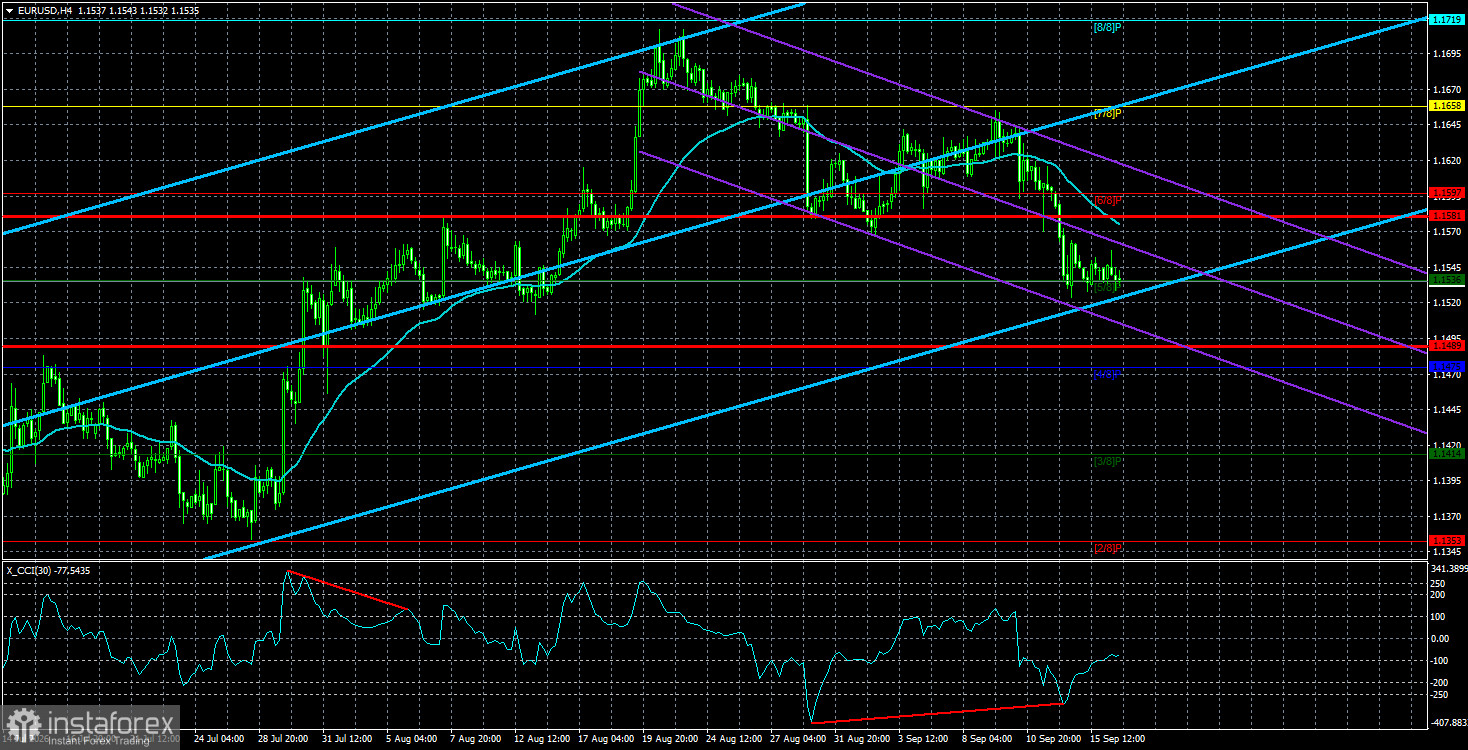
The EUR/USD currency pair traded quietly for most of Wednesday, moving slowly and without haste. We see nothing surprising in the week's muted price action, since traders were plainly unwilling to open positions ahead of the Federal Reserve's decision. But we would remind you that low volatility is not a one- or two-week phenomenon — it has been present for about one and a half to two months. From a trading standpoint, a single Fed meeting is unlikely to change that. Also note that, as usual, we will not analyze the Fed's results or the market's immediate reaction in this article, because responses to such an important event can last about 24 hours. Prices often spike one way right after the meeting and then revert toward prior levels. So it is clearly premature to rush to conclusions.
So whatever decision the Fed makes in September, should we expect a prolonged tightening cycle? In our view, the market essentially begged the Fed for one rate hike. And the Fed may, at most, do one tightening to restore market and public confidence in the central bank. Recall how much was said about Fed independence from the White House when Kevin Warsh was appointed chair. We share the view that Fed policy will now be influenced to a large extent by Donald Trump's stance. But the Fed cannot simply cut rates as Trump wants. First, the FOMC does not have enough votes. Second, doing so would destroy confidence in the Fed for the remainder of Warsh's term. Markets would conclude that no one is serious about fighting inflation, and bond yields would jump even higher.
At the same time, we do not believe the Fed will raise the policy rate more than once. Whether that happens in September or November is secondary. One tightening would serve a psychological role: the Fed would show the market that, despite Trump's wishes, the central bank intends to follow its mandates. In other words, "they will work on inflation," as Warsh put it. In reality, no one will truly "work" on inflation — only the appearance of doing so will be created. It is simply impractical to keep raising the policy rate if Donald Trump keeps provoking inflation through wars, import tariffs, and levies. To put it bluntly: the Fed may raise rates three times, and inflation may cool, then Trump might start a new military conflict or impose new import tariffs on top of existing ones. What's the point of tightening then? Recall that only in September Trump imposed 50% tariffs on Canada. Does anyone seriously think there will be no further tariffs?
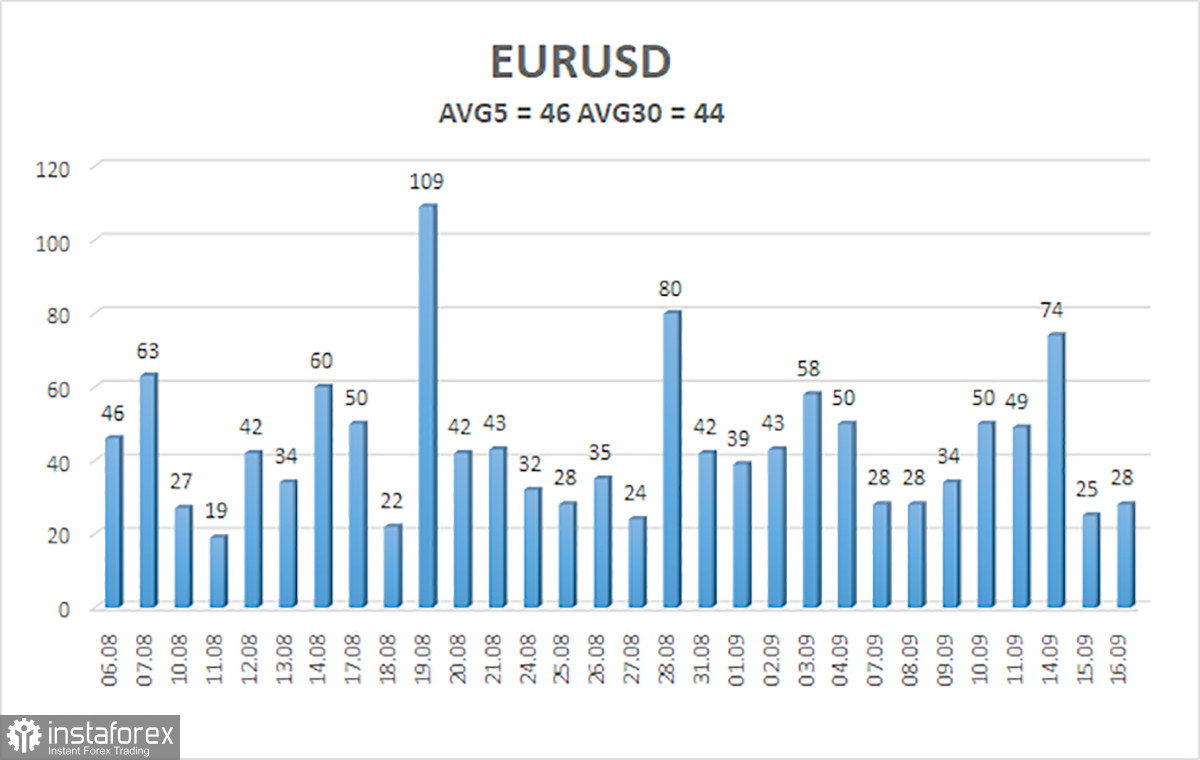
The average volatility of the EUR/USD currency pair over the last 5 trading days as of September 16 is 46 pips and is classified as "low." We expect the pair to trade between 1.1489 and 1.1581 on Thursday. The higher linear-regression channel points up, indicating an uptrend. The CCI entered the oversold area for the second time, warning of a possible end to the downward correction. A bullish divergence has also formed.
S1 – 1.1536
S2 – 1.1475
S3 – 1.1414
R1 – 1.1597
R2 – 1.1658
R3 – 1.1719
The EUR/USD pair continues an uptrend on the 4-hour timeframe, which may be the start of a new leg of a global uptrend on higher timeframes. The global fundamental backdrop for the dollar remains negative, but in 2026, geopolitics first and then the Fed's hawkish stance provided strong support for the US currency. However, at present, those factors no longer support the dollar. With price below the moving average, consider short positions on a corrective basis, with targets at 1.1489 and 1.1475. Above the moving average line, long positions remain relevant with targets 1.1658 and 1.1719.
Regression channels help determine the current trend. If both are directed in the same direction, it means the trend is currently strong;
The moving average line (settings 20,0, smoothed) defines the short-term trend and the direction in which trading should be conducted at present;
Murray levels are target levels for moves and corrections;
Volatility levels (red lines) are the probable price channel within which the pair will spend the next 24 hours based on current volatility indicators;
The CCI indicator – its entry into the oversold area (below -250) or the overbought area (above +250) indicates that a trend reversal in the opposite direction is approaching.
* Analisis pasaran yang disiarkan di sini adalah bertujuan untuk meningkatkan kesedaran anda, tetapi tidak untuk memberi arahan untuk membuat perdagangan.
Kajian analisis InstaSpot akan membuat anda mengetahui sepenuhnya aliran pasaran! Sebagai pelanggan InstaSpot, anda disediakan sejumlah besar perkhidmatan percuma untuk dagangan yang cekap.


