




Nella nostra squadra ci sono più di 7.000.000 trader! Ogni giorno ci impegniamo a far sì che il trading migliori. Conseguiamo grandi risultati e ci muoviamo in avanti.
Il riconoscimento da parte di milioni di trader in tutto il mondo rappresenta l'alta valutazione della nostra attività! Voi avete fatto la vostra scelta e noi faremo la nostra al fine di soddisfare le vostre aspettative!
Assieme siamo una grande squadra!
InstaSpot. Siamo orgogliosi di lavorare per voi!





Attore, campione del mondo di lotta libera e semplicemente un vero maciste russo! Persona venuta dal nulla. Persona che rispecchia i nostri obiettivi. Il segreto del successo di Taktarov consiste nel mirare continuamente al suo scopo.
Dischiudi anche tu tutti gli aspetti del tuo talento! Impara, prova, sbaglia, ma non fermarti!
InstaSpot - la storia delle tue vittorie inizia qui!

To predict the future, you must look to the past. In 2018, Bitcoin collapsed 80% from its peak after the crypto bubble burst. In 2022, it slumped amid the TerraUSD/Luna crashes and the FTX exchange failure. In 2025–2026, there were no single obvious causes. Ask five different experts, and you'll get five different drivers for BTC/USD's plunge — and each risks being wrong. So, is there any sensible explanation for where the digital asset is headed next?
Over the years, investors have tried to liken Bitcoin to other assets in order to use fundamental analysis for forecasts. The crypto was often called "digital gold" for its supposed inflation?hedge properties, its capped supply and its utility as a dollar alternative. Yet, 2026's market shocks did not spare BTC/USD, which has dropped roughly 50% from its October record highs. Events in Venezuela, Iran, and Greenland didn't prevent the crypto market from losing about $2 trillion in market cap.
Bitcoin vs. tech stocks and gold
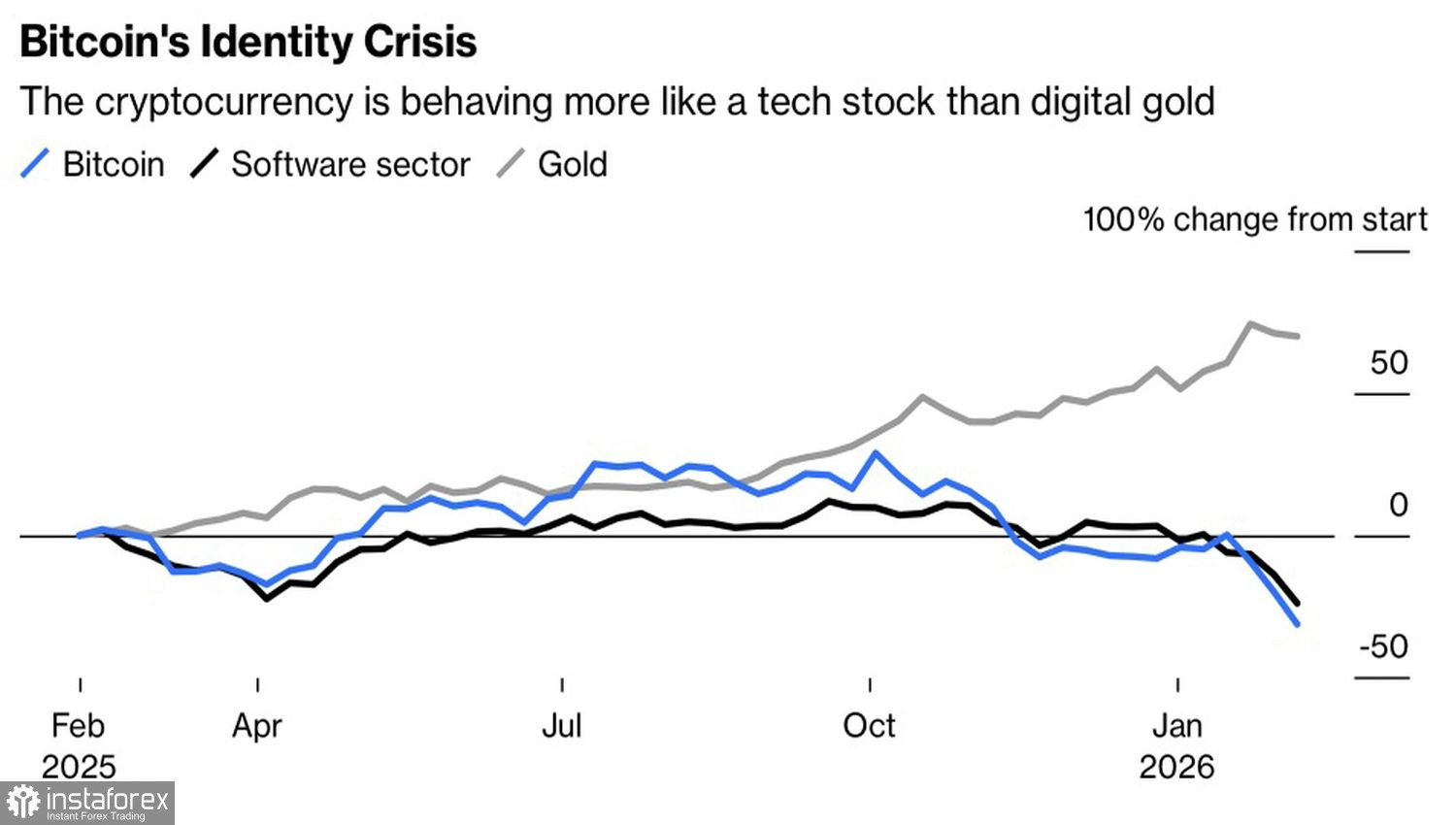
Gold, silver, and other precious metals outshone Bitcoin, prompting capital rotation out of BTC and weighing on its price. But the crash in rivals did not hand Bitcoin a lifeline. Its current price action looks more like that of software companies — the stocks hit hardest by fears that AI will displace their business models. A sharp rally in tech stocks on February 6, the fastest since May, reached out to the digital asset and helped it find some footing.
Pressure on Bitcoin from October through February reduced its relative volatility. Not long ago crypto was considered the riskiest of risky assets and was bought simply because it was rising. Its volatility was extreme, and a fall in price variability drew capital out of the market. In that sense, the sharp jump in the volatility measure from 57% to 97% in the first days of February is a positive sign for BTC/USD: it coincided with spot Bitcoin ETFs recording daily inflows of $221 million late in the week.
Volatility spike may be liquidity-driven
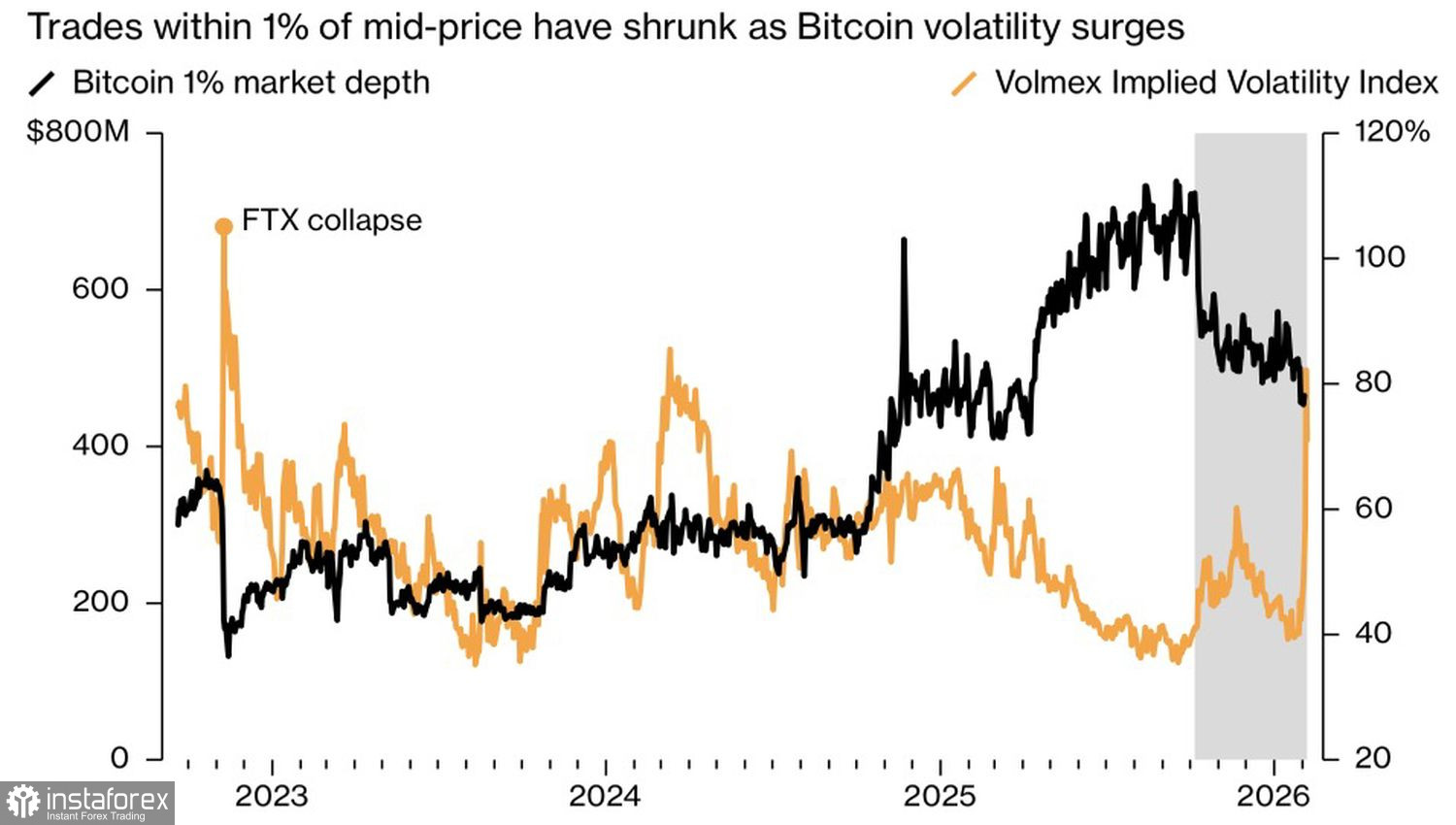
However, the volatility jump may have a prosaic cause: market depth on the crypto market has collapsed, reducing its ability to absorb large trades. That likely reflects a liquidity shortage. In this respect the intention of incoming Fed chair Kevin Warsh to shrink the Fed's balance sheet could deliver a serious blow to BTC/USD.
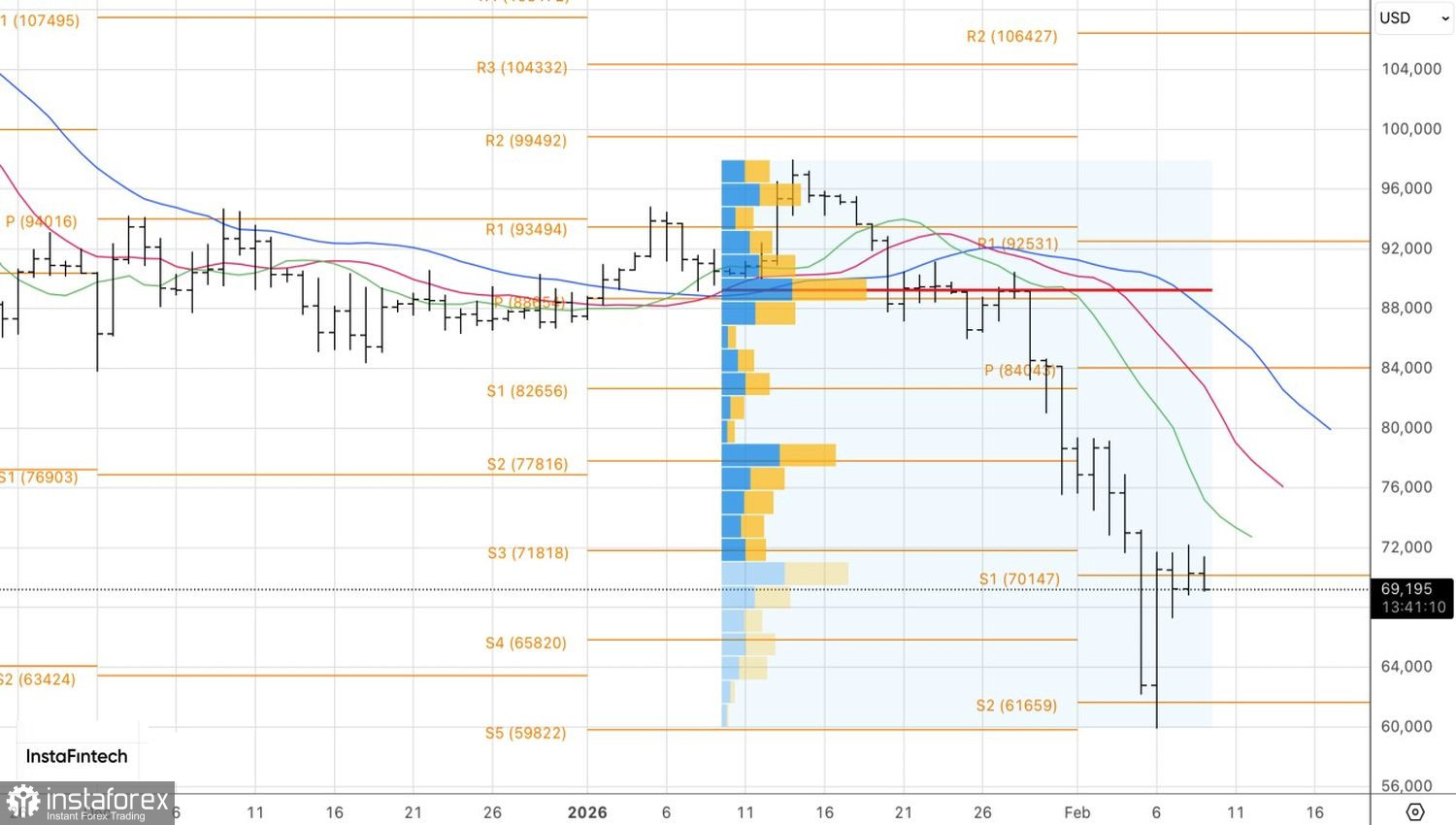
For now Bitcoin is trying to feel out a bottom and to make sense of what's happening.
Technically, the daily BTC/USD chart shows consolidation after a prolonged decline. Downward targets at $70,000 and $60,000 have been reached. It makes sense now to place pending sell orders at $67,200 and buy orders at $72,200.
*La presente analisi del mercato ha un carattere esclusivamente informativo e non rappresenta una guida per l`effettuazione di una transazione.
Le recensioni analitiche di InstaSpot ti renderanno pienamente consapevole delle tendenze del mercato! Essendo un cliente InstaSpot, ti viene fornito un gran numero di servizi gratuiti per il trading efficiente.


