



Our team has over 7,000,000 traders!
Every day we work together to improve trading. We get high results and move forward.
Recognition by millions of traders all over the world is the best appreciation of our work! You made your choice and we will do everything it takes to meet your expectations!
We are a great team together!
InstaSpot. Proud to work for you!



Actor, UFC 6 tournament champion and a true hero!
The man who made himself. The man that goes our way.
The secret behind Taktarov's success is constant movement towards the goal.
Reveal all the sides of your talent!
Discover, try, fail - but never stop!
InstaSpot. Your success story starts here!

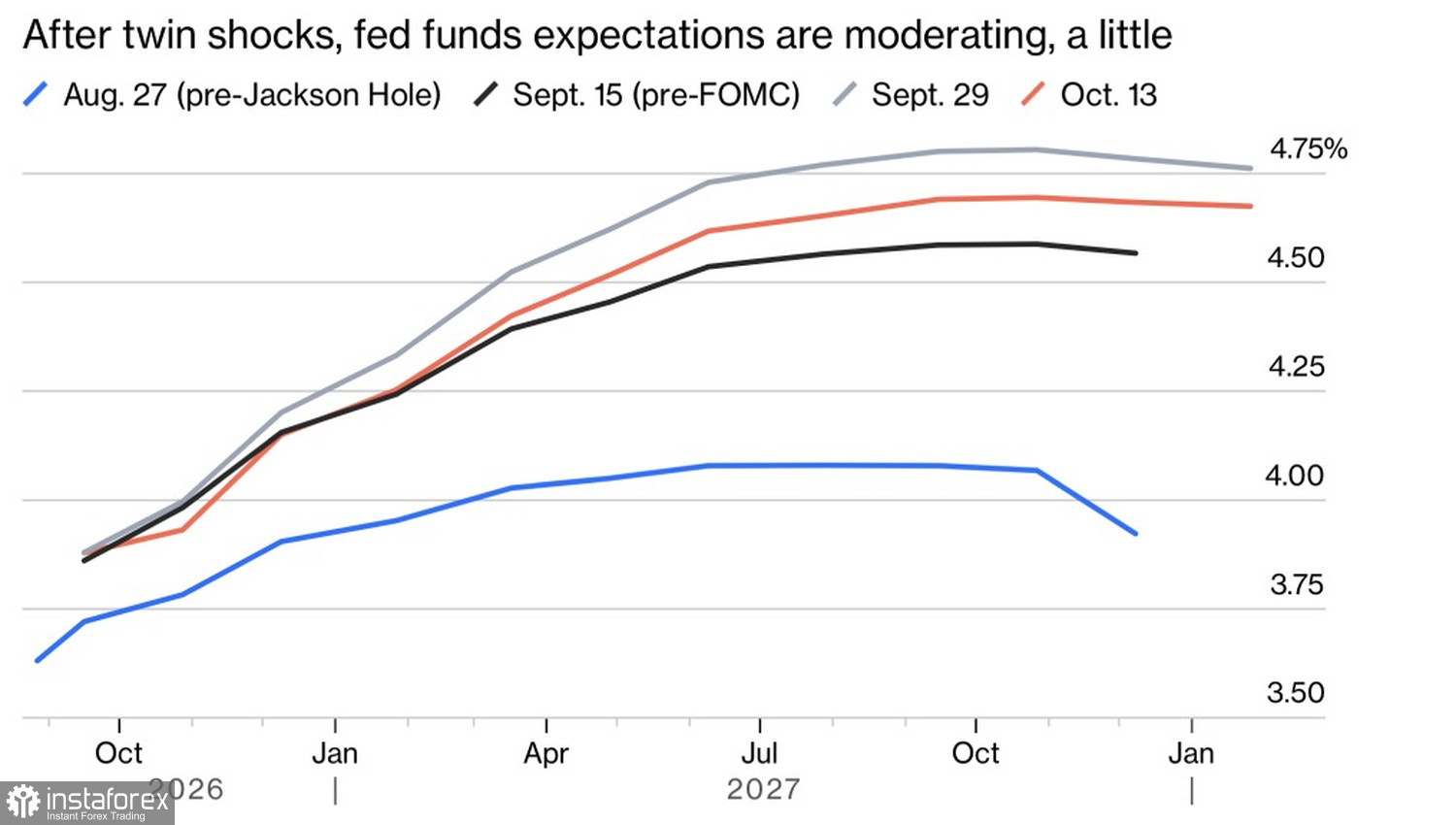
The S&P 500 showed remarkable resilience despite a sell-off in the semiconductor sector and the inability of major bank results to deliver a clear tailwind for US equities. The broad index was supported by falling Treasury yields and comments from New York Fed President John Williams, who said the Fed could, under certain conditions, refrain from raising interest rates in 2027.
Dynamics of Fed policy market expectations
News from CXMT about a new memory chip hit South Korean chipmakers Samsung Electronics and SK Hynix and triggered a collapse in the KOSPI. That index is a de facto barometer of investor appetite for the AI theme. Then Broadcom warned that many investors don't understand what they are putting money into — that expectations around AI are inflated, "like going to a casino." Add two failed IPOs closely tied to NVIDIA in Australia, and you had the makings of a panic that could have sparked broad tech selling.
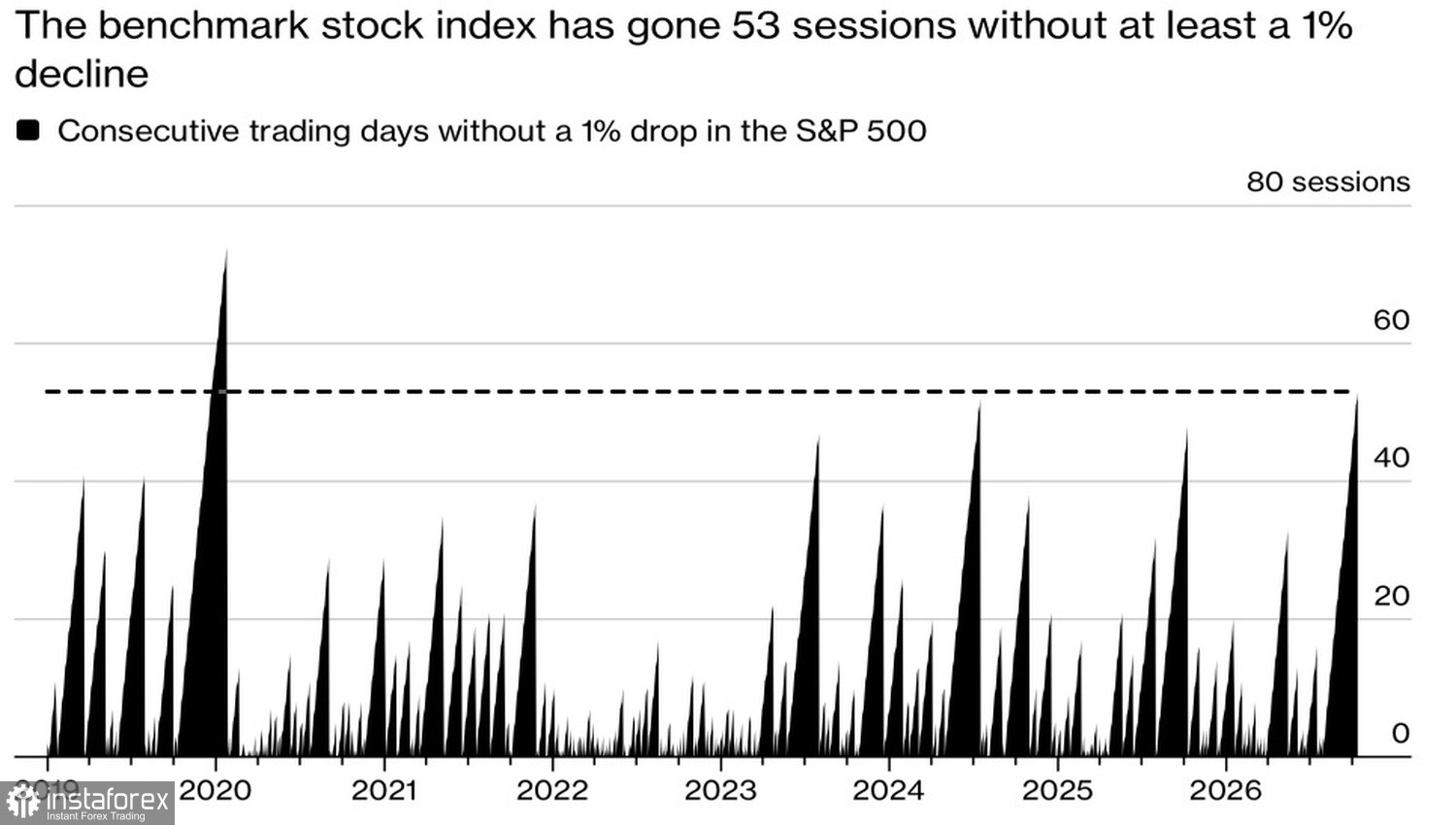
In practice, the S&P 500 looked surprisingly calm. The broad market avoided a 1%+ drop for 53 trading sessions, the longest run since January 2020. Investors seemed unfazed by Chinese competition in chips, doubts about whether tech companies can generate returns large enough to justify huge capex, or the IPO setbacks. If the market isn't going where people expect, it's more likely to move the other way, isn't it?
S&P 500 swings
John Williams' comments helped. They reduced Treasury yields, and after rates had climbed to 2002 highs, Treasuries started to look attractive again — especially if core inflation doesn't reaccelerate and the Fed avoids further tightening in 2027.
Morgan Stanley notes that keeping long-term Treasury yields at 5%+ over the long run would require nominal GDP growth of roughly 5.5–6.5%. A Bank of America survey found 64% of asset-manager respondents don't expect yields to rise above 6%.
Investors' concern now is peak earnings. Wall Street expects earnings growth of 25% in Q3 and 28% in Q4, but growth is forecast to slow to about 18% in the first half of 2027. Will investor demand for equities fade as earnings momentum cools?
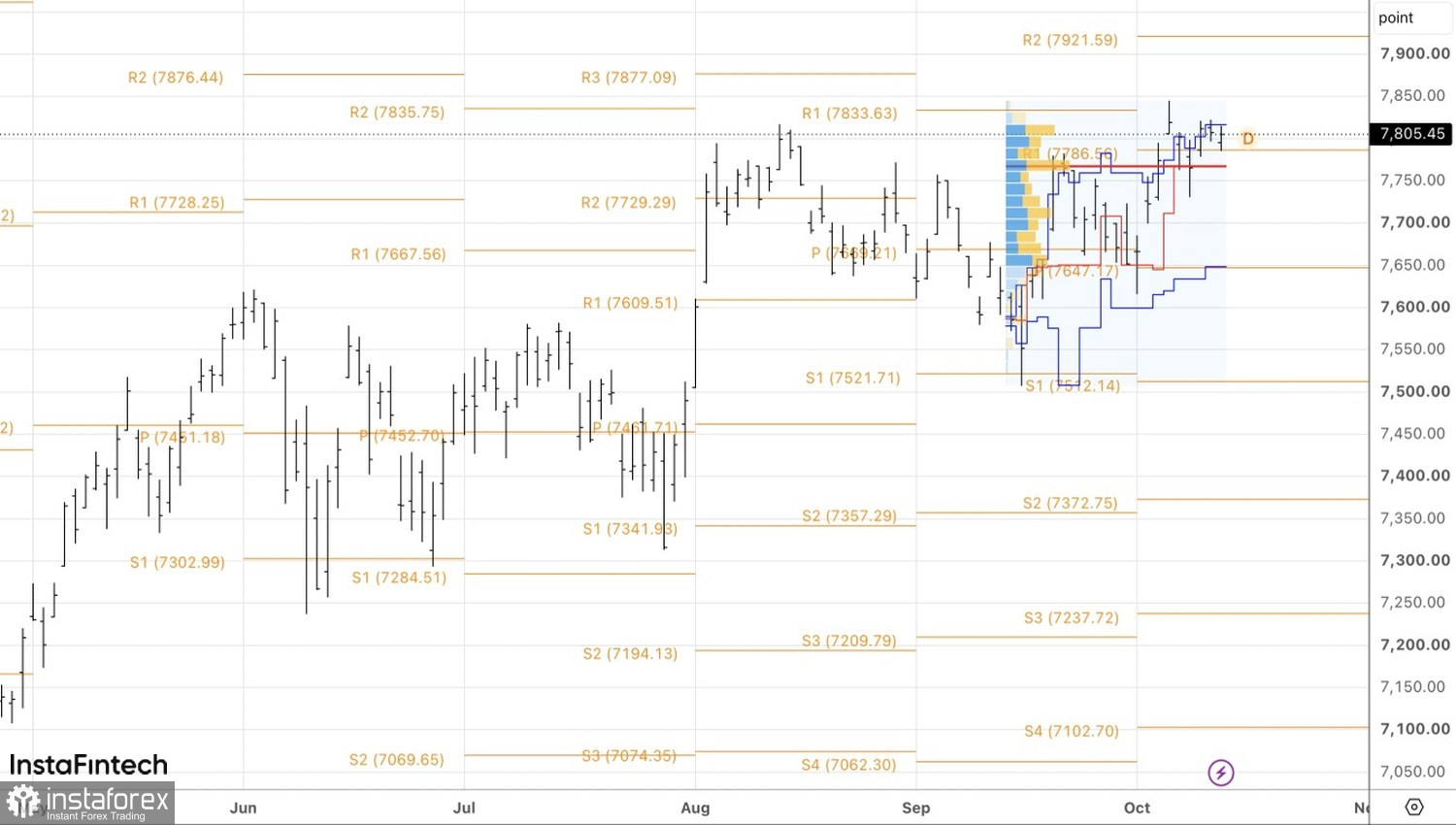
Technically, the daily chart shows that the S&P 500 could form a 1?2?3 reversal or a "spike and shelf" pattern. A break above the local high at 7,825 remains a valid trigger to add long positions. Conversely, a drop below 7,785 and then 7,765 would be grounds for short-term selling.
*The market analysis posted here is meant to increase your awareness, but not to give instructions to make a trade.
InstaSpot analytical reviews will make you fully aware of market trends! Being an InstaSpot client, you are provided with a large number of free services for efficient trading.


