




Our team has over 7,000,000 traders!
Every day we work together to improve trading. We get high results and move forward.
Recognition by millions of traders all over the world is the best appreciation of our work! You made your choice and we will do everything it takes to meet your expectations!
We are a great team together!
InstaSpot. Proud to work for you!





Actor, UFC 6 tournament champion and a true hero!
The man who made himself. The man that goes our way.
The secret behind Taktarov's success is constant movement towards the goal.
Reveal all the sides of your talent!
Discover, try, fail - but never stop!
InstaSpot. Your success story starts here!

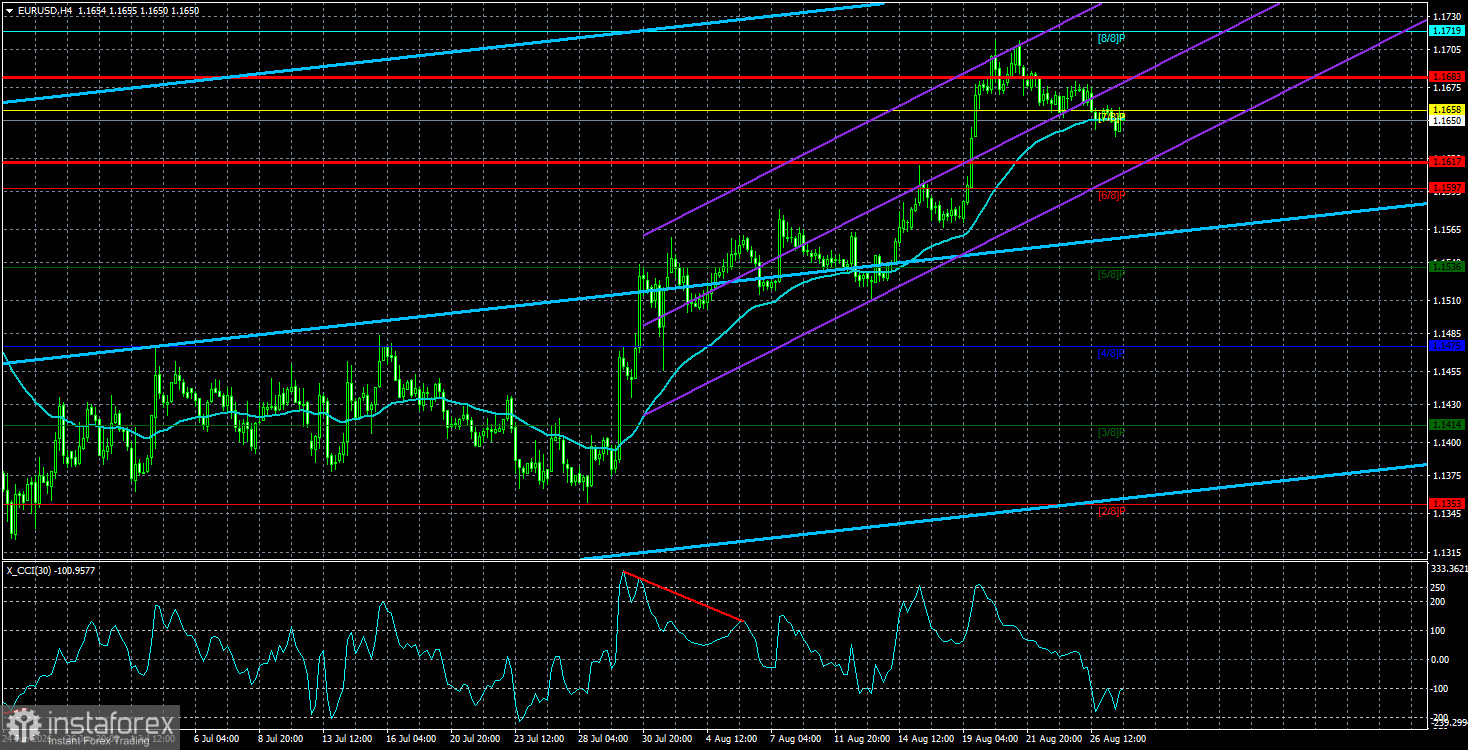
The EUR/USD currency pair showed no interesting movements on Thursday. Once again, there was a lack of macroeconomic and fundamental background, and the market has clearly closed its eyes to everything happening in the world, focusing instead on Friday. Recall that today the annual revisited Non-Farm Payroll data will be released in the U.S. To understand the importance of this report, one must delve into why monthly reports are revised and the rationale behind them.
It is no secret that the ADP report on changes in private-sector employment is inaccurate. It does not account for certain sectors of the economy, so the employment data is imprecise. This is why the market typically ignores this report and prefers to draw conclusions from Non-Farm Payrolls. However, the problem is that Non-Farm Payrolls are not the most accurate indicator of the state of the labor market. This report collects data on employee hiring, but it does not consider layoffs or, for example, refusals to continue working together.
For instance, 100,000 workers were hired this month. But how many of them worked at least one month? How many passed the probation period and received a long-term offer or contract? How many changed their minds about taking the job at the last moment? Simply put, Non-Farm Payrolls only capture initial hiring data, while subsequent developments between the employer and the worker are disregarded. This is precisely why, even within monthly reports, the figures are constantly revised, and, as a rule, downward. In reality, fewer people are hired and successfully continue working for a long time than merely pass an interview.
The annual revision of Non-Farm Payrolls is considered the most accurate indicator, as it is based on tax data. In simple terms, the amount of taxes companies have paid for their employees over a certain period is the real number of hired workers. And, as mentioned, this number is generally less than the count of offers received, contracts signed, or reported hiring.
Thus, there is a high probability that the actual Non-Farm Payrolls figure will be lower than the cumulative figure for the last 12 months obtained through standard monthly reports. If so, the U.S. dollar risks coming under significant pressure again. The recent Non-Farm Payroll reports have already failed to impress. For four consecutive months, the figure has only decreased, falling below the "waterline." If the actual number of employed Americans turns out to be even less (which is quite likely), it will indicate that the labor market is not just slowing down; it is once again in a coma, as it was last year. In this case, any thoughts of tightening the Federal Reserve's monetary policy can be forgotten almost regardless of inflation. The dollar will decline in any case on weak Non-Farm Payrolls, and the likelihood of a Fed rate hike will drop to virtually zero.
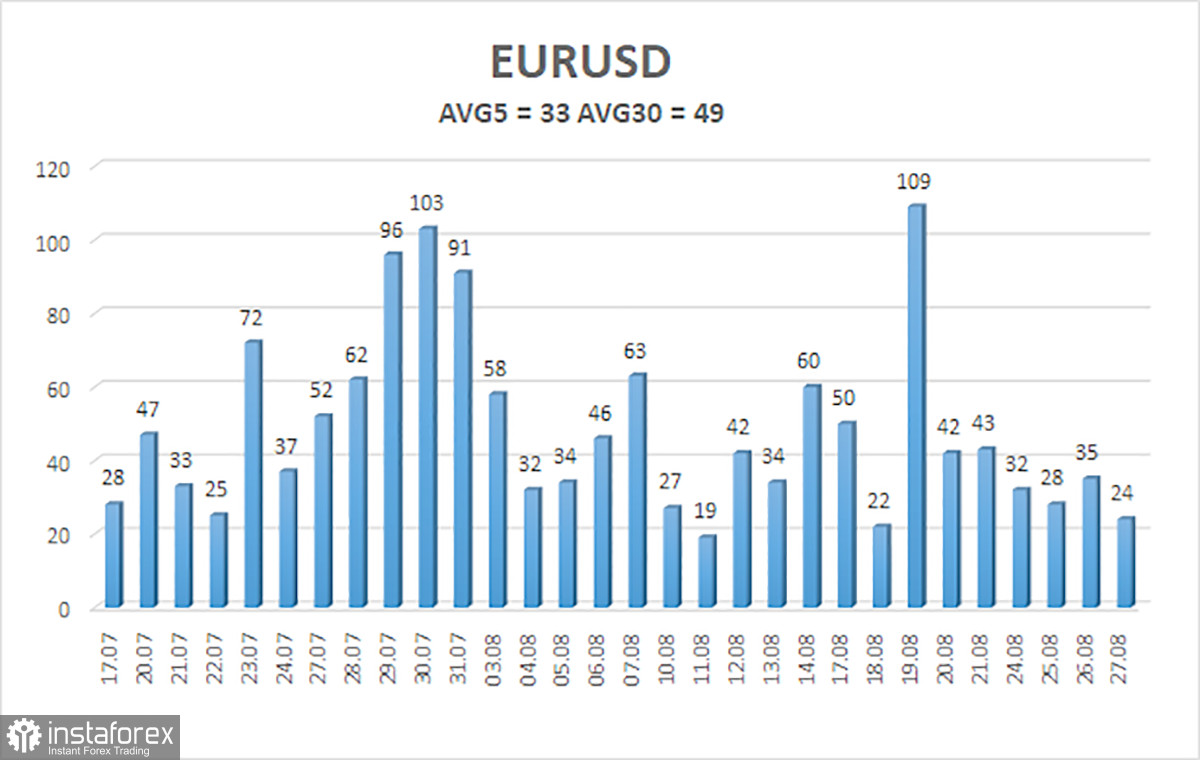
The average volatility of the EUR/USD currency pair over the last 5 trading days, as of August 28, is 33 pips and is characterized as "low." We expect movement in the pair between 1.1617 and 1.1683 on Friday. The upper linear regression channel is directed downward, indicating the continuation of a bearish trend; however, the trend has already changed. The CCI indicator has entered the overbought area again, warning of a new downward correction, which we are currently observing.
S1 – 1.1597
S2 – 1.1536
S3 – 1.1475
R1 – 1.1658
R2 – 1.1719
R3 – 1.1780
The EUR/USD pair continues to show an upward trend on the 4-hour timeframe, which may indicate the beginning of a new phase in the global upward trend on higher timeframes. The overall fundamental backdrop for the dollar remains negative; however, in 2026, geopolitical factors, followed by the Fed's "hawkish" stance, provided strong support for the American currency. Currently, these factors no longer support the dollar.
If the price is below the moving average, short positions can be considered on corrective grounds, targeting 1.1617 and 1.1597. Long positions remain relevant if the price is above the moving average, with targets at 1.1683 and 1.1719.
*The market analysis posted here is meant to increase your awareness, but not to give instructions to make a trade.
InstaSpot analytical reviews will make you fully aware of market trends! Being an InstaSpot client, you are provided with a large number of free services for efficient trading.


