



The legend in the InstaSpot team!
Legend! You think that's bombastic rhetoric? But how should we call a man, who became the first Asian to win the junior world chess championship at 18 and who became the first Indian Grandmaster at 19? That was the start of a hard path to the World Champion title for Viswanathan Anand, the man who became a part of history of chess forever. Now one more legend in the InstaSpot team!





Borussia is one of the most titled football clubs in Germany, which has repeatedly proved to fans: the spirit of competition and leadership will certainly lead to success. Trade in the same way that sports professionals play the game: confidently and actively. Keep a "pass" from Borussia FC and be in the lead with InstaSpot!

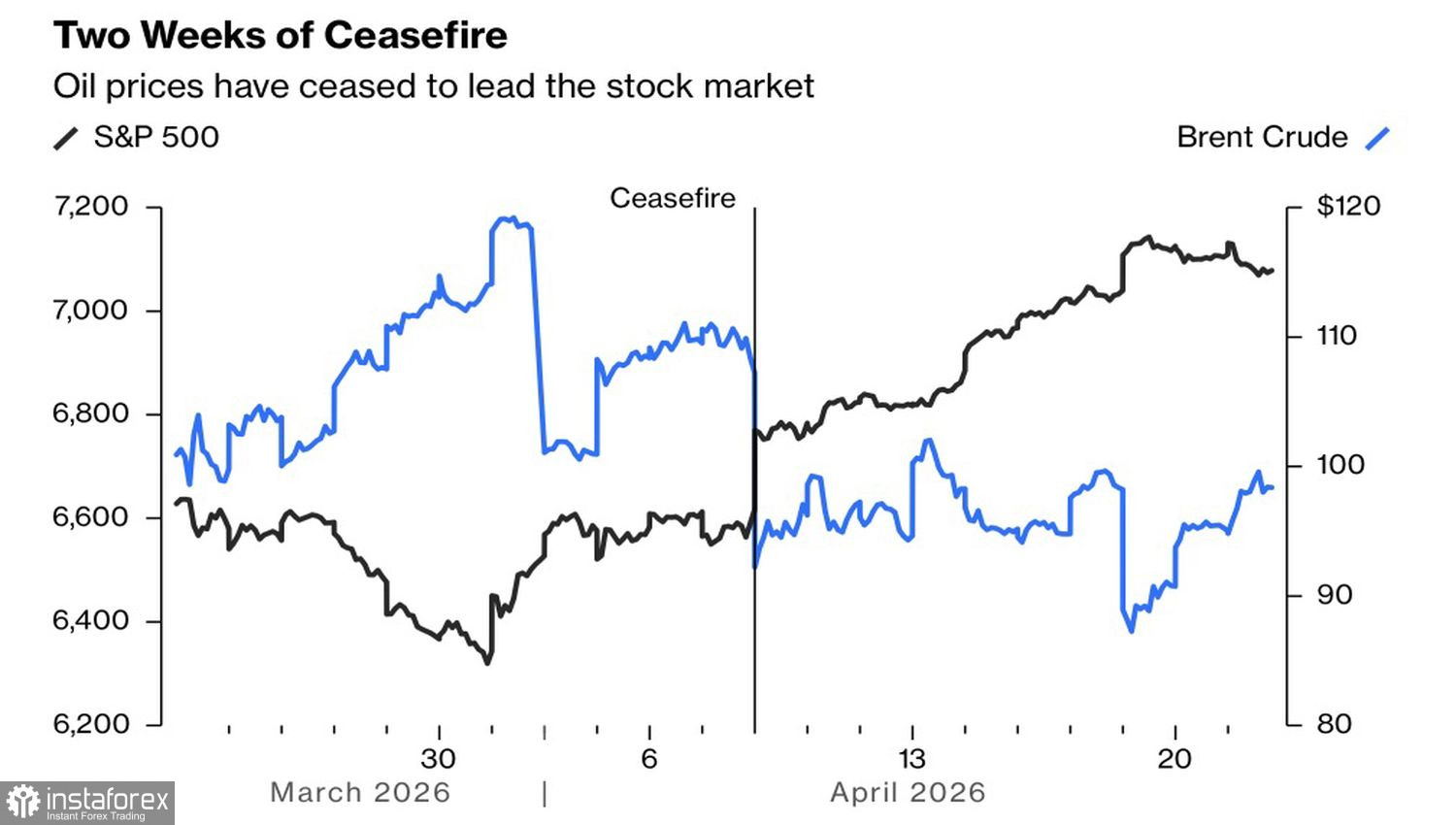
Who cares? That was the stock market's reaction to the collapse of US–Iran talks in Islamabad. The S&P 500 closed in the red for a second straight day, but only after surging to record highs earlier. It doesn't look like a catastrophe, even with the Strait of Hormuz blocked and oil climbing toward $100/bbl. In fact, the broad index broke its correlation with Brent at the start of the two-week ceasefire, which President Trump has since extended indefinitely.
Dynamcis of S&P 500 and oil
Why is the S&P 500 so numb to geopolitics? Has the market grown weary, or is it confident that the White House will throw a lifeline to risk assets no matter what? The TACO trade — "Trump Always Chickens Out" — thrives, and FOMO is alive and well. The market has become more dependent on momentum?buying algorithms that effectively filter out news, good or bad.
For example, a headline that should have been bullish — US retail sales accelerating to 1.7% m/m in March, a sign of economic strength — was largely ignored. Conversely, Kevin Warsh's accusation that the Fed's policy framework contributed to inflation in 2020–21 could have been interpreted as hawkish, yet markets barely reacted. The takeaway: investors cared more about the ceasefire extension.
S&P 500 performance
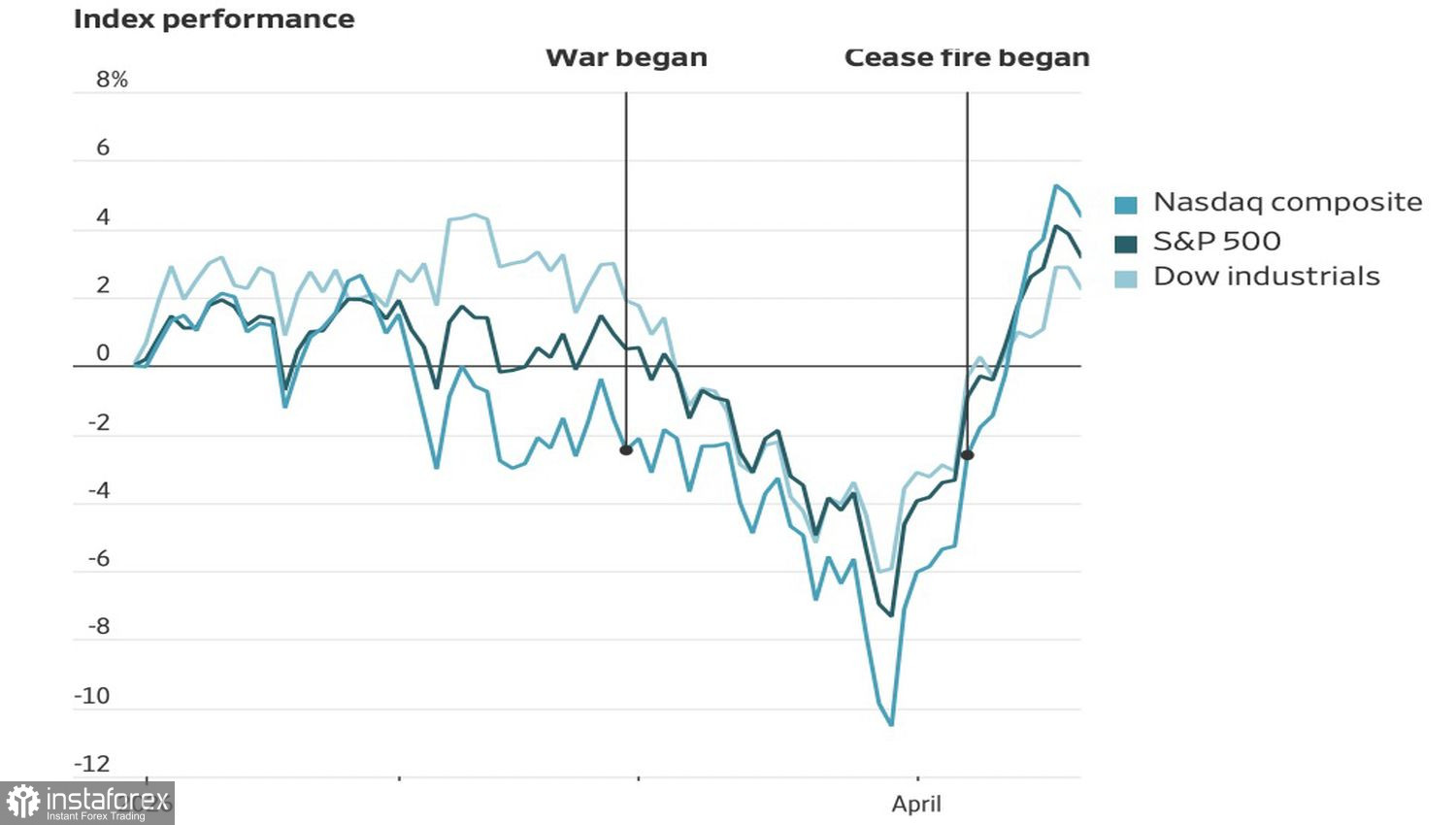
In practice, the S&P 500 is operating in a "could be worse" mode. Traders feared that Iran's rejection of talks would trigger renewed US strikes. That didn't happen, so markets shrugged.
Is the Strait of Hormuz blocked? Yes, but if US ships relax the blockade, traffic can resume. Yes, Tehran is charging transit fees, but investors view that as compensation to Iran for damage caused by US actions. Both sides have taken losses; markets assume a pragmatic compromise is possible.
The return of retail investors buying the dip in the S&P 500, and mania around the Magnificent Seven — which added about $2.5 trillion in market cap in a short time — keep optimism intact. JP Morgan has raised its S&P 500 year-end target to 7,600 after cutting it to 7,200 at the end of March. The main rationale: stronger earnings from AI-exposed companies.
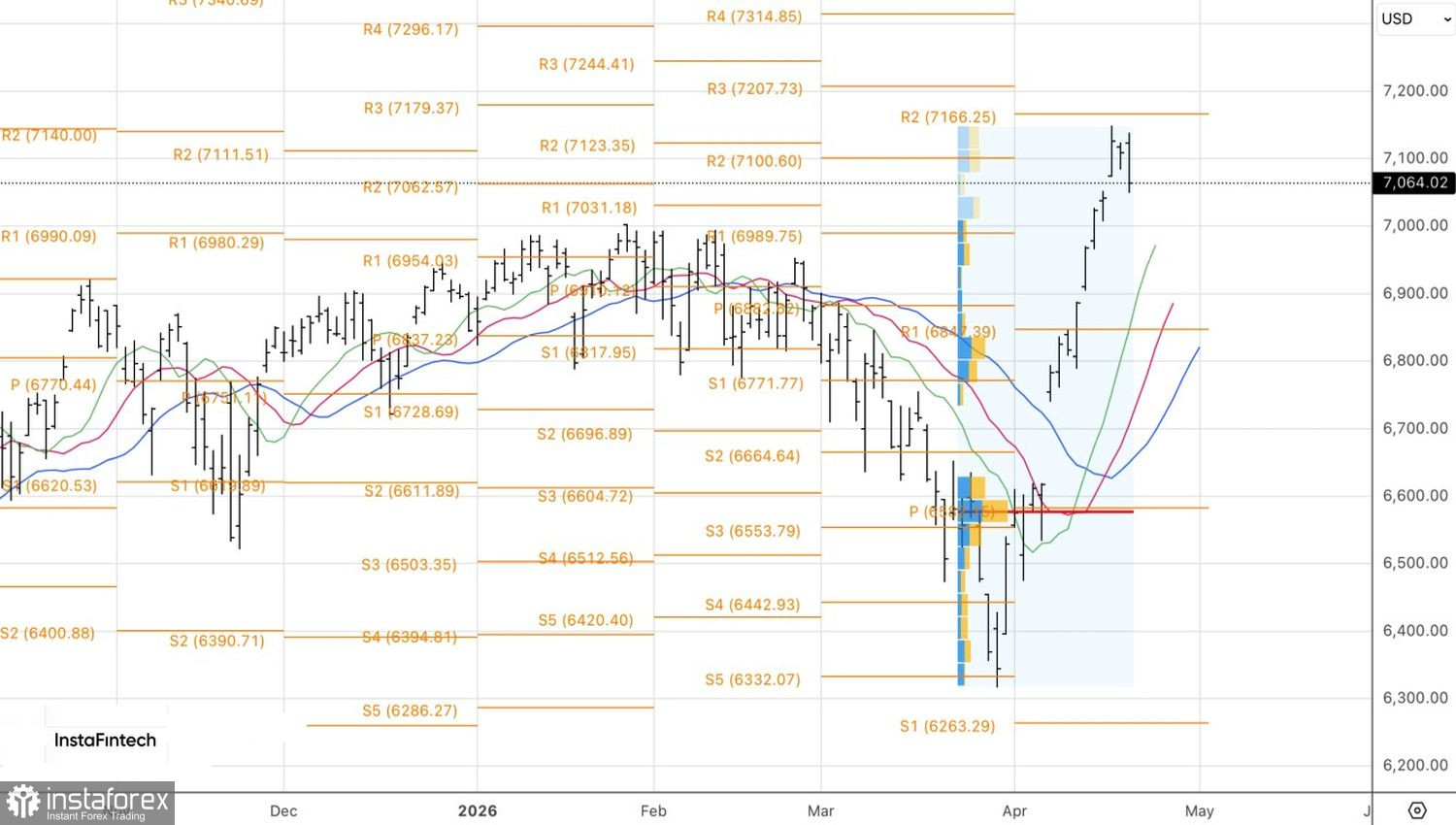
Technically, the S&P 500 saw a double play?out of an inside bar on the daily chart. After a false test of the bar's upper boundary, traders entered a successful trade on a break of the lower boundary near 7,080. A drop below the support level of 7,030 would justify adding short positions in the broad index. Key resistance sits near 7,100.
*The market analysis posted here is meant to increase your awareness, but not to give instructions to make a trade.
InstaSpot analytical reviews will make you fully aware of market trends! Being an InstaSpot client, you are provided with a large number of free services for efficient trading.


