




Our team has over 7,000,000 traders!
Every day we work together to improve trading. We get high results and move forward.
Recognition by millions of traders all over the world is the best appreciation of our work! You made your choice and we will do everything it takes to meet your expectations!
We are a great team together!
InstaSpot. Proud to work for you!





Actor, UFC 6 tournament champion and a true hero!
The man who made himself. The man that goes our way.
The secret behind Taktarov's success is constant movement towards the goal.
Reveal all the sides of your talent!
Discover, try, fail - but never stop!
InstaSpot. Your success story starts here!

The Japanese yen continues to face pressure as easing trade-war risks reduce its appeal as a defensive asset. U.S. President Donald Trump has dismissed the threat of high tariffs on goods from several European countries and, on Wednesday in Davos, announced a framework for a future deal with NATO on Greenland. Meanwhile, Japan's bond market suffered a sharp sell-off on Tuesday due to growing concerns about the country's fiscal position amid the fiscally expansionary policies of Prime Minister Sanae Takaichi. Weak demand at the 20-year government bond auction the same day exacerbated the negativity, pushing long-term government bond yields to record highs. That said, the unfavorable fundamental backdrop for the yen is partially offset by hawkish expectations regarding the Bank of Japan's monetary policy.
Earlier this week, Reuters quoted Bank of Japan officials as saying that an interest rate hike as early as April remains a possibility. The recent weakening of the yen could intensify price pressures and prompt the BoJ to accelerate its tightening measures. A Bank of Japan survey for December, released on Monday, showed that most Japanese households expect prices to continue rising over the next few years.
This aligns with data from last Friday, which showed that Japan's year-on-year inflation has exceeded the Bank of Japan's 2% target for four consecutive calendar years, underscoring the need for further monetary tightening. Japan's Finance Minister, Satsuki Katayama, last week suggested the possibility of joint intervention with the United States to stabilize the recent weakening of the national currency.
For now, yen bulls are refraining from aggressive positions, preferring to wait ahead of the two-day Bank of Japan meeting starting Thursday, with the decision due on Friday. The central bank is widely expected to keep interest rates unchanged after raising the overnight lending rate to 0.75% in December—the highest level in 30 years. Attention will then turn to comments by BoJ Governor Kazuo Ueda at the press conference to gauge the timing of the next rate hike, which will influence the yen's trajectory.
Meanwhile, the U.S. dollar is trying to maintain its positive tone amid easing trade risks.
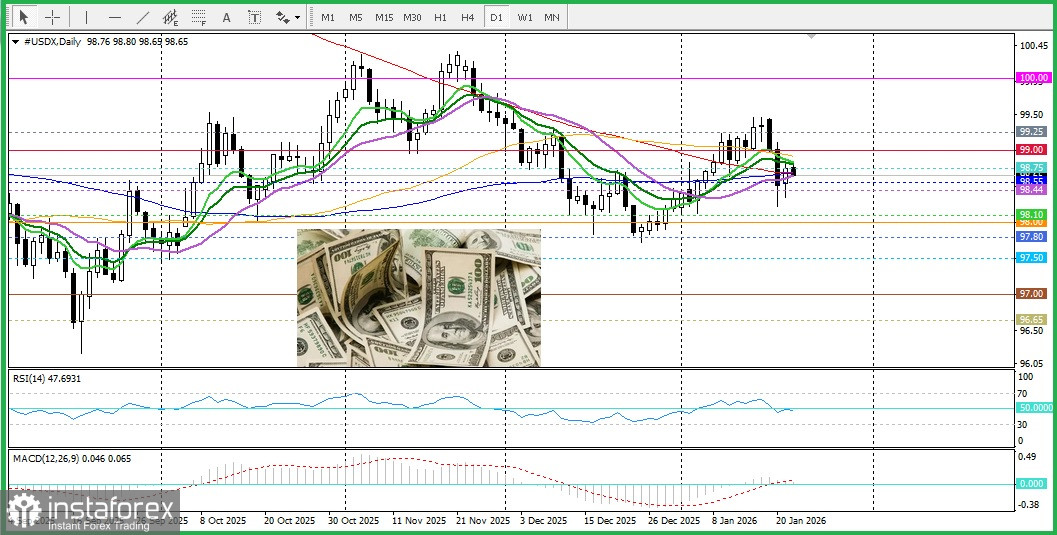
This further supports the USD/JPY pair ahead of the release of the U.S. Personal Consumption Expenditures (PCE) index and the final Q3 GDP growth report, both of which could provide a meaningful impulse.
From a technical perspective, the pair is trading above all key moving averages, signaling a positive bias. Oscillators on the daily chart are also in positive territory, suggesting that the path of least resistance remains to the upside. Resistance is located at the 158.60 level; a break above it would open the way toward the January high.
Support is provided by the 9-day EMA and the psychological 158.00 level. If this level fails to hold, prices could accelerate lower toward the 20-day SMA, located around 157.40.
*The market analysis posted here is meant to increase your awareness, but not to give instructions to make a trade.
InstaSpot analytical reviews will make you fully aware of market trends! Being an InstaSpot client, you are provided with a large number of free services for efficient trading.


