




Our team has over 7,000,000 traders!
Every day we work together to improve trading. We get high results and move forward.
Recognition by millions of traders all over the world is the best appreciation of our work! You made your choice and we will do everything it takes to meet your expectations!
We are a great team together!
InstaSpot. Proud to work for you!





Actor, UFC 6 tournament champion and a true hero!
The man who made himself. The man that goes our way.
The secret behind Taktarov's success is constant movement towards the goal.
Reveal all the sides of your talent!
Discover, try, fail - but never stop!
InstaSpot. Your success story starts here!

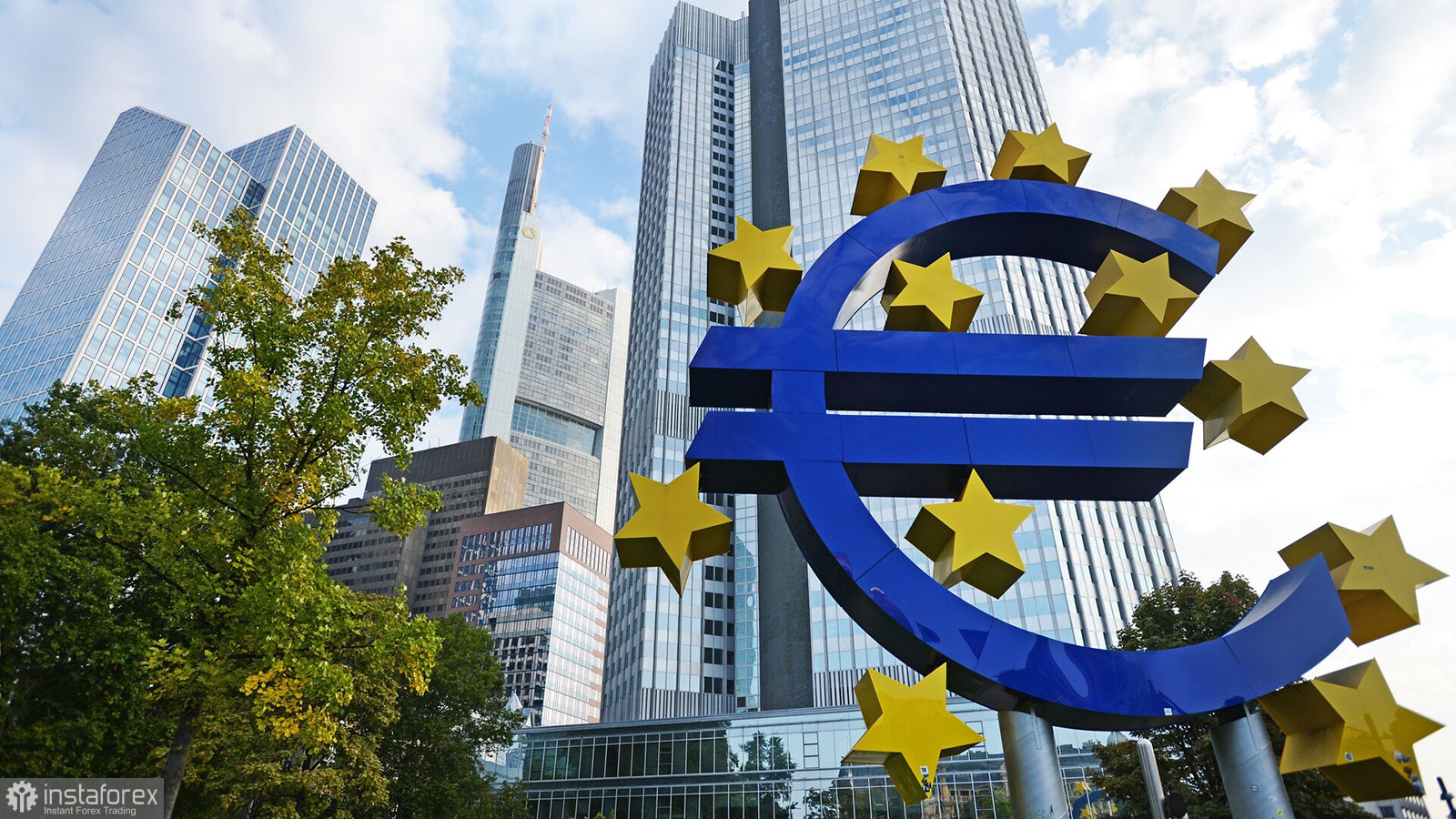
In the previous review, we discussed the reasons that could trigger a new dollar collapse in the second half of 2025. I recommend reviewing that analysis. In this overview, we will take a closer look at the European Central Bank's monetary policy.
The ECB completed its monetary policy easing process last summer, conducting a total of 8 rounds of 25 basis points each. Inflation has been successfully "calmed" and brought back to the target mark of 2%. Therefore, the ECB has justifiably stopped lowering interest rates. It is worth noting that the lower the central bank's rates are, the lower the cost of borrowing becomes, and consequently, the lower the yield on bank deposits and government bonds—the instruments considered the safest in the investment world.
As yields fall and loan costs decrease, more investors take out loans, while fewer invest their capital in bonds and deposits. Consequently, the demand for the currency of such a country declines, as safer investments in other countries offer higher yields. This is how the mechanism works. However, 2025 has shown that this is not always the case.
While the ECB was actively easing monetary policy, the euro was in demand in the market. It is undeniable that this demand was not driven by the ECB's easing policy but rather by the dollar's decline amid Donald Trump's trade war. Therefore, I consider the strengthening of the euro in the first half of 2025 to be entirely justified. However, in the second half of the year, as the ECB completed its easing cycle and the Federal Reserve resumed its own, we should have seen what? The dollar is becoming even less attractive to investors, and the euro is ceasing to lose demand, which it did not lose throughout the year.
In 2026, the ECB may shift toward tightening its monetary policy. Increasing confidence in this scenario is growing among participants across various markets. The consensus opinion now leans toward a 0.1% rate increase. However, it is unlikely that the ECB will raise rates by 0.1%. Most likely, it will be 0.25%. If inflation in the Eurozone accelerates, there may be multiple rounds of tightening. Additionally, it is worth noting that one of the ECB's executives, Isabel Schnabel, has indicated that she views the market forecasts for interest rate increases positively. This means that the ECB itself admits this scenario is possible.
In summary, we have the prospect of the Fed lowering rates in 2026, while there is a high likelihood of the ECB raising its rates.
Based on the conducted analysis of EUR/USD, I conclude that the instrument continues to build an upward trend section. In recent months, the market has paused, but Donald Trump's policies and the Fed's remain significant factors in the decline of the American currency in the future. The targets for the current trend section could reach the 25-figure mark. However, the last upward section of the trend has taken on a corrective appearance again; therefore, we may now see the beginning of a minimum downward wave of this section, with the maximum being a new downward corrective wave.
The wave picture for the GBP/USD instrument has changed. We continue to deal with an upward impulsive section of the trend, but its internal wave structure has become complex. The downward corrective structure a-b-c-d-e in C in 4 appears quite complete. If this is indeed the case, I expect the main trend section to resume its formation with initial targets around the 38 and 40 figures. However, wave 4 itself may take on a five-wave form.
In the short term, I expected wave 3 or c to form, with targets around 1.3280 and 1.3360, which correspond to the 76.4% and 61.8% Fibonacci levels. These targets have been reached. Wave 3 or c may continue its formation, but the current wave set will likely remain corrective. Therefore, a decline at the beginning of next week is also possible, and the attempt to break the 1.3360 mark was unsuccessful.
*The market analysis posted here is meant to increase your awareness, but not to give instructions to make a trade.
InstaSpot analytical reviews will make you fully aware of market trends! Being an InstaSpot client, you are provided with a large number of free services for efficient trading.


