




The legend in the InstaSpot team!
Legend! You think that's bombastic rhetoric? But how should we call a man, who became the first Asian to win the junior world chess championship at 18 and who became the first Indian Grandmaster at 19? That was the start of a hard path to the World Champion title for Viswanathan Anand, the man who became a part of history of chess forever. Now one more legend in the InstaSpot team!





Borussia is one of the most titled football clubs in Germany, which has repeatedly proved to fans: the spirit of competition and leadership will certainly lead to success. Trade in the same way that sports professionals play the game: confidently and actively. Keep a "pass" from Borussia FC and be in the lead with InstaSpot!

What's new is often just what's been forgotten. As spring draws to a close, the long-dismissed mantra "sell America" is making a comeback in markets. The phrase gained traction following Donald Trump's sweeping tariff actions in early April, which heightened fears of a potential US recession. Today, the United States faces a different challenge—fiscal. And the dollar is no longer a safe-haven currency that automatically rallies in times of stress. Still, the US president's threats towards the European Union are clipping the wings of the EUR/USD pair.
If US federal debt does indeed climb to 134% of GDP over the next decade, as projected by Moody's, investors are justified in demanding higher compensation for risk. The so-called term premium in the US bond market has surged to its highest level since 2014. This underscores the depth of market discomfort with the Republican tax-cut proposal.
Chart: US Treasury Term Premium Trend
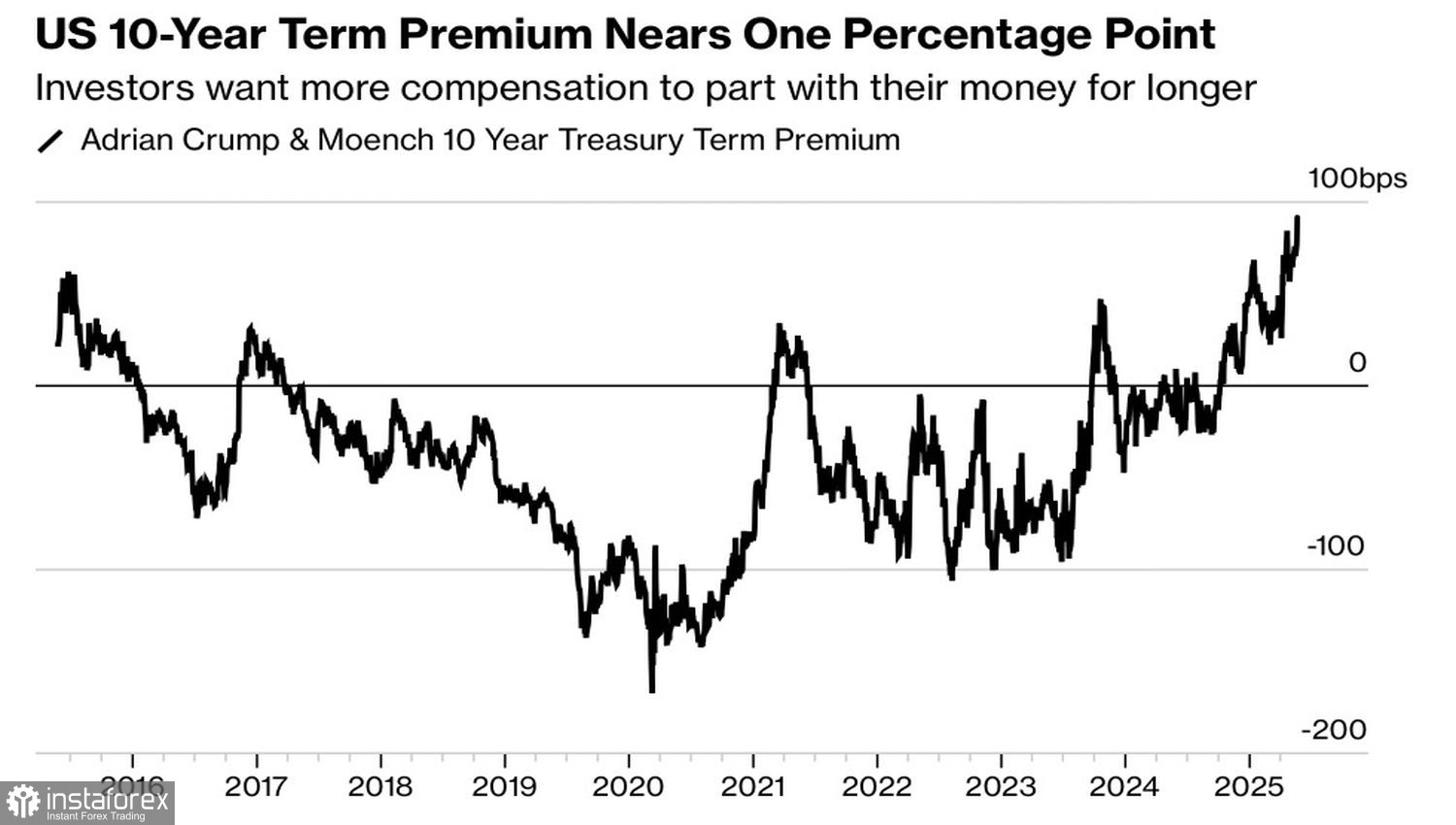
Fiscal troubles are eroding confidence in the US dollar. According to Deutsche Bank, America's fiscal woes pose a greater threat to the greenback than to Treasury bonds. Domestic buyers will likely continue absorbing government debt, but foreign reluctance to do the same could be yet another nail in the coffin for the US dollar index.
The White House, however, has its own agenda. Without waiting for the weekend—so as not to rattle equity markets—Donald Trump threatened to impose a 50% tariff on goods imported from the European Union. He argued that current talks between Washington and Brussels are going nowhere, that negotiating with Europe is difficult, and that it's time they "got moving." If not, higher import duties will take effect starting June 1.
Markets are now bracing for a new trade war. While the US reached an understanding with China relatively quickly, doing the same with the EU could prove more challenging. Brussels is preparing countermeasures, and tit-for-tat tariffs are likely to harm both the American and European economies. Business activity in the eurozone is already flashing warning signs, so what happens when 50% tariffs hit?
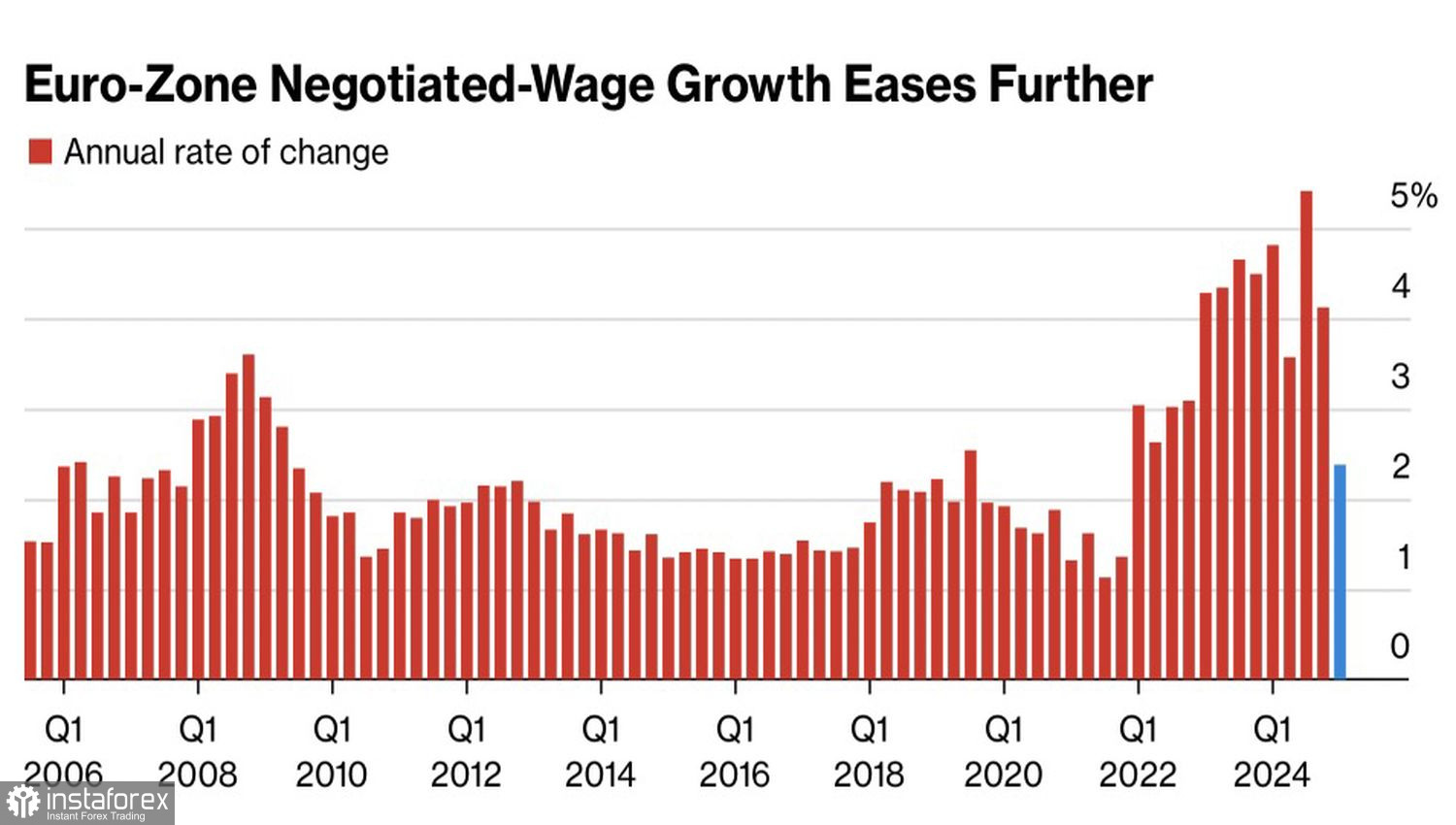
The only potential lifeline appears to be continued monetary easing by the European Central Bank. A sharp slowdown in average wages, which are now at their lowest since late 2021, suggests that the Governing Council has plenty of room to cut interest rates.
Chart: Eurozone Average Wage Growth Trend
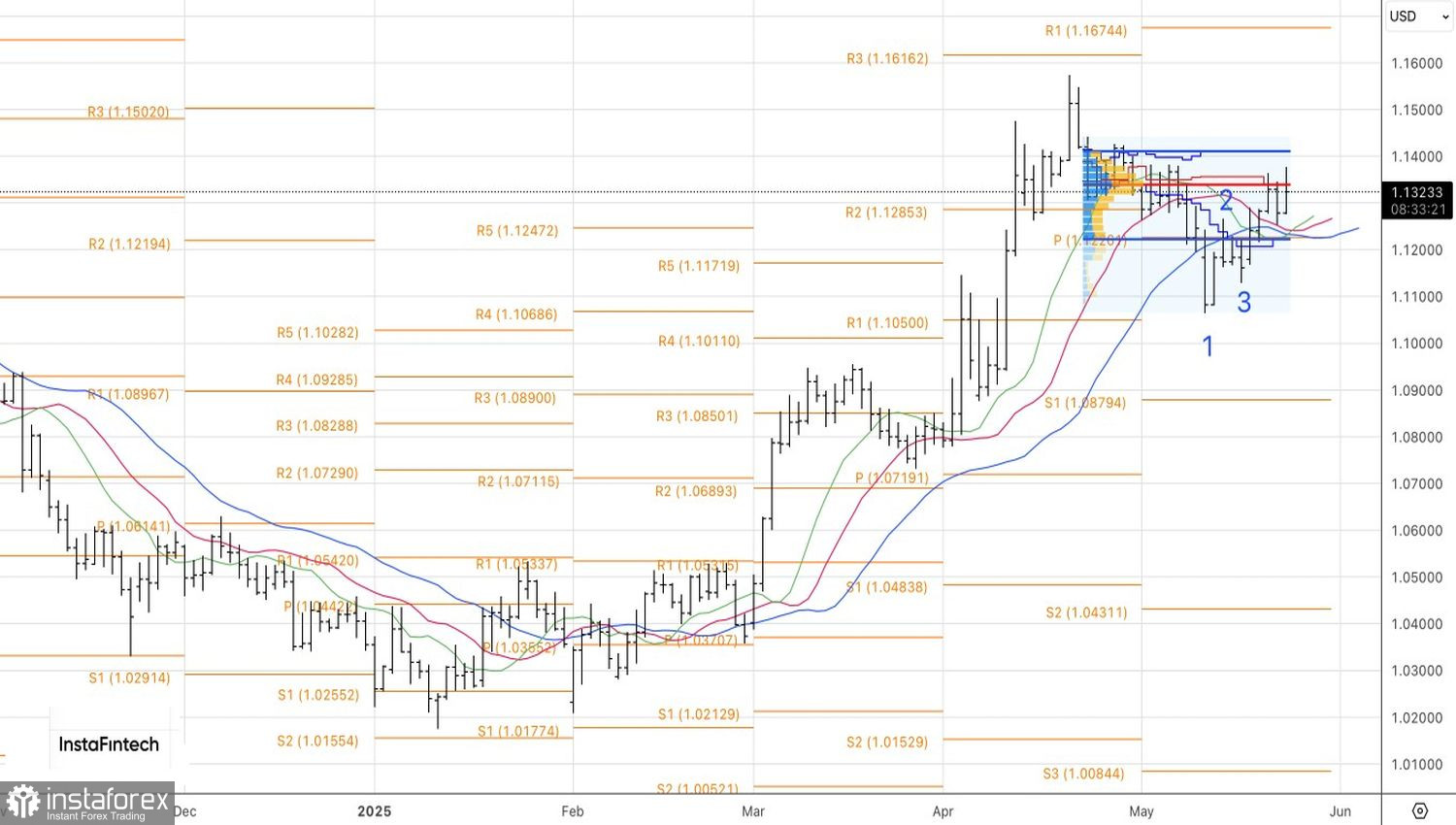
Thus, while fiscal challenges weigh on the US dollar, the inability of the US and the European Union to swiftly reach a compromise is a clear negative factor for the euro, driven by fears of losing a trade war. This balance of risks further heightens the chances of consolidation in the EUR/USD pair.
Technically, the daily chart shows a battle unfolding around fair value, located near the 1.134 mark. A win for the bulls would allow them to expand long positions built during the euro's dip below $1.13. Conversely, if bears maintain control of this key level, investors will have to wait for a deeper pullback in EUR/USD to initiate new long positions.
*The market analysis posted here is meant to increase your awareness, but not to give instructions to make a trade.
InstaSpot analytical reviews will make you fully aware of market trends! Being an InstaSpot client, you are provided with a large number of free services for efficient trading.


