




The legend in the InstaSpot team!
Legend! You think that's bombastic rhetoric? But how should we call a man, who became the first Asian to win the junior world chess championship at 18 and who became the first Indian Grandmaster at 19? That was the start of a hard path to the World Champion title for Viswanathan Anand, the man who became a part of history of chess forever. Now one more legend in the InstaSpot team!





Borussia is one of the most titled football clubs in Germany, which has repeatedly proved to fans: the spirit of competition and leadership will certainly lead to success. Trade in the same way that sports professionals play the game: confidently and actively. Keep a "pass" from Borussia FC and be in the lead with InstaSpot!

Everyone got what they wanted. The Federal Reserve (Fed) has seen a confident move of inflation towards the 2% target, while the White House enjoys a robust economy. It feels as though Americans are living in paradise. However, such an ideal cannot last! A strong economy leads to high inflation, while stagnating consumer prices indicate a slowing GDP. Sooner or later, these processes will come into play. The question is, which will happen faster? And the answer to this is crucial for EUR/USD.
The latest CPI report further confirmed the disinflation in the U.S. Consumer prices grew by 3.2% year-on-year, less than what Bloomberg experts anticipated. Core inflation also fell short of the annual consensus forecast. Its 0.2% month-on-month increase for the second consecutive month marked the worst performance in two years. Can the Fed now confidently conclude its monetary tightening cycle? But then, why did markets react so strangely? After a logical rally, EUR/USD sharply dropped and closed below 1.1.
U.S. Inflation Dynamics
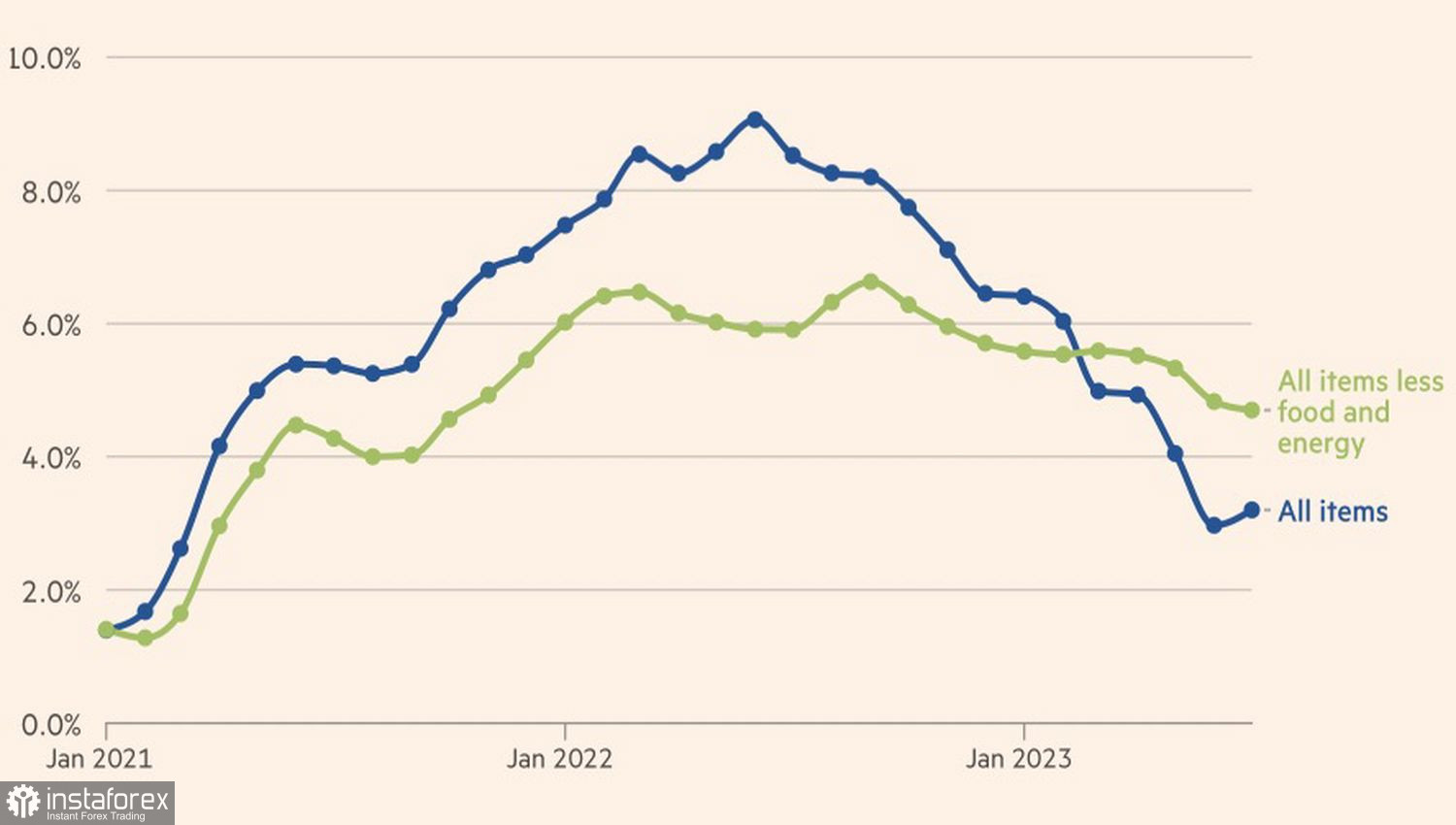
Investors are simply uncertain about the Fed's next move. The central bank itself is in uncharted waters. Never in post-war American history has it paid so little for monetary restriction. Unemployment isn't increasing, although it should have! Meanwhile, disinflation is in full swing!
However, secondary indicators suggest that in the near future, we shouldn't expect as sharp a drop in the pace of consumer price growth as we saw this summer. Firstly, average wages are not slowing. Secondly, price drops in real estate and certain products, such as used cars, might trigger the price increase of other goods. At the very least, the Fed will maintain the federal funds rate flat until March 2024. They might even increase it once more. It's premature to expect a dovish turn from them.
U.S. Average Wage Dynamics
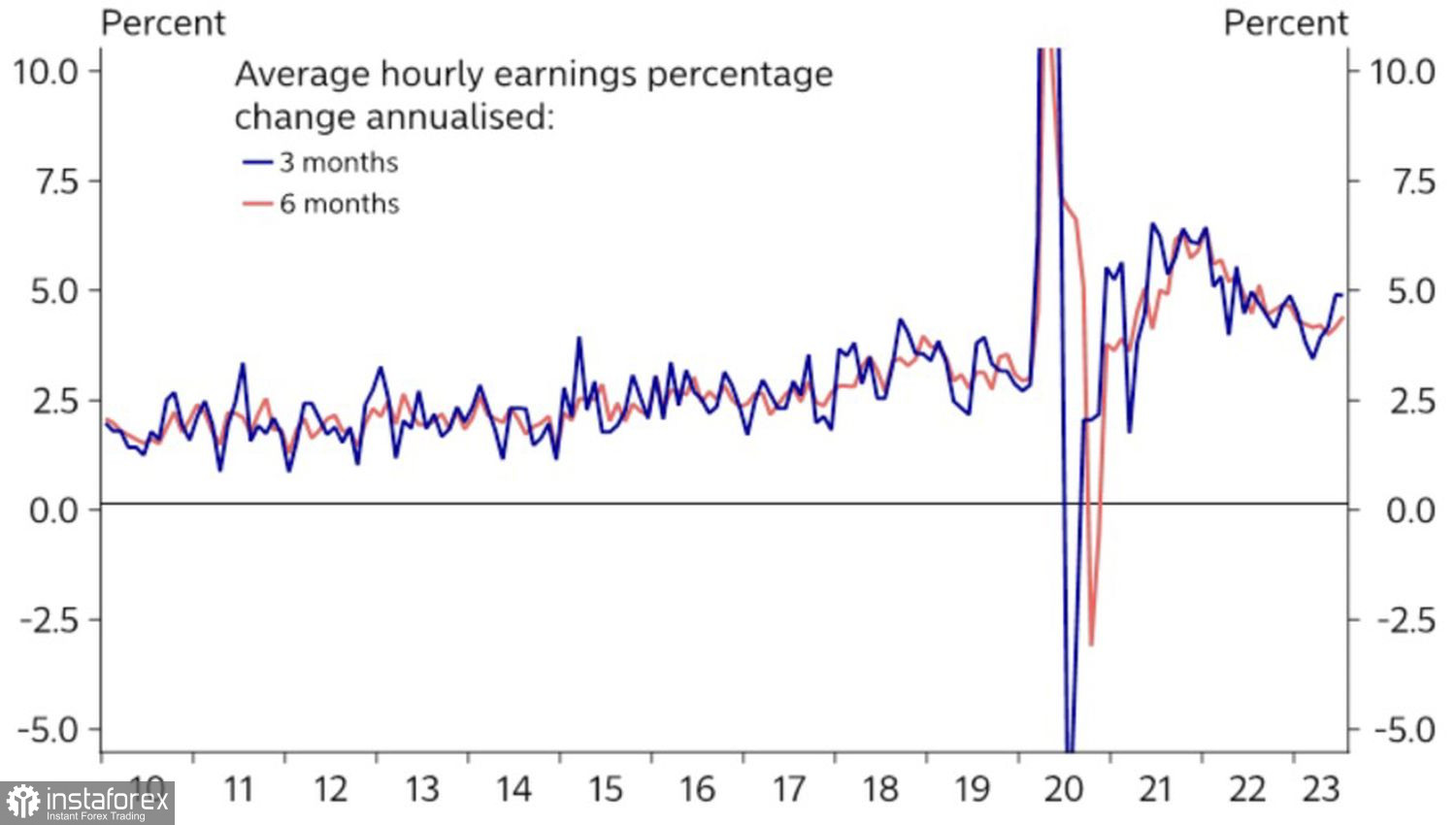
What's next? Two scenarios. Either U.S. macro statistics will drastically worsen, increasing recession risks and prompting the Federal Reserve to cut rates. Or inflation will accelerate, and borrowing costs will start to rise after a September pause. In my opinion, the latter scenario is more likely. Currently, the markets are in a Goldilocks mode, where consumer price growth rates decrease, while GDP expands at a moderate pace. This mode leads to relaxed financial conditions, further stimulating the economy.
Thus, the chances of a repeat of the 1970s scenario – where inflation began to decrease, the Fed stopped hiking rates, followed by a new CPI peak – are quite high. The central bank will not repeat past mistakes, so EUR/USD "bears" can rest easy. Borrowing costs will remain at their current levels or begin to rise, but not decrease. This is a favorable environment for the U.S. dollar.
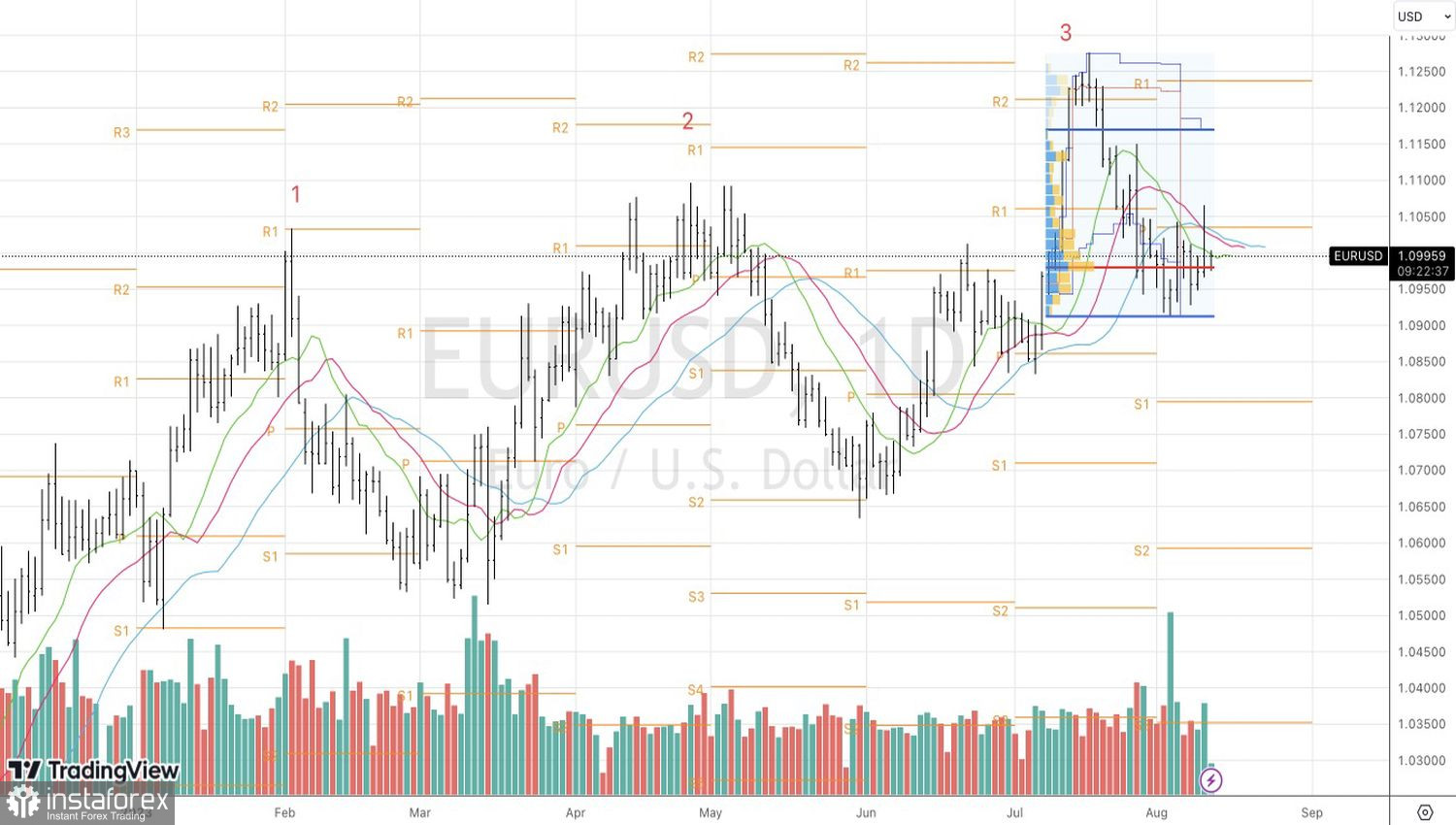
Technically, the formation of a pin bar with a long upper shadow on the EUR/USD daily chart allows placing a pending sell order for the pair at the 1.0965 level.
*The market analysis posted here is meant to increase your awareness, but not to give instructions to make a trade.
InstaSpot analytical reviews will make you fully aware of market trends! Being an InstaSpot client, you are provided with a large number of free services for efficient trading.


