




我们的团队有超过700万的操盘手!
我们每天都在一起努力改善交易。我们得到了很高的成绩,并继续前进。
世界各地数以百万计的操盘手的认可是我们工作的最大赞赏! 您做出了您的选择,我们将尽一切努力来满足您的期望!
我们是一个共同的伟大团队!
InstaSpot. 自豪地为您工作!



Today, oil prices have plummeted by more than 6%—the largest single-day decline in several weeks. Brent has dropped to $97.10 per barrel, while WTI is near $91.
This situation indicates that the market is trading in anticipation of an agreement between the U.S. and Iran concerning the Strait of Hormuz—a matter of days, not weeks.
The signals are indeed encouraging. According to recent media reports, U.S. Secretary of State Mark Rubio, speaking in New Delhi, stated that news could emerge as early as today. The Washington Post reports that the parties have developed a memorandum to extend the ceasefire for 60 days while simultaneously clearing mines and reopening the strait. Recent data shows that within a day, 33 vessels, including oil tankers and container ships, have passed through the strait with the permission of the IRGC Navy, indicating the first tangible signs of a thaw in the Strait's status.
When it comes to oil, which has been trading for several weeks under the worst-case scenario of a new war, further declines below the $90 mark will only occur with a clear breakthrough in negotiations. Given that Trump is facing increasing domestic political pressure ahead of the midterm elections in November and gas prices have reached their highest since 2022, all of this directly impacts ratings, making it in the U.S. interest to avoid prolonged conflict. White House chief economic advisor Kevin Hassett has already stated that he expects a sharp drop in energy prices after the deal, providing the Federal Reserve room for rate cuts.
However, the key disagreements have not gone away. The Iranian news agency Tasnim warns that the agreement could still fall through. The U.S. is reportedly blocking the unfreezing of Iranian assets, and the nuclear program remains an unresolved issue. All of this indicates that the market has priced in relief—but not a long-term solution.
The complete reopening of the strait, through which approximately one-fifth of the world's oil and LNG supplies flowed in peaceful times, would be a significant relief for major Asian importers—China, Japan, and South Korea. The next 24–48 hours will show whether diplomatic progress leads to a signed document.
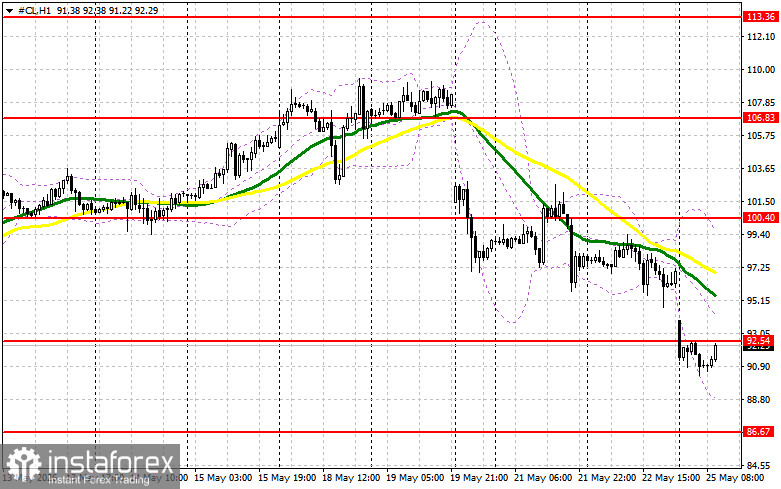
Regarding the current technical picture for oil, buyers need to overcome the nearest resistance at $92.50. This will allow targeting $100.40, above which it will be quite difficult to break through. The furthest goal will be $106.80. In the event of a decline in oil, bears will attempt to take control at $86.50. If they succeed, a breakout of the range will deal a serious blow to bullish positions and may push oil down to a low of $81.40, with the prospect of reaching $74.85.
*这里的市场分析是为了增加您对市场的了解,而不是给出交易的指示。
InstaSpot分析评论将让您充分了解市场趋势! 作为InstaSpot的客户,您将获得大量的免费服务以实现有效的交易。