




The legend in the InstaSpot team!
Legend! You think that's bombastic rhetoric? But how should we call a man, who became the first Asian to win the junior world chess championship at 18 and who became the first Indian Grandmaster at 19? That was the start of a hard path to the World Champion title for Viswanathan Anand, the man who became a part of history of chess forever. Now one more legend in the InstaSpot team!




Borussia is one of the most titled football clubs in Germany, which has repeatedly proved to fans: the spirit of competition and leadership will certainly lead to success. Trade in the same way that sports professionals play the game: confidently and actively. Keep a "pass" from Borussia FC and be in the lead with InstaSpot!
The US dollar is in demand again as global markets are bracing for the worst.
On Monday, trading opened amid a sharp escalation in geopolitical tensions. Official reports cited a drone attack on a nuclear power plant in the United Arab Emirates as the immediate cause, but other significant factors are clearly also affecting markets.
Global markets reacted to the escalation:
- Oil hit a two-week high.
- Gold fell to its lowest level in more than a month.
- Asian equity markets opened with widespread sell-offs.
- European trading also started on a negative footing.
- Bond yields rose sharply: the US 10-year Treasury yield exceeded 4.6 percent, reaching its highest level since January last year.
- Federal Funds futures now imply nearly a 50 percent probability of a rate hike in December.
Meanwhile, the latest Commodity Futures Trading Commission report showed that speculative investors continue to exit long positions in the US dollar. Over the week, the net short position against major currencies narrowed by $2.6 billion to $5.0 billion.
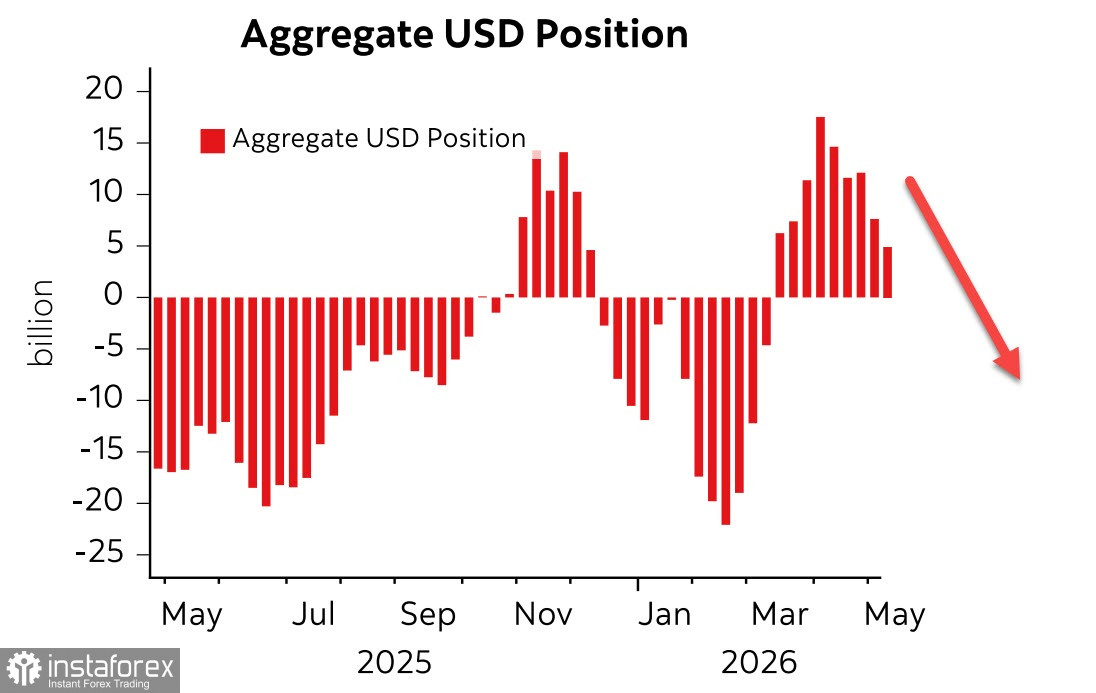
There are two key trends. Five weeks of reductions in dollar long positions reflected market expectations that the Middle East conflict was drawing to a close. That optimism was supported by President Trump's actions to extend the ceasefire and his readiness to seek a diplomatic settlement. Market participants had assumed that, despite opposing positions, the parties would seek to end the conflict, allowing the global economy to avoid another crisis.
Recent developments have forced a reassessment of that view.
Failure of Trump's China visit: The first presidential trip to China in eight years proved fruitless. Despite a lavish reception, Mr. Trump secured no concessions on any of the issues he raised and departed with no tangible gains. The outcome is a worrying signal for the United States, indicating that China feels it holds the dominant position in bilateral relations and that the era of the "junior partner" is over. This dynamic could further exacerbate the crisis.
Escalation around Iran: In response, Mr. Trump intends to consult with national security advisers on potential further military action against Iran. That discussion is occurring against a backdrop in which Tehran has indicated that military operations will not yield the results Mr. Trump seeks.
The Strait of Hormuz remains blocked. The International Energy Agency now assumes a sharp reduction in global oil supplies in 2026 while demand remains steady. Global oil stocks could fall to critical levels in the near term, triggering a large-scale global crisis. Initially the shock would be described as energy-related, but it would quickly become global as the food sector, which depends on fertilizers derived from natural gas, also comes under threat.
In its latest monthly report, the IEA forecasts a reduction in global oil supplies of about 3.9 million barrels per day over the current year. Current declines in shipments from Persian Gulf producers already exceed that figure. JPMorgan analysts say commercial inventories could approach an operational stress level by June, and the oil market risks becoming unmanageable.
Markets are actively positioning for an adverse scenario, and the prospect of a prompt end to the war looks increasingly remote. Either a resolution is reached within the next two to three weeks, or the crisis will gain momentum.
In the near term the dollar continues to be in demand as the principal safe-haven currency, and it would be premature to rule out further dollar strength.
*这里的市场分析是为了增加您对市场的了解,而不是给出交易的指示。
InstaSpot分析评论将让您充分了解市场趋势! 作为InstaSpot的客户,您将获得大量的免费服务以实现有效的交易。


