




我们的团队有超过700万的操盘手!
我们每天都在一起努力改善交易。我们得到了很高的成绩,并继续前进。
世界各地数以百万计的操盘手的认可是我们工作的最大赞赏! 您做出了您的选择,我们将尽一切努力来满足您的期望!
我们是一个共同的伟大团队!
InstaSpot. 自豪地为您工作!



Chairman Jerome Powell has achieved a near-perfect consensus as the Federal Reserve raised interest rates aggressively. Now this agreement is going to be much tougher to maintain as the rate-hiking campaign is coming to an end.
In light of inflation that hit 9% last year, Powell's colleagues were fully committed to curbing price pressures. This Wednesday, the regulator is expected to deliver another 25 basis point rate increase, which might be the final one. However, this consensus is already showing signs of splintering amid inflation that remains too high, while Fed officials and many private economists anticipate a recession in the coming months.
As the coronavirus pandemic threatened the US economy in early 2020, Powell received over 98% of the Federal Open Market Committee's votes in favor of his actions, first to stimulate growth during the recession and then to fight inflation in the past year. Growing dissent is more likely as the choice between combating inflation or much higher unemployment becomes increasingly worrisome.
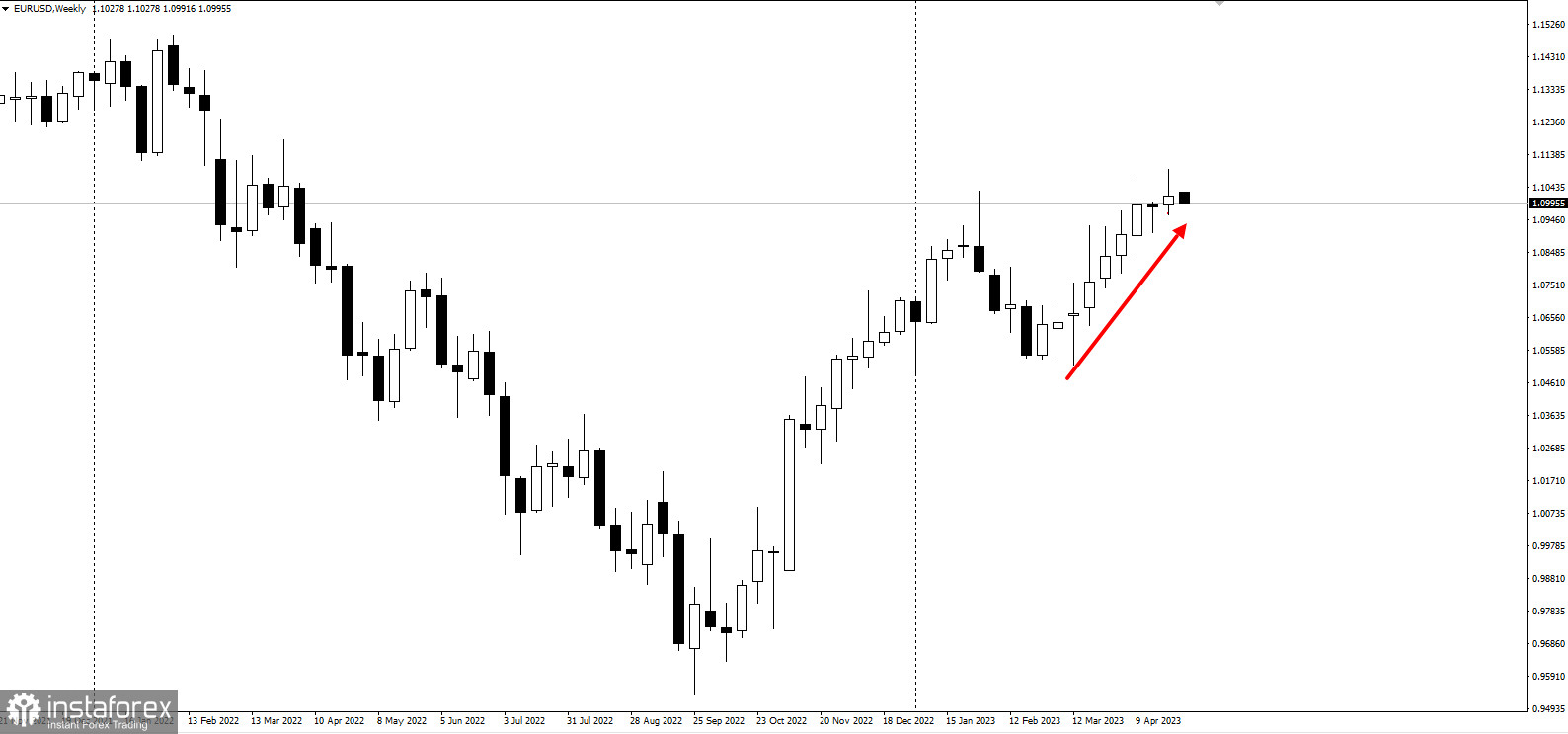
The EUR/USD pair is trading at one-year highs ahead of the news:
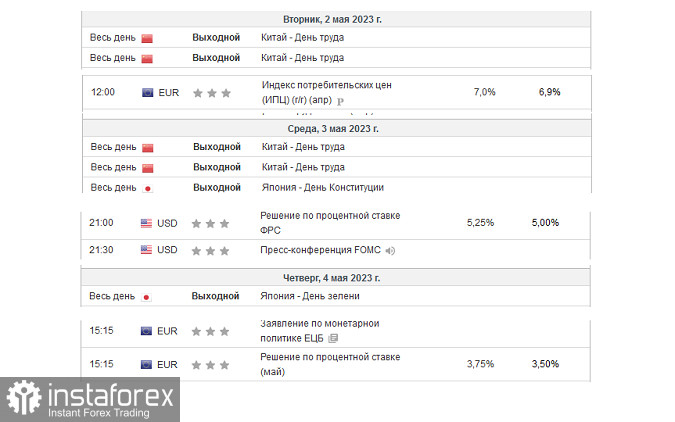
Federal Reserve officials have signaled that the FOMC will deliver another quarter-point rate hike at its May 2-3 meeting to a range of 5% to 5.25%, the highest since 2007 and part of the most aggressive tightening campaign since Paul Volcker faced double-digit inflation four decades ago.
The economy is also being weighed down by tighter credit following the bankruptcy of Silicon Valley Bank and Signature Bank. According to economists surveyed by Bloomberg, this is equivalent to another half-point or more increase in the Fed's target rate. This in turn could lead to tighter credit conditions, especially for commercial real estate, where significant losses are expected.
Another major uncertainty is the looming US debt ceiling.
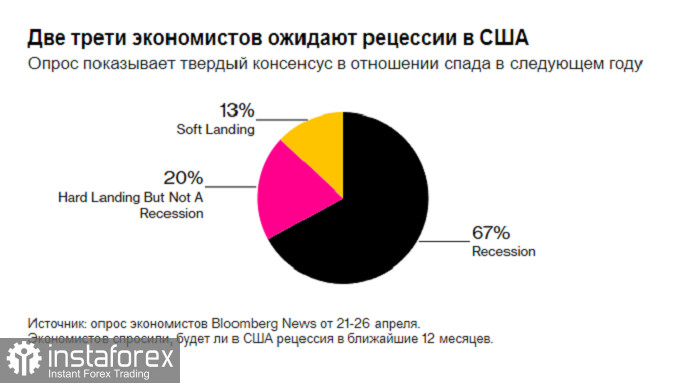
Given that Fed officials and two-thirds of economists predict a recession, FOMC voters are uncomfortable deciding whether to continue fighting inflation or try to soften a slowing economy.
The Fed's March forecasts show that seven out of 18 FOMC participants advocated for at least one more rate hike beyond the extended move to 5-5.25%, with one official expecting rates at 6%. The divisions for the next year are even greater, with over 2 percentage points of difference between the top and bottom rate forecasts.
Fed hawks
Among the hawks, St. Louis Fed President James Bullard, who does not vote this year, has called on its colleagues to lift rates to the 5.5-5.75% range, stating that the economy is resilient and banking problems will not be too costly. Minneapolis Fed President Neel Kashkari, a voter, and Fed Governor Christopher Waller partly shared this view.
Fed doves
Among the doves, Chicago Fed President Austan Goolsbee, a voter, called for "prudence and patience" when assessing the impact of the banking stress on the economy, while Philadelphia Federal Reserve Bank President Patrick Harker, another voter, warned that the Fed's aggressive steps could lead to severe consequences.
According to Jerome Powell, the Fed will not loosen prematurely and will not stop fighting inflation until the regulator is confident that the rate is back to the central bank's 2% target level, even with some rise in unemployment. He said the path could be bumpy, which could reinforce hawkish views that more hikes are needed.
"It is a difficult decision point for the Fed" as it weighs whether it's done too little or too much, former Boston Federal Reserve Bank President Eric Rosengren noted during EconoFact round-table discussions at Tufts University last week. "If the unemployment rate were to go up too quickly, that would be more challenging."
*这里的市场分析是为了增加您对市场的了解,而不是给出交易的指示。
InstaSpot分析评论将让您充分了解市场趋势! 作为InstaSpot的客户,您将获得大量的免费服务以实现有效的交易。