




The legend in the InstaSpot team!
Legend! You think that's bombastic rhetoric? But how should we call a man, who became the first Asian to win the junior world chess championship at 18 and who became the first Indian Grandmaster at 19? That was the start of a hard path to the World Champion title for Viswanathan Anand, the man who became a part of history of chess forever. Now one more legend in the InstaSpot team!




Borussia is one of the most titled football clubs in Germany, which has repeatedly proved to fans: the spirit of competition and leadership will certainly lead to success. Trade in the same way that sports professionals play the game: confidently and actively. Keep a "pass" from Borussia FC and be in the lead with InstaSpot!
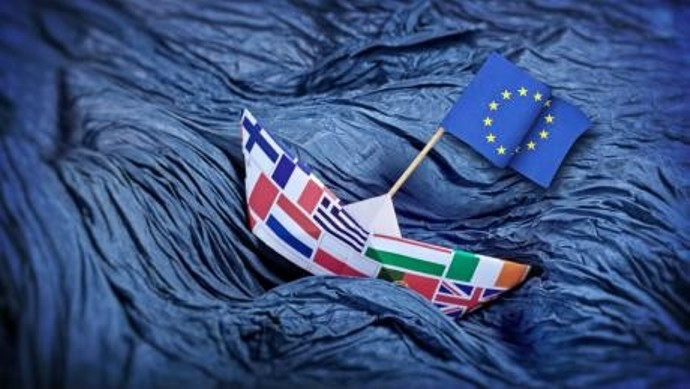
This spring, the eurozone faced the deepest recession ever caused by a global lockdown. According to the European Commission's quarterly report, the eurozone's GDP will decline by 7.8% in 2020. Next year, GDP will grow by 4.2%, and in 2022 - by 3.0%.
Over the summer, the European economy managed to recover almost completely, showing record growth rates. However, the sharp growth in the number of infected people in autumn canceled out the success. The second wave of the coronavirus forced many countries to reintroduce restrictive measures. As a result, the economic recovery began to slow down.
A decrease in GDP is expected in all EU countries, but the damage is uneven. Spain, France, and Italy have been hit hardest, according to the European Commission's estimates. The GDP's drop in these countries may exceed 9%. For comparison, in Germany, GDP fell by only 5.6%.
Moreover, Spain and Italy have the highest daily COVID-19 incidence rates. In some regions, quarantine has been already reintroduced. Also, Italy joined countries such as France, Britain, and Germany in suspending vast sectors of their economies.
Besides, in Germany, industrial production rose less than expected in September. In other words, the continent could be hit by a double recession.
The scale of the virus spread and the severity of the measures taken to contain COVID-19 are different. In other words, each EU country will take a different amount of time to recover from the consequences. State support measures play an important role in this situation as well.
By the way, Vice-President of the European Commission Valdis Dombrovskis informed of the new NextGenerationEU package of measures, which was created in order to provide significant support to those regions that have been most affected by the coronavirus.
Meanwhile, amid a weakening economy and fear of the virus, European indices fell.
Germany's DAX lost 0.5%, France's CAC 40 fell by 0.4%, and the UK's FTSE decreased by 0.2%.
On Friday, oil prices fell under pressure from signs of the overproduction at OPEC and more drastic discounts from Saudi Arabia to consumers in Asia.
WTI crude futures lost 1.2% to trade at $38.34 per barrel, Brent crude fell by 1.3% to $40.42 as well.
Gold futures rose by 0.1% to hit $1,949.30 per ounce.
EUR/USD increased by 0.2% to settle at 1.1848.
InstaSpot分析评论将让您充分了解市场趋势! 作为InstaSpot的客户,您将获得大量的免费服务以实现有效的交易。


