




The legend in the InstaSpot team!
Legend! You think that's bombastic rhetoric? But how should we call a man, who became the first Asian to win the junior world chess championship at 18 and who became the first Indian Grandmaster at 19? That was the start of a hard path to the World Champion title for Viswanathan Anand, the man who became a part of history of chess forever. Now one more legend in the InstaSpot team!





Borussia is one of the most titled football clubs in Germany, which has repeatedly proved to fans: the spirit of competition and leadership will certainly lead to success. Trade in the same way that sports professionals play the game: confidently and actively. Keep a "pass" from Borussia FC and be in the lead with InstaSpot!

The odds of an October Fed rate hike are falling on Thursday after speeches by two of its leaders — Vice Chair Philip Jefferson and Vice Chair for Supervision Michelle Bowman — who urged giving policymakers more time to assess the data.
Earlier this week, futures on the federal funds rate priced in roughly a 70% chance of a rate hike in October. After New York Fed President John Williams' Tuesday remarks and softer core inflation data on Wednesday, that probability decreased below 35%, and Jefferson's comments pushed it even lower, according to derivatives pricing.
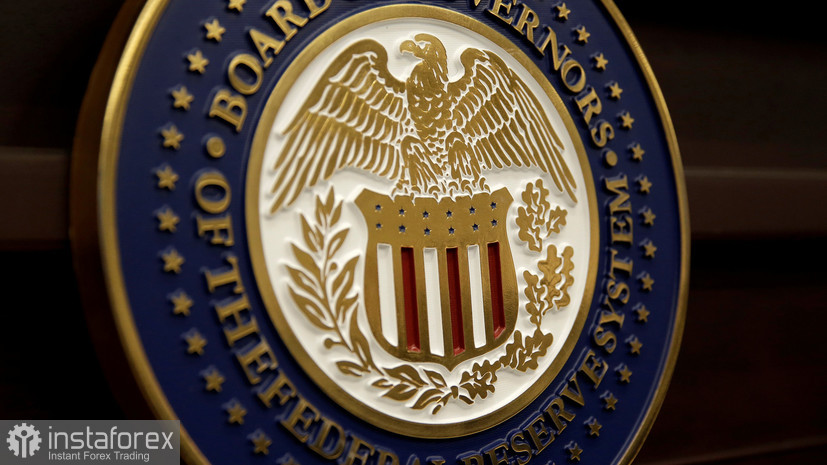
Speaking at the University of Virginia in Charlottesville, Jefferson kept a stern diagnosis but a cautious prescription. Inflation, he said, has been too high for a long period and risks of persistence remain, yet the economy and labor market are holding up. "My view is that any future policy adjustments should be driven by careful study of data trends, evolving prospects and the balance of risks. My colleagues and I need to reach our own judgment, and that may take more time," Jefferson said.
That same day, Michelle Bowman spoke at the Atlantic Council in Washington. "I do not see an urgent need for further action at this time, and we need to better understand the full set of data," the Fed's vice chair for supervision said. Notably, three of the Fed's most influential voices spoke in the same key this week, echoing Williams' message that there is no rush after September's hike. The unified front reduces market uncertainty — if only toward inaction.
The caution is understandable given three simultaneous shocks. Jefferson argued that the oil?price shock from the Middle?East conflict, an investment boom around artificial intelligence, and tariff effects cannot be viewed in isolation — the Fed must assess their cascading impact on the entire economy. Why pause with inflation at 3.4% versus a 2% target? The answer lies in transmission mechanics: yesterday's ISM report showed input?price inflation jumping to 77.9 from 71.1, with companies blaming tariffs and the Iran conflict. While input costs are accelerating, tightening policy further risks choking activity — so acting hastily is dangerous.
A reminder of the September decision: on Sept. 15–16 the committee unanimously raised rates by 25 bps, the first hike since 2023, and the median projection still allowed for another rise this year and one next year. Jefferson described the September move as an important milestone in keeping long?run inflation expectations well anchored.
Note also yields, which the vice chair mentioned separately. Since the September meeting, yields have risen across the curve — 10?year Treasuries trade near 24?year highs — and investors, he said, are re?pricing the changing macro landscape. More important, rising yields themselves tighten financial conditions and do part of the Fed's anti?inflation work without a committee vote, which reduces the urgency to act but simultaneously pressures mortgages, construction and long?duration borrowers.
A pause in October now looks likely. After three synchronized speeches, only Friday's nonfarm payrolls — consensus roughly 90,000 new jobs — could meaningfully change the view. If hiring comes in materially stronger, the odds of a hike would rise back toward 40% or higher; if weak, the market would push probabilities to 20% or lower — and either scenario would be repriced quickly.
The other fork in the road is December. The baseline for the next move remains that meeting, and the decision will hinge on October inflation, oil prices and fresh labor?market data. With ISM input prices near 80% and expensive energy, hawkish arguments could quickly reassert themselves; if wage growth cools, the next hike may slip into 2027, as many economists expect.
Based on the data, I think an October hike will not happen; the next Fed move is far more likely in December, provided today's report comes in near the 90,000 mark.
Technical outlook for EUR/USD Buyers should consider taking out 1.1265. Only that would allow a test of 1.1300. From there, a push to 1.1315 would be possible, but doing so without support from major players will be difficult. On the downside, I expect significant buying only around 1.1220. If no bid appears there, it is better to wait for a new low at 1.1175 or consider longs from 1.1140.
Technical outlook for GBP/USD Pound buyers need to take immediate resistance at 1.3225 to target 1.3265, above which further advances will be difficult. The next extended target is around 1.3300. On the downside, bears will try to seize control of 1.3180; a confirmed break would severely damage bull positions and push GBP/USD to 1.3145 with a prospect of extending to 1.3110.
*এখানে পোস্ট করা মার্কেট বিশ্লেষণ আপনার সচেতনতা বৃদ্ধির জন্য প্রদান করা হয়, ট্রেড করার নির্দেশনা প্রদানের জন্য প্রদান করা হয় না।
ইন্সটাফরেক্স বিশ্লেষণমূলক পর্যালোচনাগুলো আপনাকে মার্কেট প্রবণতা সম্পর্কে পুরোপুরি সচেতন করবে! ইন্সটাফরেক্সের একজন গ্রাহক হওয়ায়, দক্ষ ট্রেডিং এর জন্য আপনাকে অনেক সেবা বিনামূল্যে প্রদান করা হয়।


