




Our team has over 7,000,000 traders!
Every day we work together to improve trading. We get high results and move forward.
Recognition by millions of traders all over the world is the best appreciation of our work! You made your choice and we will do everything it takes to meet your expectations!
We are a great team together!
InstaSpot. Proud to work for you!





Actor, UFC 6 tournament champion and a true hero!
The man who made himself. The man that goes our way.
The secret behind Taktarov's success is constant movement towards the goal.
Reveal all the sides of your talent!
Discover, try, fail - but never stop!
InstaSpot. Your success story starts here!

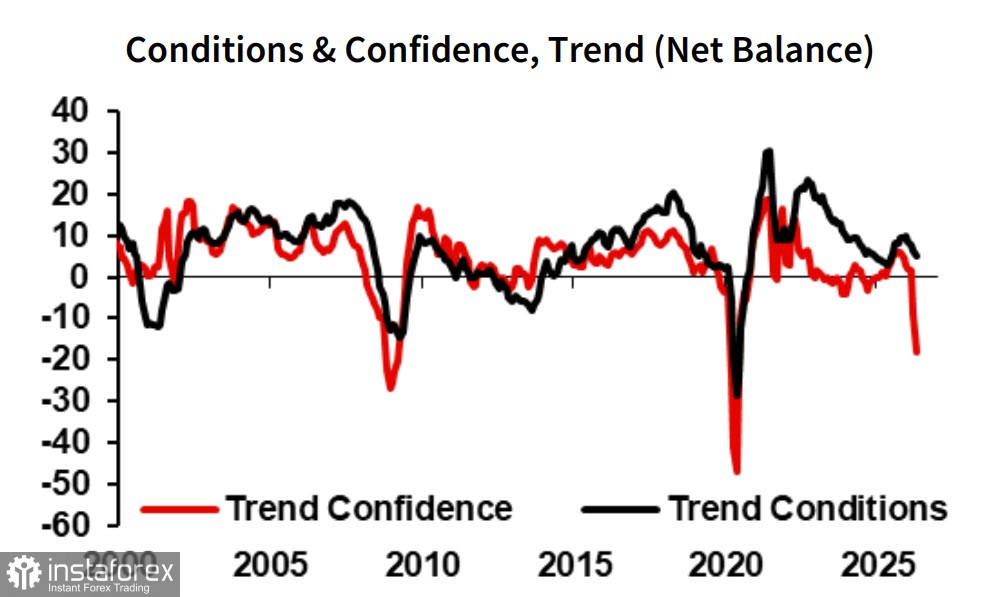
The latest monthly NAB survey showed a deterioration in business activity in Australia. In April, companies' input costs rose 4.5% (quarter-on-quarter), notably outpacing the increase in output prices (1.8%). That has squeezed margins and weighed on investment activity. Forward orders, capital expenditure, cash flows, and employment have all fallen noticeably in recent months and are well below long-term averages.
Despite this, the business confidence index grew 5 points to -24. That gain likely reflects hopes in April for a rapid end to the conflict in the Middle East. However, actual business activity fell by 3 points and remains below the long-term average, reflecting current strains. Forward orders dropped 4 points, and capex fell 8 points, the largest monthly decline since the post-COVID period began.
In April, US inflation showed a sharp pick-up: the annual headline rate rose from 3.3% to 3.8%, and the core rate from 2.6% to 2.8%. Both exceeded forecasts. Markets reacted to these data and to tough comments from Chicago Fed President Austan Goolsbee, who said inflation is not slowing and is moving in the wrong direction. That pushed US bond yields higher.
Before the release, CME Fed funds futures had not priced a rate hike this year. After the report, the probability of a hike by December rose above 30%. This is not definitive yet, since the May inflation report will be released before the next Fed meeting (in 35 days) and will be decisive if it also shows an uptick. It is clear, however, that the chances of a Fed cut have fallen significantly.
On Thursday, the Melbourne Institute will publish its monthly consumer inflation expectations report. A key event that could affect the AUD will be US President Trump's visit to China and any attempts to secure concessions from Xi Jinping. Chinese demand is a major factor for Australia, affecting not only the trade balance but the overall resilience of the economy.
According to the CFTC report, the net long position in AUD rose by $490 million in the reporting week to $5.651 billion. Surprisingly, long?term investors appear to be ignoring geopolitical risks in the Middle East and are positioned for a stronger Australian dollar over the long run. The main driver may be the sharp rise in inflation expectations and the prospect of further RBA rate hikes, which would boost yields and the currency's appeal. Nevertheless, the implied price continues to decline.
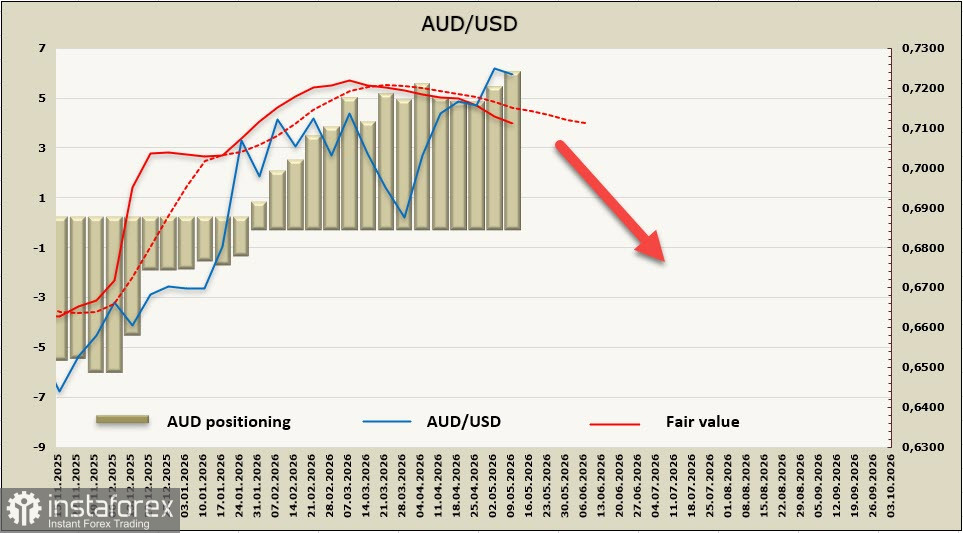
Technically, the bullish impulse in AUD/USD remains strong; the daily RSI has not yet entered the overbought zone. However, a move to the 0.8010 target without a corrective pullback seems unlikely. The Australian economy is already facing energy issues, and much will depend on how the RBA seeks to strike a balance. For now, the Bank is focused on fighting inflation and is hiking rates aggressively, which supports the AUD's strong bullish momentum. Still, the implied price dynamics suggest a reversal toward the nearest support at 0.6940–0.6960 is close.
*এখানে পোস্ট করা মার্কেট বিশ্লেষণ আপনার সচেতনতা বৃদ্ধির জন্য প্রদান করা হয়, ট্রেড করার নির্দেশনা প্রদানের জন্য প্রদান করা হয় না।
ইন্সটাফরেক্স বিশ্লেষণমূলক পর্যালোচনাগুলো আপনাকে মার্কেট প্রবণতা সম্পর্কে পুরোপুরি সচেতন করবে! ইন্সটাফরেক্সের একজন গ্রাহক হওয়ায়, দক্ষ ট্রেডিং এর জন্য আপনাকে অনেক সেবা বিনামূল্যে প্রদান করা হয়।


