




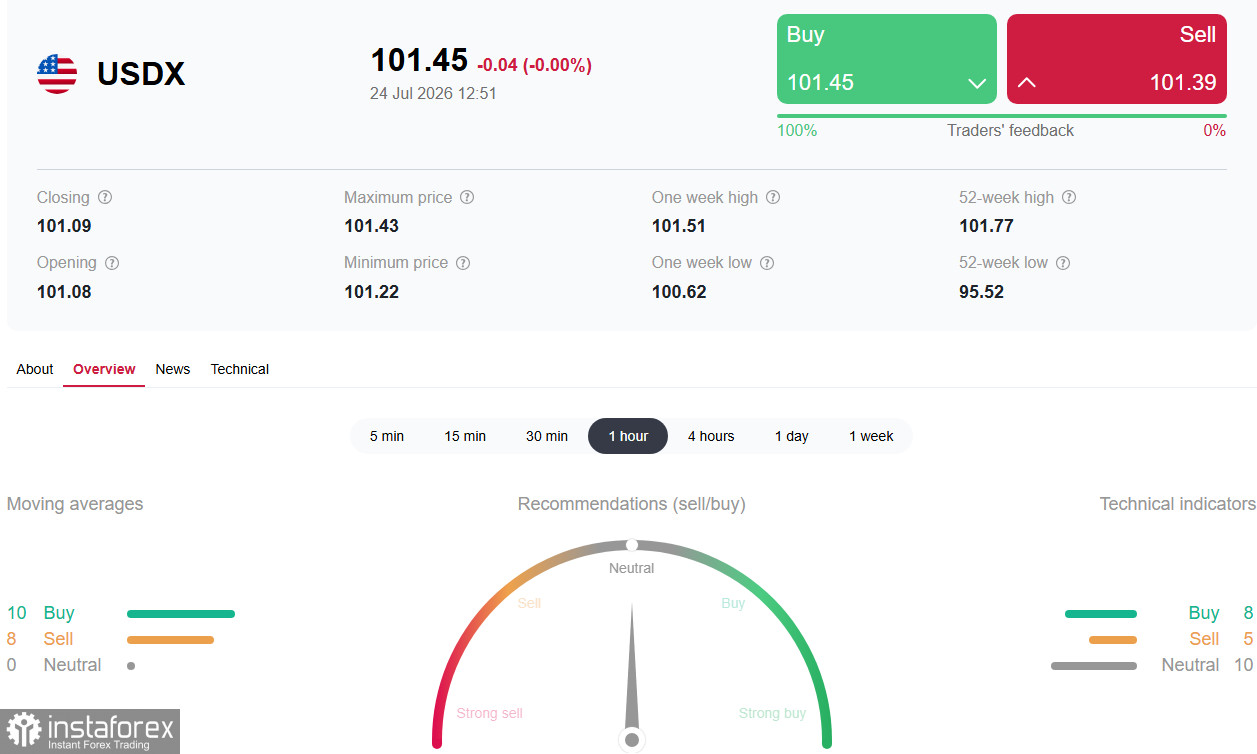
The U.S. Dollar Index (USDX) is ending a volatile week on a strong note, consolidating near three-week highs around 101.30–101.40 after rebounding decisively from support at 100.95 (the lower boundary of the short-term trend and the ascending channel on the 1-hour chart). The U.S. dollar has received a strong boost from the renewed escalation of the conflict in the Middle East, which has driven oil prices higher, increased demand for safe-haven assets, and reinforced expectations that the Federal Reserve will maintain a restrictive monetary policy stance.
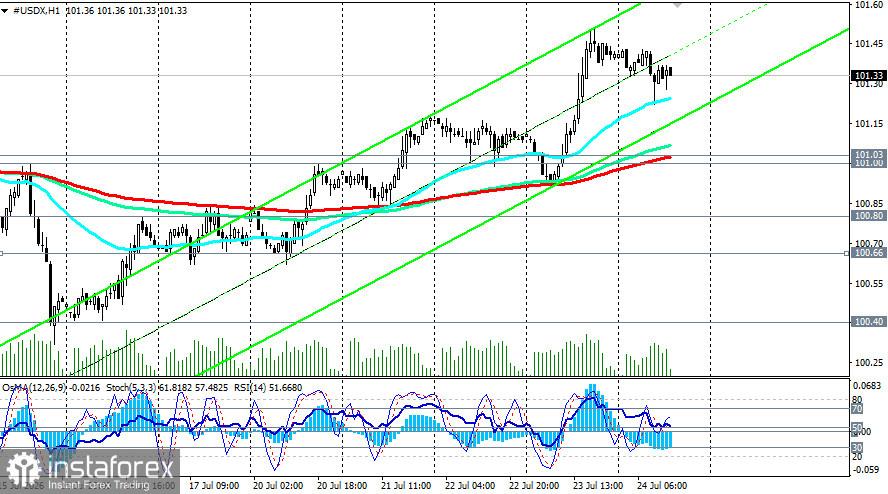
At the start of Friday's U.S. trading session, USDX futures were trading slightly below the day's opening level but remained broadly supported following the rally triggered by geopolitical developments. The main catalyst was the thirteenth consecutive day of overnight U.S. strikes against Iran, along with the expansion of the conflict into the Red Sea, where Iran-backed Houthi forces attacked Saudi oil tankers and threatened to disrupt another strategic shipping route—the Bab el-Mandeb Strait. These developments intensified concerns over potential energy supply disruptions, pushing Brent crude prices above $95 per barrel and strengthening demand for the U.S. dollar as the world's primary safe-haven currency.
The dollar also found support from U.S. macroeconomic data. Initial jobless claims fell to 187,000, the lowest level since September 1969, confirming the continued resilience of the U.S. labor market. This has allowed Federal Reserve officials to remain focused on combating inflation, while markets have priced in more than an 80% probability of an interest rate increase as early as September.
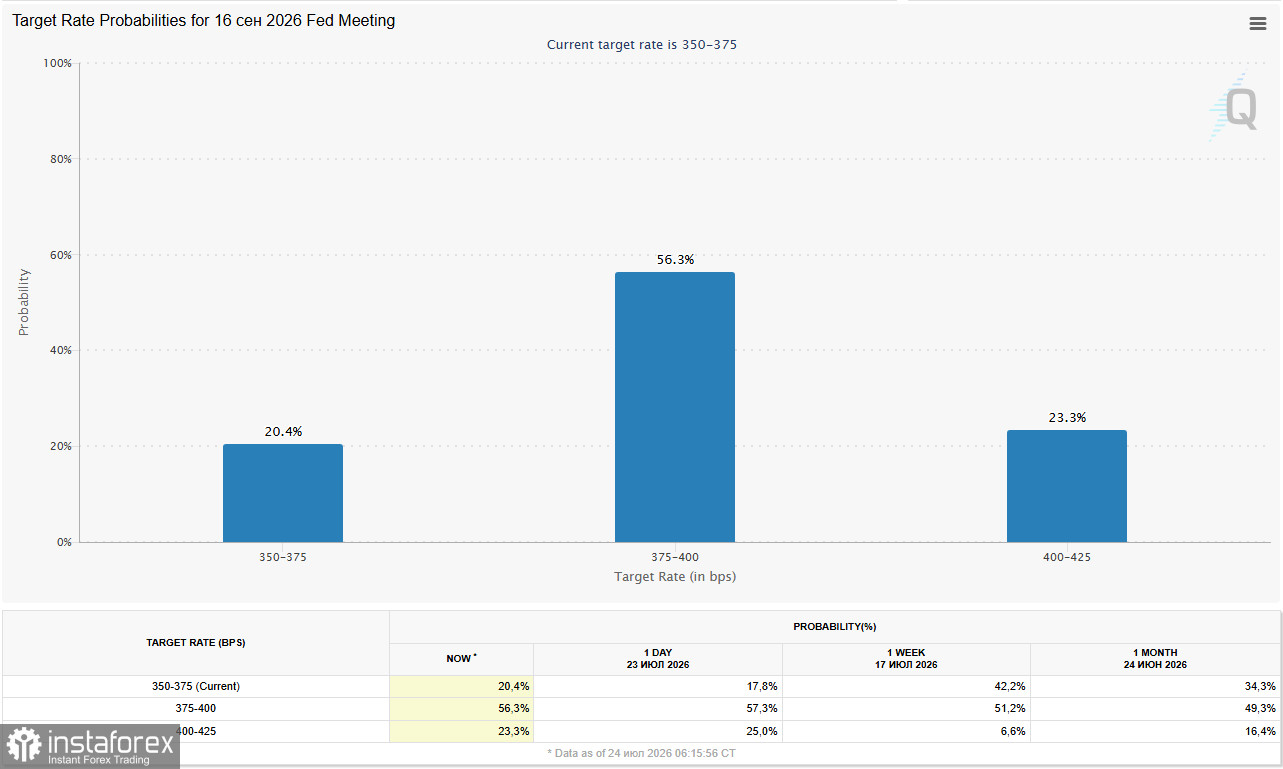
The Federal Reserve's continued hawkish stance remains the key factor supporting the U.S. dollar. Markets currently expect at least one 25-basis-point rate increase before the end of the year, while some analysts do not rule out a more aggressive tightening cycle. Federal Reserve Chair Kevin Warsh has reaffirmed the central bank's commitment to bringing inflation under control, while the Fed's decision to move away from forward guidance has introduced additional uncertainty, which historically tends to support the U.S. dollar.
The resilience of the U.S. economy is also contributing to dollar strength, with second-quarter GDP growth expected to exceed its long-term average.
The renewed military confrontation between the United States and Iran, together with the threat of disruptions to key global shipping routes, has created an ideal environment for further U.S. dollar strength. Rising oil prices are reinforcing inflation expectations and strengthening the case for a hawkish Federal Reserve. At the same time, geopolitical uncertainty continues to boost demand for the dollar as a safe-haven asset.
While the Federal Reserve maintains a restrictive policy stance, the European Central Bank (ECB) has left interest rates unchanged, with ECB President Christine Lagarde merely reaffirming the possibility of a rate increase in September. The ECB's comparatively more dovish tone continues to support the U.S. dollar against the euro.
U.S. President Donald Trump has introduced broad new tariffs ranging from 10% to 12.5% on imports from 60 countries, covering approximately 99.4% of total imports. These measures have increased concerns about a renewed global trade conflict, further reducing investors' appetite for risk and supporting demand for the U.S. dollar.
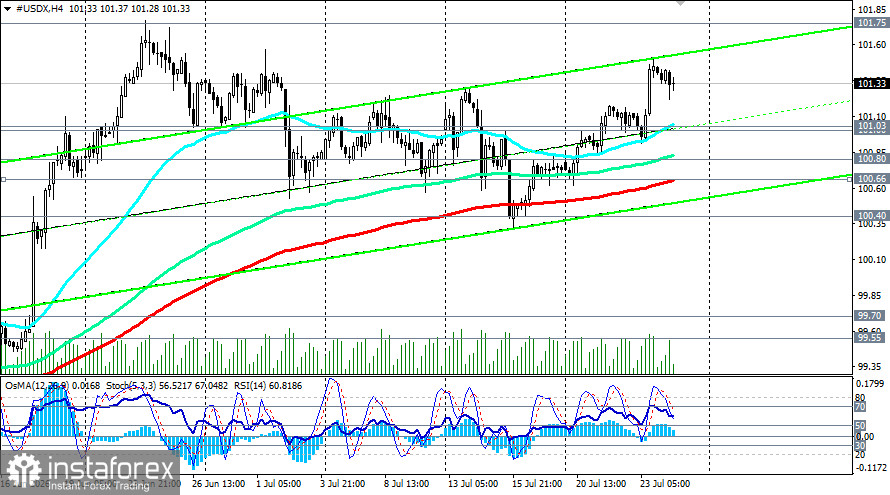
From a technical perspective, USDX maintains a constructive short-term outlook, although it is encountering resistance above the 101.00 level.
On the daily chart, the index remains above both the 50-period EMA (100.40) and the 200-period EMA (99.55), confirming that the broader upward structure remains intact. Price action also continues to develop within the ascending channel that originated in April–May.
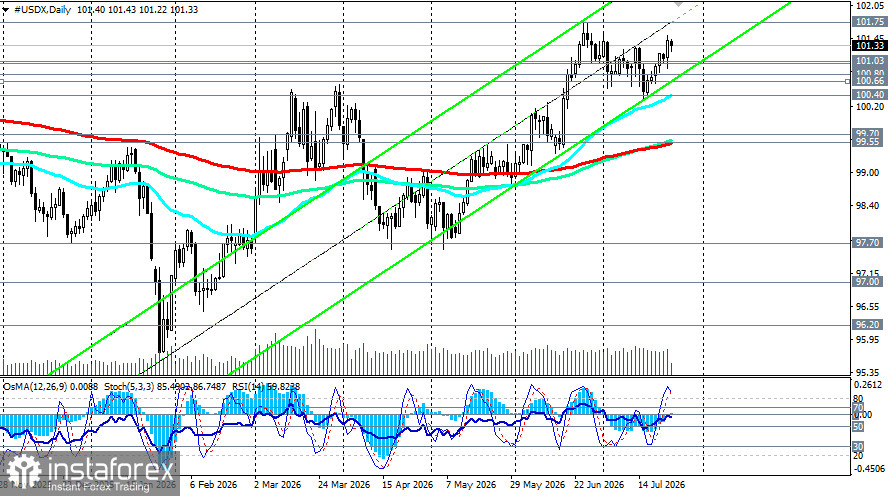
The nearest resistance levels are located at:
The nearest support levels are located at:
Date | Event | Forecast / Expectation | Potential Impact on USDX |
July 24 | S&P Global Flash U.S. PMI (July) | Services: 51.0; Manufacturing: 54.5 | Strong data would support the dollar; weak data would weigh on it. |
July 24 | U.S. New Home Sales (June) | — | Indirect impact through the outlook for the U.S. economy. |
July 28–29 | Federal Reserve Meeting | Interest rate expected to remain at 3.50%–3.75% | Dovish signals would pressure the dollar; hawkish signals would support it. |
Throughout the week | Geopolitical developments | — | Escalation would support USDX; de-escalation could trigger a correction. |
The U.S. Dollar Index is entering a decisive phase, where bullish momentum driven by geopolitical uncertainty and hawkish Federal Reserve expectations is increasingly confronting the risk of a corrective pullback if geopolitical tensions begin to ease. The 101.50 level remains the key short-term pivot. Next week, market attention will focus on the Federal Reserve meeting and developments in the Middle East, both of which could determine the index's next directional move.
For short-term traders: Long positions may be considered following a confirmed breakout above 101.50, with upside targets at 101.75 and 102.00. Short positions should be considered only after a confirmed break below 101.00, supported by corresponding fundamental developments.
For medium-term investors: A wait-and-see approach remains appropriate until there is greater clarity regarding geopolitical developments and the outcome of the Federal Reserve meeting. A pullback toward the 100.80–101.00 level could provide an opportunity to establish long positions, provided the Fed maintains its hawkish stance.
Risk management: Exercise caution amid elevated volatility driven by geopolitical developments and macroeconomic releases. Use disciplined stop-loss orders and closely monitor developments in the Middle East, together with comments from Federal Reserve officials.
*Analiza tržišta koja se ovde nalazi namenjena je boljem razumevanju tržišta i ne pruža instrukcije za vršenje trgovanja.
Uz InstaSpot-ove analitičke preglede uvek ćete biti u toku sa tržišnim trendovima! Klijentima InstaSpot-a su dostupni mnogobrojni besplatni servisi za uspešno trgovanje.