




ہمارے ٹیم میں 7000000 سے ذائد تاجران شامل ہیں
ہم تجارت کی بہتری کے لئے ہر روز اکھٹے کام کرتے ہیں اور بہترین نتائج حاصل کرتے ہوئے آگے کی جانب بڑھتے ہیں
دُنیا بھر سے سے لاکھوں ہمارے بہترین کام کو سند عطاء کرتے ہیں آپ اپنا انتحاب کریں باقی ہم آپ کی توقعات پر پورا اترنے کے لئے اپنی بہترین کوشش کریں گے
ہم مل کر ایک بہترین ٹیم بناتے ہیں
انسٹا فاریکس آپ سے کام کرتے ہوئے فخر محسوس کرتا ہے





ایکٹر - یو سی ایف 6 ٹورنامنٹ چیمپین اور واقعی ہیرو
ایک فرد کے جس نے اپنا آپ منوایا ہے وہ فرد کہ جو ہماری راہ پر چلا ہے.
ٹکٹا روو کی کامیابی کا راز یہ ہے کہ وہ اپنے اہداف کی جانب مسلسل بڑھتا رہتا ہے
اپنے ہنر یا ٹیلنٹ کے تمام پہلو آشکار کررہے ہیں
پہچانیں ، کوشش کریں ، ناکام ہوں لیکن کبھی نہ رُکیں
انسٹا فاریکس آپ کی کامیابی کی کہاں یہاں سے شروع ہوتی ہے

Oil has returned to growth once again, and there are objective reasons for this. The current escalation in U.S.-Iran relations can no longer be ignored. While we are still far from full-scale hostilities, prices for raw assets are likely to slowly creep upward again.
The attack on a Kuwait oil rig over the weekend marked the first direct strike against energy infrastructure in several weeks. If the conflict expands into attacks on energy facilities in general, oil could rise to $100 per barrel. This attack on the offshore platform has created a new qualitative shift in the conflict, forcing traders to react. Kuwait stated that the platform was damaged amid retaliatory strikes by Iranian drones and missiles against U.S. allies across the Middle East, including Jordan and Qatar. Iran announced on Sunday that the strait would be closed "until further notice." The U.S. disputes this version: U.S. Central Command stated today that it struck dozens of targets on Sunday specifically to weaken Iran's ability to attack international shipping in the strait.
The reaction in prices was predictably sharp. Brent rose above $79 a barrel, continuing a rally of more than 5 percent last week, while WTI hovers around $74. Oil rebounded from its lows as uncertainty returned military premiums to prices, erasing part of the decline recorded in May and June after a temporary peace agreement that promised increased supply.
The International Energy Agency warned on Friday that the new escalation risks disrupting efforts to restore stocks, serving as a reminder of how high the stakes are for the global economy if the conflict drags on. European natural gas prices also rose amid concerns that escalation would hinder supplies: futures rose by up to 2.7 percent after an almost 8 percent increase last week.
Actual traffic data confirm the seriousness of the situation. Traffic through the Strait of Hormuz, which typically accounts for about one-fifth of global oil and liquefied natural gas supplies, was nearly zero on Monday, continuing a slowdown that began with the escalation of tensions last week. However, the United Maritime Information Center noted that the southern shipping corridor coordinated by Oman remains accessible, leaving at least a theoretical loophole for some supplies.
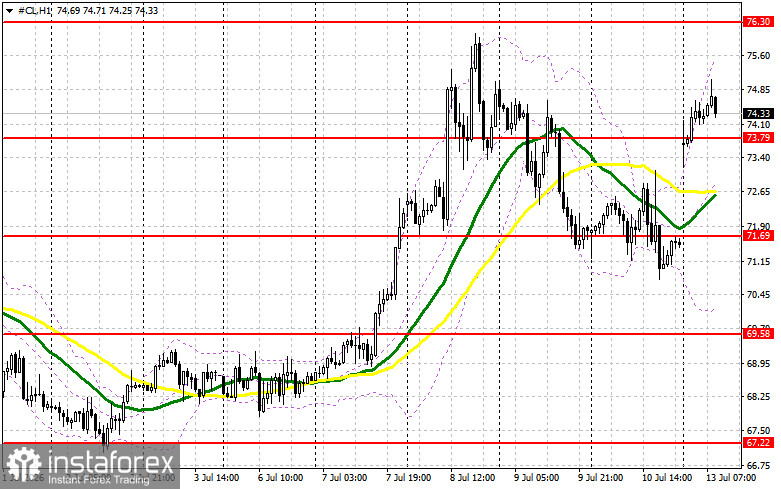
As for the current technical picture for oil, buyers need to claim the nearest resistance at $76.30. This will allow aiming for $78.70, above which it will be quite challenging to break through. The most distant target will be in the $80.20 area. In the event of a decline, bears will try to take control over $73.70. If they succeed, a range breakout will deal a serious blow to the bulls' positions and push oil to a low of $71.70, with the potential to move down to $69.58.
*تعینات کیا مراد ہے مارکیٹ کے تجزیات یہاں ارسال کیے جاتے ہیں جس کا مقصد آپ کی بیداری بڑھانا ہے، لیکن تجارت کرنے کے لئے ہدایات دینا نہیں.
InstaSpot analytical reviews will make you fully aware of market trends! Being an InstaSpot client, you are provided with a large number of free services for efficient trading.


