




ہمارے ٹیم میں 7000000 سے ذائد تاجران شامل ہیں
ہم تجارت کی بہتری کے لئے ہر روز اکھٹے کام کرتے ہیں اور بہترین نتائج حاصل کرتے ہوئے آگے کی جانب بڑھتے ہیں
دُنیا بھر سے سے لاکھوں ہمارے بہترین کام کو سند عطاء کرتے ہیں آپ اپنا انتحاب کریں باقی ہم آپ کی توقعات پر پورا اترنے کے لئے اپنی بہترین کوشش کریں گے
ہم مل کر ایک بہترین ٹیم بناتے ہیں
انسٹا فاریکس آپ سے کام کرتے ہوئے فخر محسوس کرتا ہے





ایکٹر - یو سی ایف 6 ٹورنامنٹ چیمپین اور واقعی ہیرو
ایک فرد کے جس نے اپنا آپ منوایا ہے وہ فرد کہ جو ہماری راہ پر چلا ہے.
ٹکٹا روو کی کامیابی کا راز یہ ہے کہ وہ اپنے اہداف کی جانب مسلسل بڑھتا رہتا ہے
اپنے ہنر یا ٹیلنٹ کے تمام پہلو آشکار کررہے ہیں
پہچانیں ، کوشش کریں ، ناکام ہوں لیکن کبھی نہ رُکیں
انسٹا فاریکس آپ کی کامیابی کی کہاں یہاں سے شروع ہوتی ہے

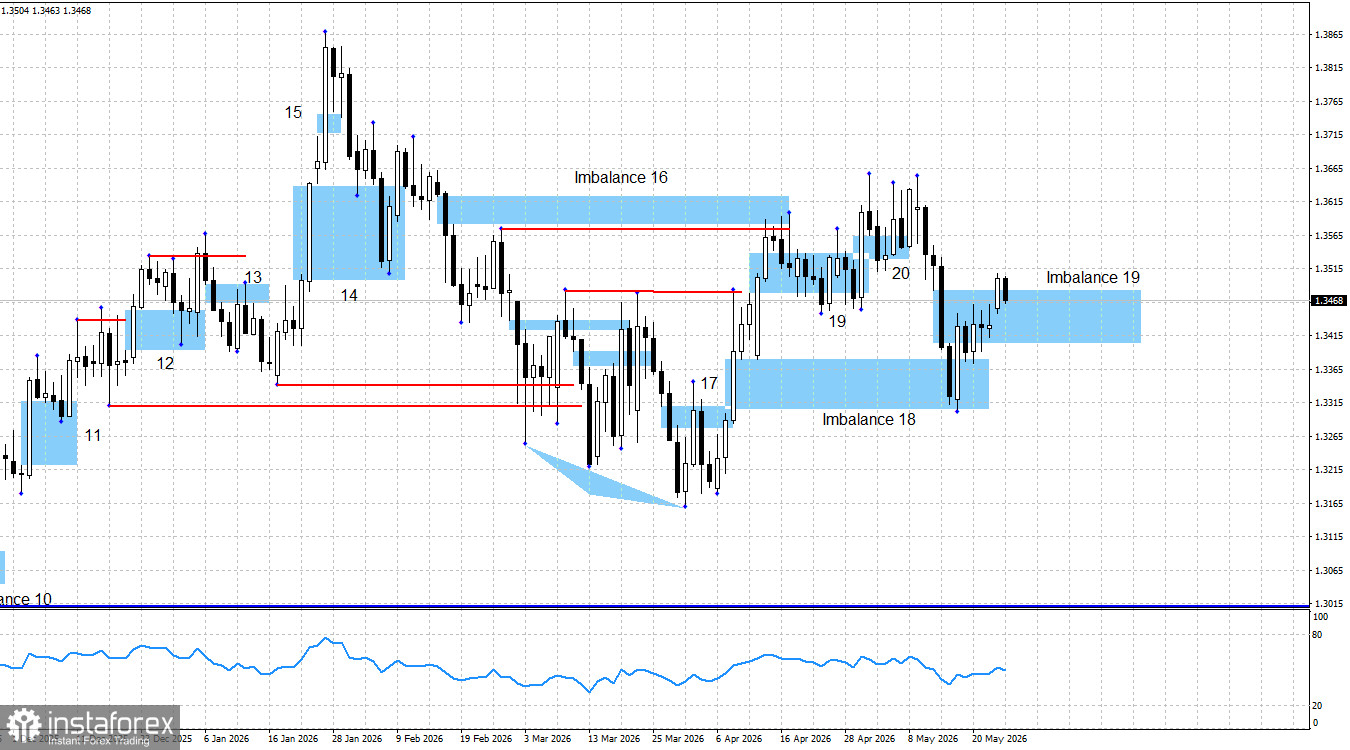
Last week, the GBP/USD pair declined into bullish imbalance 18, received a reaction from this pattern, formed a "Bullish Engulfing" candlestick formation, and then returned to bearish imbalance 19. As of Tuesday, everything points toward the invalidation of the bearish pattern. No reaction followed from imbalance 19, which in itself serves as a signal. Thus, two bullish signals have recently emerged, one of which allowed traders to open new long positions.
Undoubtedly, the rise of the British currency over the past week and a half has been driven by increased market optimism regarding the conclusion of a framework agreement between Iran and the United States. Other factors may have contributed to the strengthening of the pound, but they were clearly not the leading force behind the move. Therefore, technical analysis currently points to further growth for the pound, and traders may continue holding long positions with a target at the May 1 high of this year.
Unfortunately, market sentiment still depends heavily on geopolitics. This means that bears may regain control at any moment, and technical analysis will not be able to prevent it. Therefore, traders should not forget to limit potential losses through Stop Loss orders.
The situation surrounding the resolution of the Middle East conflict is slowly emerging from the deadlock, but traders still fear that the pendulum could swing back toward escalation. In fact, this did not take long to happen. Today, the United States launched new missile strikes against Iran, and one can only hope that negotiations will not collapse afterward and that the deal — which the parties supposedly already agreed upon — will not be canceled. Over the past two weeks, optimistic reports have dominated, but in the past there have been many situations where optimism eventually collided with harsh reality.
In my view, the overall trend remains bullish despite the pair's sharp declines earlier this year. At the moment, the Middle East ceasefire remains fragile, but it is still holding and could even be extended by at least 60 days if Tehran and Washington sign a framework agreement. However, the Strait of Hormuz remains under dual blockade, the nuclear issue remains unresolved, and any progress in negotiations can only be judged from Donald Trump's statements. The situation regularly shifts between positive and negative developments. At present, the market is optimistic, but conditions could reverse completely in an instant.
The technical picture is currently as follows: bullish imbalance 18 triggered a price reaction, while bearish imbalance 19 is likely to be invalidated. Thus, the chart structure fully supports further pound appreciation. The only thing left is to monitor geopolitical developments carefully in order to exit long positions in time if negotiations once again reach a deadlock and the framework agreement remains merely "95% agreed."
There was no significant economic news on Tuesday. Bullish attacks stalled after the United States once again struck Iran. The market is now waiting for Tehran's response and preparing for the worst. Under current conditions, buying the pound is no longer under consideration.
In the United States, the overall informational backdrop continues to suggest that, in the long term, little should be expected other than dollar weakness. Even the conflict between Iran and the U.S. changes very little in this regard. Geopolitics has temporarily reminded markets of the dollar's safe-haven status for about two months, but overall, the long-term outlook for the U.S. dollar remains difficult.
The U.S. labor market continues to weaken, the economy is approaching recession, and the Federal Reserve lacks room to tighten monetary policy in 2026. In addition, four major protests against Donald Trump have already taken place across the United States, while Jerome Powell's eventual departure could further worsen the dollar's outlook if the FOMC becomes more dovish under Kevin Warsh. From an economic perspective, I see no grounds for sustained dollar growth.
The economic calendar for May 27 contains no notable events. Therefore, the influence of economic data on market sentiment on Wednesday will once again be absent.
The long-term picture for the pound remains bullish. The "Three Drives Pattern" warned traders about the beginning of the rally, and since then three bullish patterns and three bullish signals have formed, all of which traders could have acted upon.
Two weeks ago, geopolitics disrupted the bulls' vision of a cloudless future, but they still managed to retain control and formed another bullish signal in imbalance 18. If geopolitical developments remain positive, the upward movement is likely to continue.
I consider the target for the pound to be the 2026 high at 1.3867, with the nearest target at 1.3656. At the moment, there are no grounds for considering a bearish trend. The only bearish imbalance is on the verge of invalidation. For obvious reasons, no new bearish patterns can form during the current upward movement.
*تعینات کیا مراد ہے مارکیٹ کے تجزیات یہاں ارسال کیے جاتے ہیں جس کا مقصد آپ کی بیداری بڑھانا ہے، لیکن تجارت کرنے کے لئے ہدایات دینا نہیں.
InstaSpot analytical reviews will make you fully aware of market trends! Being an InstaSpot client, you are provided with a large number of free services for efficient trading.


