




ہمارے ٹیم میں 7000000 سے ذائد تاجران شامل ہیں
ہم تجارت کی بہتری کے لئے ہر روز اکھٹے کام کرتے ہیں اور بہترین نتائج حاصل کرتے ہوئے آگے کی جانب بڑھتے ہیں
دُنیا بھر سے سے لاکھوں ہمارے بہترین کام کو سند عطاء کرتے ہیں آپ اپنا انتحاب کریں باقی ہم آپ کی توقعات پر پورا اترنے کے لئے اپنی بہترین کوشش کریں گے
ہم مل کر ایک بہترین ٹیم بناتے ہیں
انسٹا فاریکس آپ سے کام کرتے ہوئے فخر محسوس کرتا ہے





ایکٹر - یو سی ایف 6 ٹورنامنٹ چیمپین اور واقعی ہیرو
ایک فرد کے جس نے اپنا آپ منوایا ہے وہ فرد کہ جو ہماری راہ پر چلا ہے.
ٹکٹا روو کی کامیابی کا راز یہ ہے کہ وہ اپنے اہداف کی جانب مسلسل بڑھتا رہتا ہے
اپنے ہنر یا ٹیلنٹ کے تمام پہلو آشکار کررہے ہیں
پہچانیں ، کوشش کریں ، ناکام ہوں لیکن کبھی نہ رُکیں
انسٹا فاریکس آپ کی کامیابی کی کہاں یہاں سے شروع ہوتی ہے

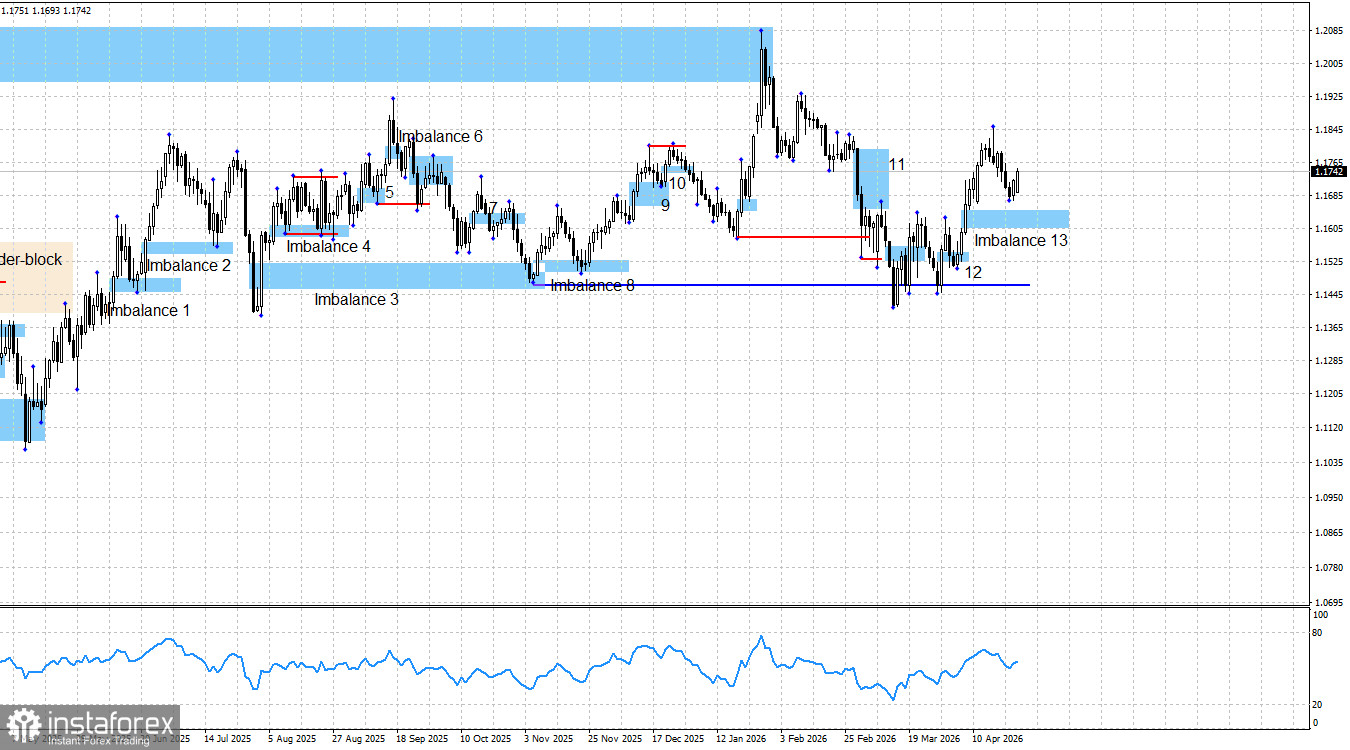
The EUR/USD pair continues to trade within a corrective pullback. There is very little distance left to the bullish imbalance 13, but so far this pattern has not been tested. Therefore, no buy signal has been formed yet.
Throughout last week, traders were expecting negotiations between Iran and the United States almost daily. However, instead of talks, they received mostly negative news, pointing more toward the inevitability of renewed conflict in the Middle East than toward a lasting ceasefire. Naturally, Donald Trump will try until the very end to push Iran into a deal on U.S. terms. However, Iran continues to refuse a new round of negotiations as long as the Strait of Hormuz remains blocked by U.S. aircraft carriers. Trump is not willing to lift the blockade, and Iran is not willing to negotiate under these conditions—a deadlock.
How long will this situation last before missiles begin flying again in one direction, and then the other? In my view, the answer is obvious: if there are no negotiations, the resumption of conflict is only a matter of time.
Under the current circumstances, traders are left to wait for the price to react to imbalance 13. There are no other clear buying zones at the moment, and I still consider the trend to be bullish. Therefore, I am only interested in buy signals. Notably, there are no bearish patterns at all.
The previous buy signal from imbalance 12 worked out very well, with the euro gaining around 270 points. These positions could have been closed with solid profits or left open, as no sell signals were formed.
It is also worth noting that all of the dollar's growth over the past one and a half to two months has been driven solely by geopolitics. As soon as the U.S. and Iran agreed to a two-week ceasefire, bears immediately stepped back, and bulls resumed their advance.
At present, the ceasefire remains fragile but is still holding. I have repeatedly stated that I do not believe the bullish trend has ended, despite the break of important trend-forming lows. The price movement over the past two months could evolve into a bearish trend if geopolitical conditions continue to deteriorate. However, markets often price in the worst-case scenario in advance, attempting to anticipate the most extreme outcomes.
Thus, I allow for the possibility that traders have already fully priced in the geopolitical conflict in the Middle East. In that case, bears no longer have a clear advantage.
The overall graphical picture is clear at the moment. First, the price did not receive any reaction to the 11 imbalance. Second, the price reacted to the imbalance of 12, forming a bullish signal on a bullish trend. Thirdly, a new bullish imbalance of 13 has been formed, which is a zone of interest for future purchase transactions, as well as a support zone for the European currency.
The news background on Monday was essentially nonexistent, aside from Germany's consumer confidence index, which has remained in negative territory for five years. This report clearly did not hinder the bulls.
At present, the market is once again moving away from the U.S. dollar in favor of the euro, pound, and other currencies. In other words, the issue is not the attractiveness of the euro or pound, but rather the lack of attractiveness of the dollar.
There are still plenty of reasons for bulls to push higher in 2026, and even the outbreak of conflict in the Middle East has not reduced them. Structurally and globally, Trump's policies—which contributed to the dollar's sharp decline last year—have not changed.
In the coming months, the dollar may occasionally strengthen due to risk aversion, but this would require continuous escalation in the Middle East. I still do not believe in the formation of a sustained bearish trend for EUR/USD (i.e., a strengthening dollar trend). The dollar has received temporary support, but what will drive bears in the long term?
News Calendar for the U.S. and the Eurozone:
On April 28, the economic calendar contains only two secondary events. The impact of the news flow on market sentiment on Tuesday is expected to remain very limited.
EUR/USD Forecast and Trading Advice:
In my view, the pair remains in the process of forming a bullish trend. The information backdrop changed sharply two months ago, but the trend itself cannot be considered canceled or completed.
Thus, bulls may well continue their advance in the near term—unless geopolitics suddenly shifts toward renewed escalation.
Bulls previously had an opportunity to open long positions based on the signal from imbalance 12, and the upward move could continue toward this year's highs. A new imbalance 13 has also formed, which may generate another bullish signal in the near future.
For the euro to rise without obstacles, the Middle East conflict would need to move toward a stable peace—which is not currently the case. However, bears are not gaining additional reasons to attack either.
In the near term, I would rely primarily on technical analysis—and it clearly points to bullish dominance.
*تعینات کیا مراد ہے مارکیٹ کے تجزیات یہاں ارسال کیے جاتے ہیں جس کا مقصد آپ کی بیداری بڑھانا ہے، لیکن تجارت کرنے کے لئے ہدایات دینا نہیں.
InstaSpot analytical reviews will make you fully aware of market trends! Being an InstaSpot client, you are provided with a large number of free services for efficient trading.


