




ہمارے ٹیم میں 7000000 سے ذائد تاجران شامل ہیں
ہم تجارت کی بہتری کے لئے ہر روز اکھٹے کام کرتے ہیں اور بہترین نتائج حاصل کرتے ہوئے آگے کی جانب بڑھتے ہیں
دُنیا بھر سے سے لاکھوں ہمارے بہترین کام کو سند عطاء کرتے ہیں آپ اپنا انتحاب کریں باقی ہم آپ کی توقعات پر پورا اترنے کے لئے اپنی بہترین کوشش کریں گے
ہم مل کر ایک بہترین ٹیم بناتے ہیں
انسٹا فاریکس آپ سے کام کرتے ہوئے فخر محسوس کرتا ہے





ایکٹر - یو سی ایف 6 ٹورنامنٹ چیمپین اور واقعی ہیرو
ایک فرد کے جس نے اپنا آپ منوایا ہے وہ فرد کہ جو ہماری راہ پر چلا ہے.
ٹکٹا روو کی کامیابی کا راز یہ ہے کہ وہ اپنے اہداف کی جانب مسلسل بڑھتا رہتا ہے
اپنے ہنر یا ٹیلنٹ کے تمام پہلو آشکار کررہے ہیں
پہچانیں ، کوشش کریں ، ناکام ہوں لیکن کبھی نہ رُکیں
انسٹا فاریکس آپ کی کامیابی کی کہاں یہاں سے شروع ہوتی ہے

The U.S. president is playing big. The S&P 500 recorded its worst drop of 2025 in response to the White House imposing tariffs against Mexico and Canada. For a long time, investors complained that the market was overly confident. They believed that Donald Trump's tariff threats were merely a negotiation tactic and that he would never push things to the extreme, as he wouldn't want to sink the stock index. March brought a reckoning for this overconfidence.
The S&P 500 alternated between daily losses and gains of at least 1.5% for three consecutive trading sessions, something that hasn't happened since March 2020. The rebound on March 2 seemed to confirm the perfect opportunity to buy the dip, especially since Mexico agreed to impose reciprocal tariffs on Chinese imports, and a White House official hinted that the 25% tariff rate could be lowered.
However, Goldman Sachs warns that now is not the time to buy the S&P 500 dip. The U.S. economy is showing signs of cooling, and restoring an upward trend in the broad stock index requires something entirely different. The return of American exceptionalism and the so-called "Goldilocks economy" is absent from the market. As a result, Treasury bonds are outperforming stocks.
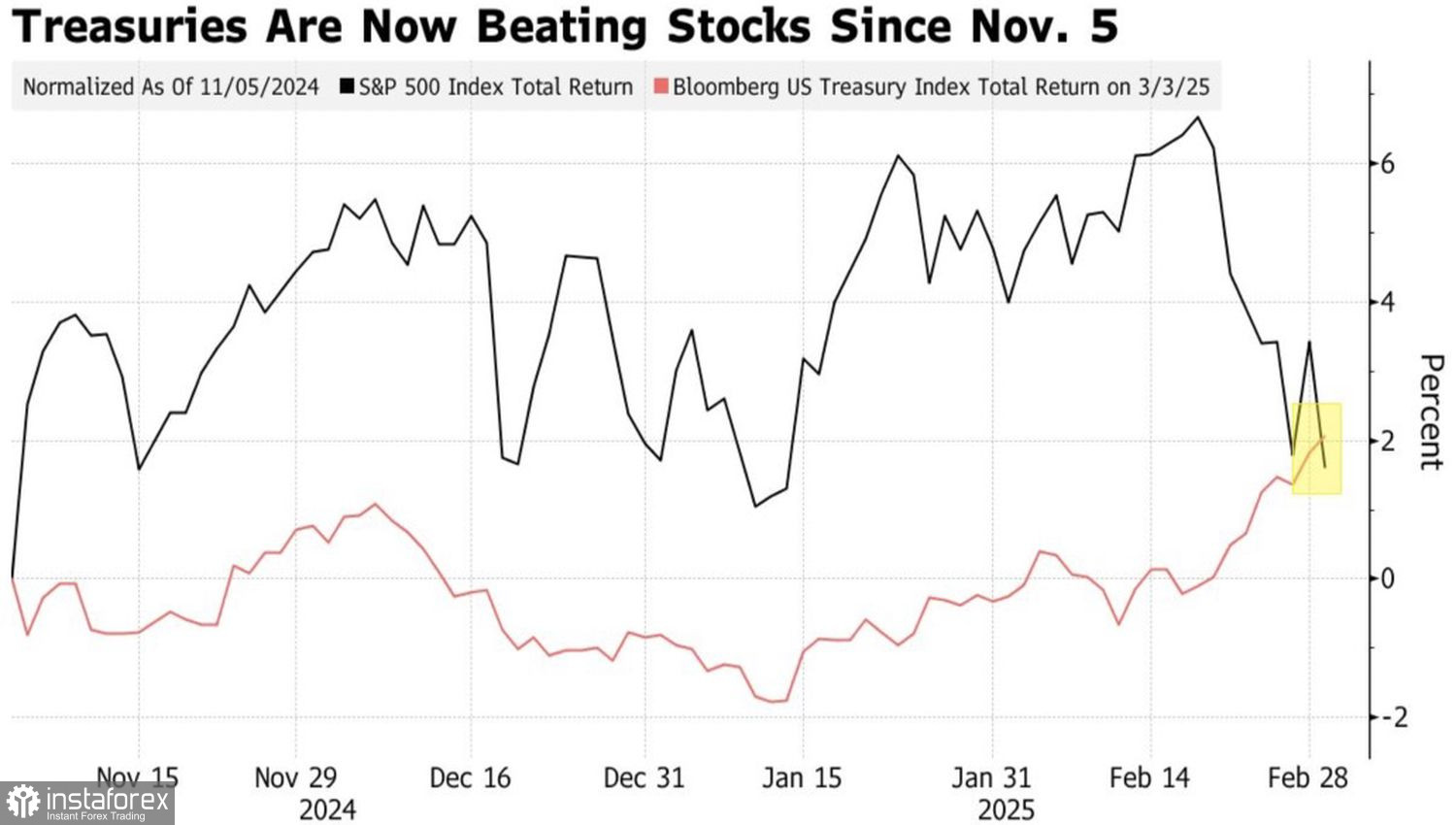
A fundamental shift is occurring in the so-called "Trump Trade." In Q4 2024, expectations that tariffs would drive inflation higher and force the Fed to keep the federal funds rate elevated for an extended period led to bond sell-offs and rising yields. Meanwhile, stocks rose on hopes of fiscal stimulus and deregulation.
At the beginning of spring, investors are more fearful of stagflation and a hard landing for the U.S. economy than inflation. This is accelerating capital outflows from equity-focused funds. The movement of money isn't just shifting into bonds but also into other markets.
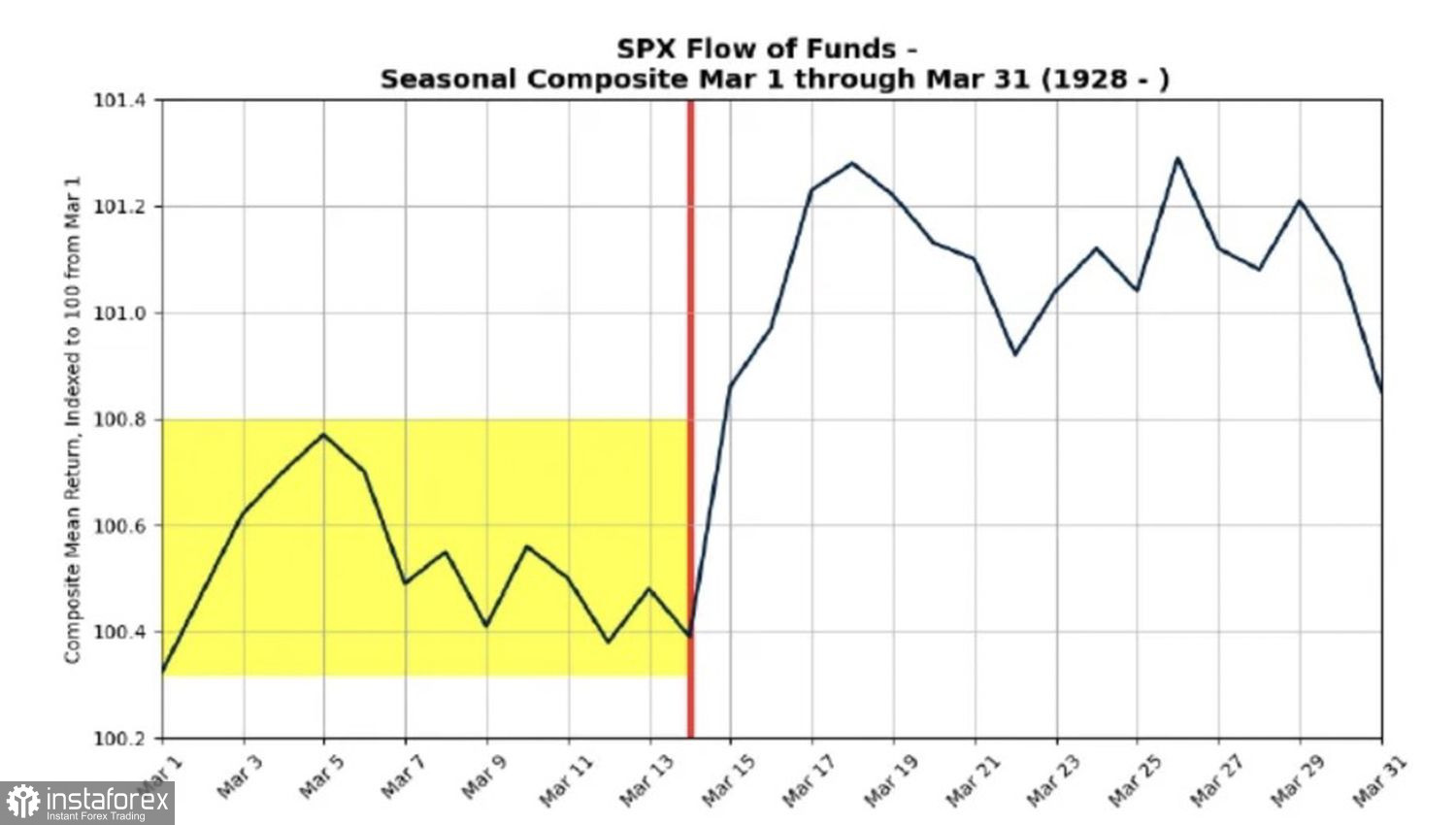
One of the primary beneficiaries of this shift is Europe. Initially, European stock indices gained because Donald Trump chose to impose tariffs on Canada, Mexico, and China rather than the EU. At the start of March, gains were further fueled by the U.S. suspending military aid to Ukraine. This forces the European Union to increase defense spending, which, in theory, should boost industrial production and accelerate GDP growth.
Competition from Chinese companies in the artificial intelligence sector is also stripping the S&P 500 of its key growth driver—American exceptionalism. U.S. stock indices are now losing not only to Treasury bonds but also to European equities.
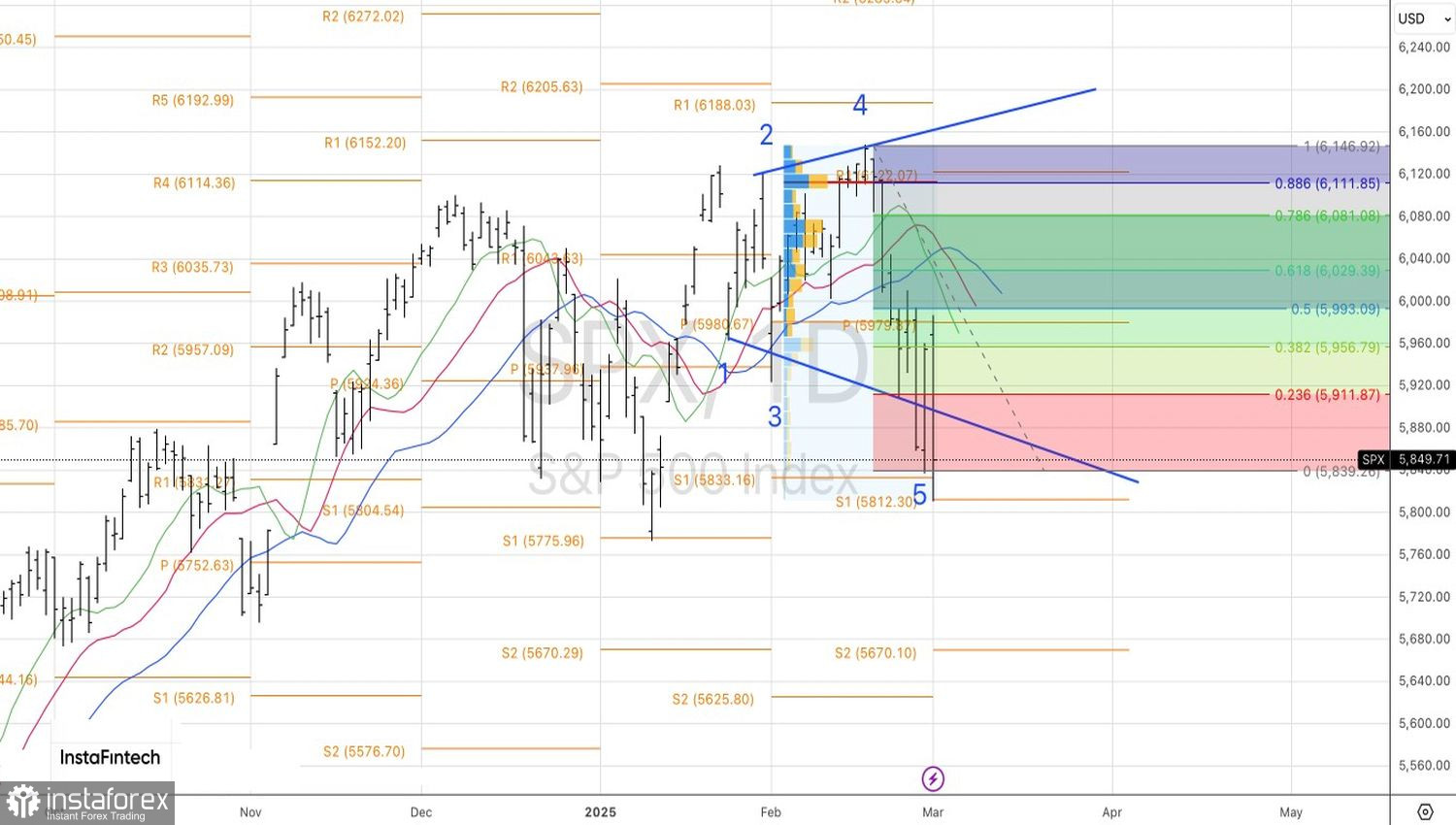
On the daily chart, the S&P 500 continues to follow the Broadening Wedge pattern. The rebound from resistance at 5955 provided another opportunity to add to the short positions formed from 6083. The first set of previously outlined targets at 5830 and 5750 has been met. The second target is now in focus.
*تعینات کیا مراد ہے مارکیٹ کے تجزیات یہاں ارسال کیے جاتے ہیں جس کا مقصد آپ کی بیداری بڑھانا ہے، لیکن تجارت کرنے کے لئے ہدایات دینا نہیں.
InstaSpot analytical reviews will make you fully aware of market trends! Being an InstaSpot client, you are provided with a large number of free services for efficient trading.


