




انسٹا فاریکس ٹیم میں لیجنڈ!
لیجنڈ!آپ کو لگتا ہے کہ یہ حیرت انگیز بیانات ہے؟ لیکن ہمیں ایسے شخص کو کیا کہنا چاہئے ، جو 18 سال میں جونیئر ورلڈ شطرنج چیمپئن شپ جیتنے والا پہلا ایشین بن گیا تھا اور 19 میں پہلا ہندوستانی گرینڈ ماسٹر بنا؟ ورلڈ چیمپیئن ٹائٹل کے لئے یہ مشکل آغاز تھا جو وشونااتھ آنند کے لئے تھا ، وہ شخص جو ہمیشہ کے لئے شطرنج کی تاریخ کا حصہ بن گیا تھا۔ انسٹا فاریکس ٹیم میں اب ایک اور لیجنڈ!





Borussia is one of the most titled football clubs in Germany, which has repeatedly proved to fans: the spirit of competition and leadership will certainly lead to success. Trade in the same way that sports professionals play the game: confidently and actively. Keep a "pass" from Borussia FC and be in the lead with InstaSpot!

Annual consumer inflation in the U.S. slowed from 3.4% to 3.1% in January, but it wasn't the dollar that weakened after this report; it was the euro. This happened because the data coincided with forecasts, including those of the Federal Reserve. Just recently, Fed Chair Jerome Powell explicitly stated that, given the current dynamics, it is likely too soon for a rate cut. Only a pronounced slowdown in inflation can compel the Federal Reserve to reconsider its policy. Many market players were actually expecting a slowdown to as low as 2.9%. However, this did not happen. And now it is obvious that we should expect the possibility that the European Central Bank may have already lowered the rate a couple of times before the Fed begins easing its monetary policy. Moreover, interest rates in Europe are already lower than in the United States. So, the interest rate disparity will continue to grow in favor of the dollar. This factor, at least in the medium term, supports the dollar's growth.
Nevertheless, today, the euro may slightly improve its position. And not because of the euro area GDP data, as this is just a second estimate that is intended to confirm the first one, which the market has already taken into account. Today, the main focus is on industrial output, which is expected to slow down from -6.8% to -5.3%. And although the expected decline is quite serious, against the backdrop of the overbought US currency, even a slight improvement in European economic data would be enough for the euro to rise.
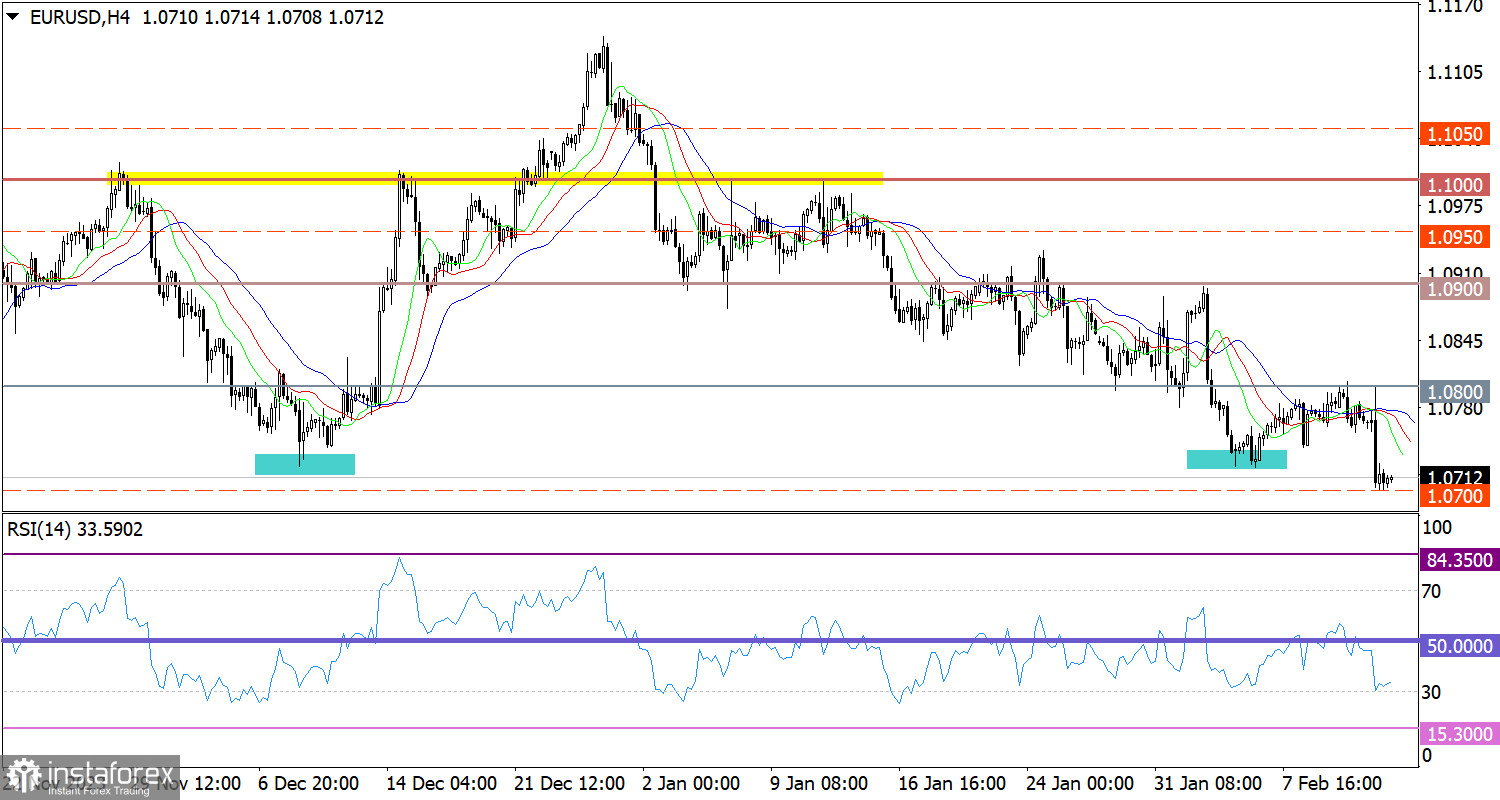
During speculative price fluctuations, EUR/USD updated the local low of the downward cycle. As a result, the pair reached the level of 1.0700, and due to the euro's oversold condition, the volume of short positions had partially decreased.
On the 30M, 1H and 4H charts, the RSI technical indicator showed signals of oversold conditions, indicating a decrease in selling volumes.
On the four-hour chart, the Alligator's MAs are headed downwards, which corresponds to the current cycle.
In the theory of technical analysis, the 1.0700/1.0730 area may exert pressure on short positions, negatively affecting the downward cycle. In this case, the euro may partially recover from its recent losses. Regarding the subsequent downward cycle, the price must settle below the level of 1.0700 during the day in order to extend this cycle.
The complex indicator analysis unveiled that indicators are suggesting a pullback in the short-term period, while indicators in the intraday period still point to a downward cycle.
*تعینات کیا مراد ہے مارکیٹ کے تجزیات یہاں ارسال کیے جاتے ہیں جس کا مقصد آپ کی بیداری بڑھانا ہے، لیکن تجارت کرنے کے لئے ہدایات دینا نہیں.
InstaSpot analytical reviews will make you fully aware of market trends! Being an InstaSpot client, you are provided with a large number of free services for efficient trading.


